What the Rustenburg workshop needed from day one
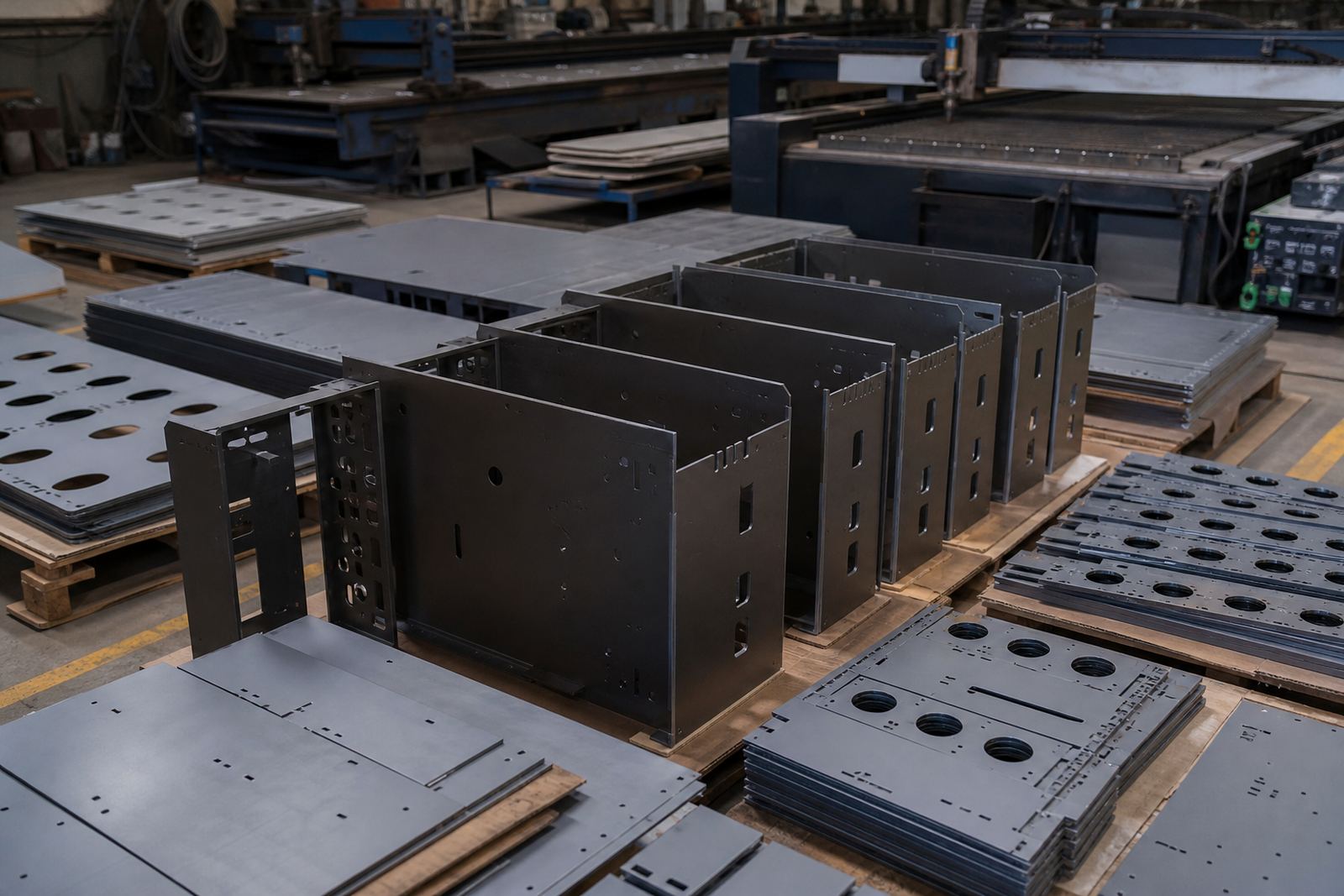
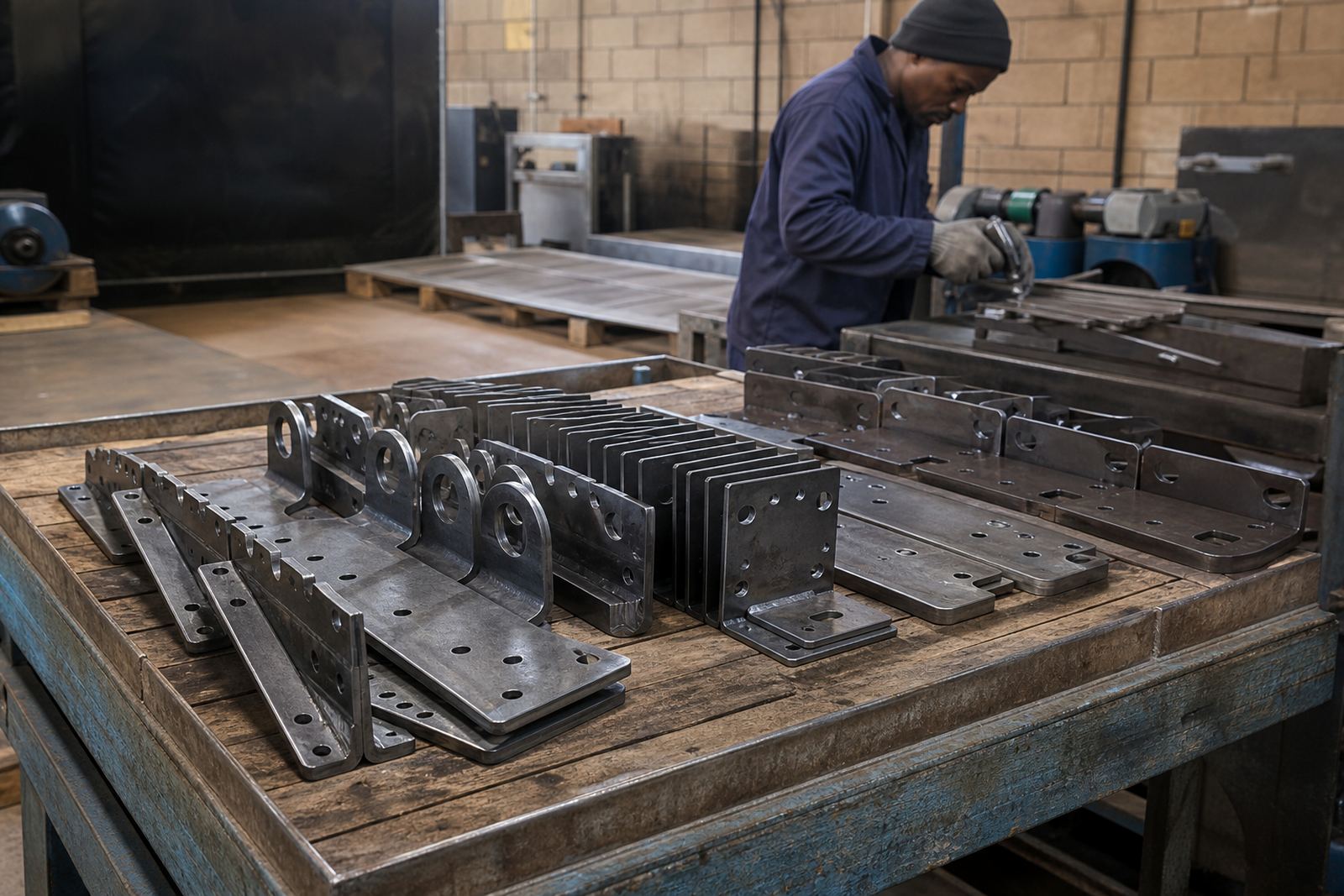
The client was a Rustenburg support workshop serving mining maintenance work, repair runs, and repeat plate fabrication for underground and surface equipment. Their laser-cut parts were coming off the table with sharp burrs, slag on the lower edge, and handling problems on larger plates. The team needed a practical setup that could take heavy parts, reduce manual grinding, and keep output moving even when load-shedding interrupted the day.
The brief was simple but specific. Improve edge finish on laser-cut sheet and plate, make handling safer for operators, and keep the process suitable for mixed batches from small brackets to larger support plates. They also wanted less variation between shifts, because some parts were being cleaned quickly by hand while others were over-finished. That inconsistency was slowing assembly and causing rework.
- Material range: mild steel plate and sheet from 1.6 mm to 16 mm
- Part sizes: small components up to heavy plates around 1,500 mm wide
- Output target: cleaner parts with less manual touch-up
- Environment: dusty workshop, warm afternoons, and occasional power interruptions
Constraints on site and how we planned around them
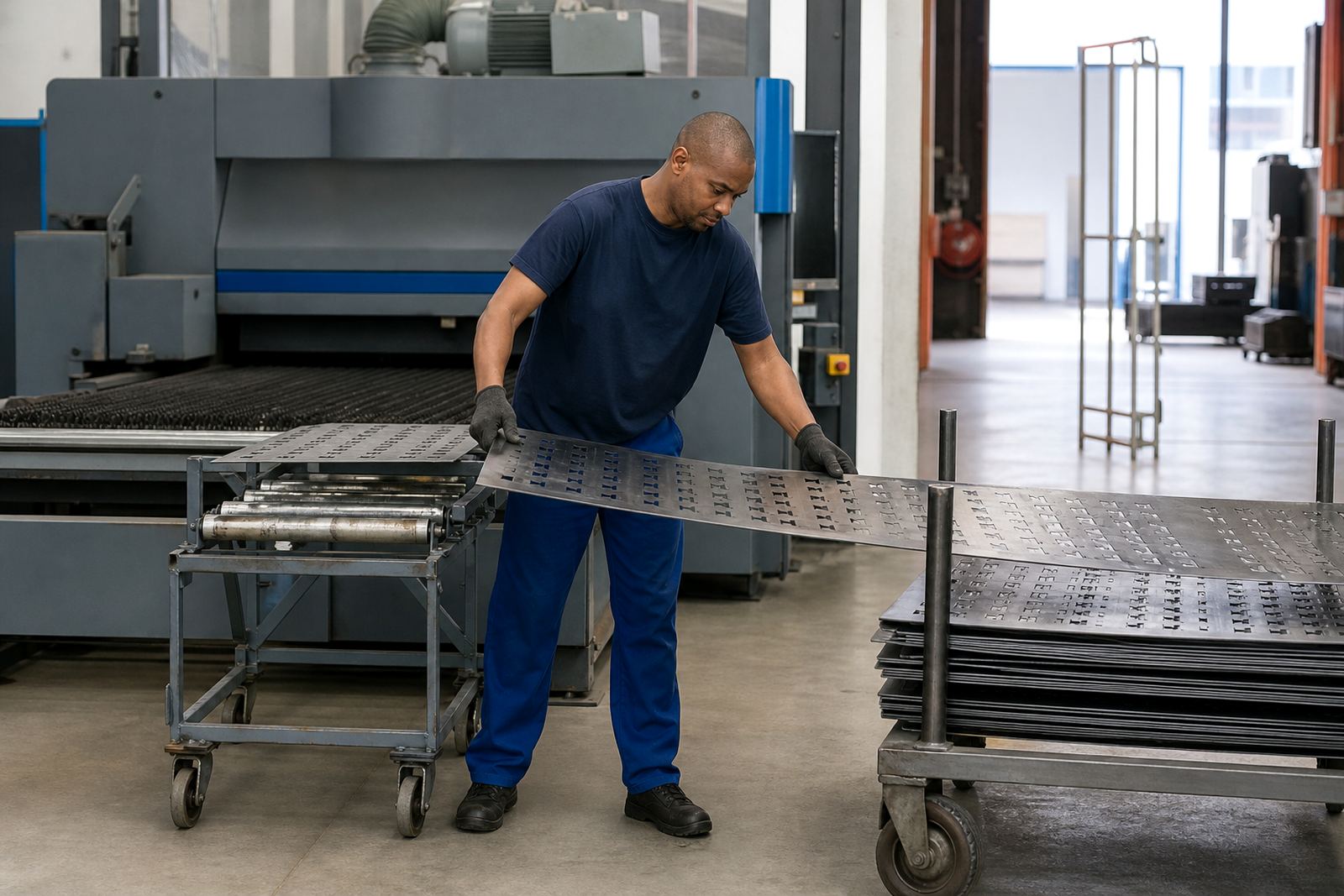
Rustenburg conditions matter. The workshop sits in a heavy industrial area where dust gets into moving parts, and the team works with large steel sheets that are awkward to turn by hand. Their floor space was tight, so the machine had to fit into the existing flow between cutting, sorting, drilling, and assembly. They also needed enough clearance for loading and offloading without blocking the route used by forklifts and trolleys.
We also had to plan for stable operation during voltage dips and scheduled outages. The client did not want a machine that would be fussy about power quality or one that would need constant resetting after interruptions. Another concern was operator fatigue. The old method relied on angle grinding and hand filing, which was slow and tiring, and it left more chance of cut hands and uneven edges. For this job, the focus was on repeatability and safety first, then finish quality.
We ran an on-site assessment and checked the part mix, sheet thicknesses, daily volume, and floor layout before confirming the equipment selection. That helped us match the machine to the actual work instead of guessing from a drawing set.
The machine package and setup we supplied
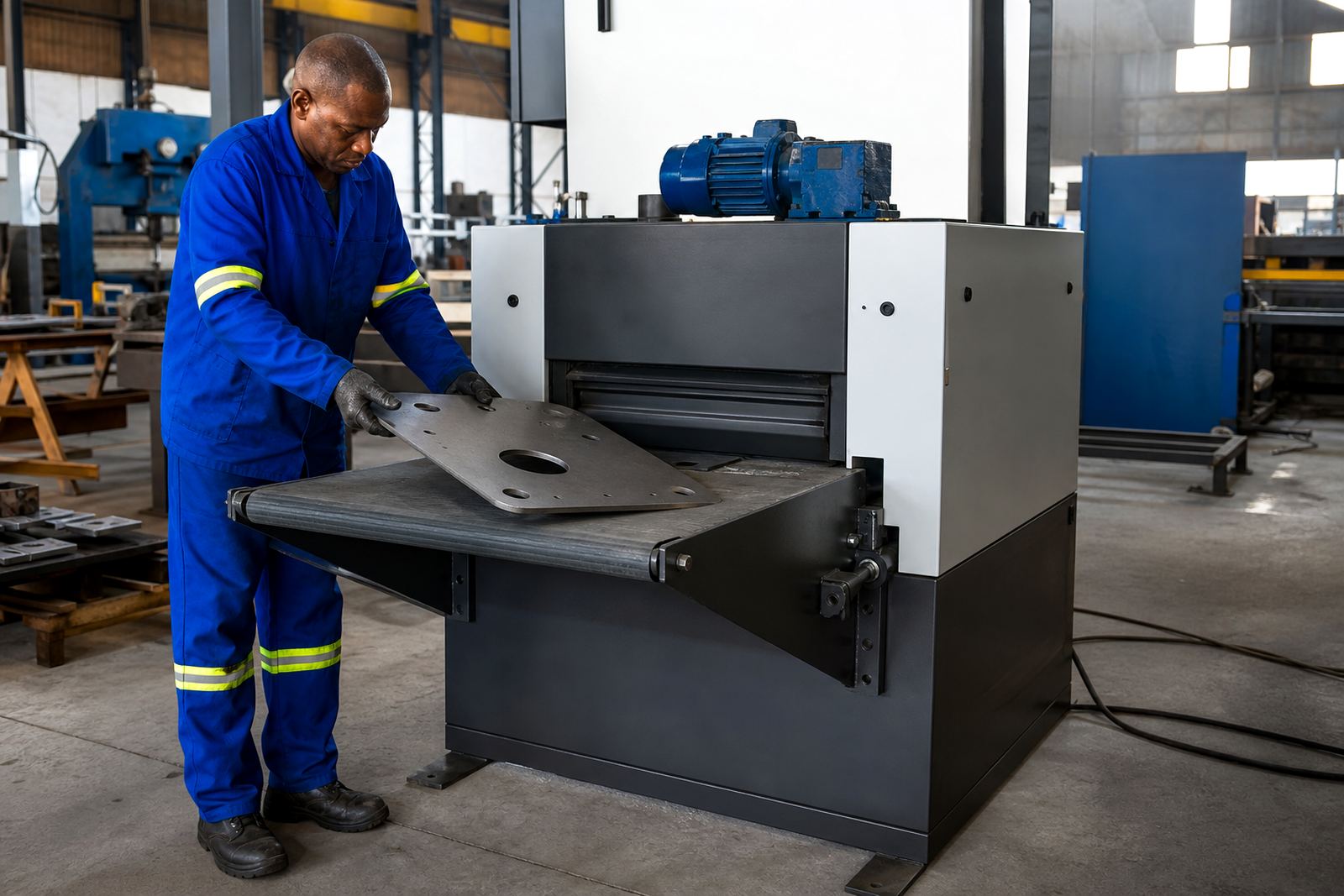
We supplied a deburring and edge-finishing machine configured for laser-cut sheet metal with variable feed control, adjustable pressure, and a wide working opening for common plate sizes. The setup was selected to remove burrs, soften sharp edges, and take light oxide or slag from the cut face without overworking the part. It was paired with local service support and a spare abrasive plan so the workshop would not be waiting for consumables from far away.
Installation was done in stages over two weeks. First we positioned the unit, checked level and access, then set up extraction and power connections. After that we tested a range of parts from thin sheet to heavier plate, including pieces with internal cut-outs and long straight edges. The final step was adjusting the feed speed and abrasive pressure for the workshop's most common jobs.
- Working width suited to standard laser-cut sheet and plate work
- Adjustable finishing pressure for light deburring or heavier edge clean-up
- Feed control for repeatable results across mixed batches
- Dust management support to suit an industrial workshop environment
- Spare abrasive schedule set around daily production rates
Training the team and locking in a safe process
The machine was only part of the job. We spent time with the operators, supervisors and the workshop lead so the process would hold up on busy days too. Training covered infeed and outfeed handling, safe lifting of plate, abrasive wear checks, and how to spot when a part needed a second pass. We also covered shutdown steps during a power cut so the team could restart without wasting material.
Because the workshop handles heavy parts, we set clear rules for manual handling and edge protection. Smaller components could be processed quickly, while larger plates were grouped so the team did not overload the infeed. We showed them how to stage work by thickness and cut type, which helped reduce changeovers and kept the finish more consistent. It sounds basic, but in a workshop it makes a big difference when everyone follows the same routine.
- Operator training for loading, inspection, and safe restart
- Wear checks for abrasive media and contact parts
- Batching method by thickness and cut quality
- Simple housekeeping routine to keep dust buildup under control
Results after commissioning and first production runs
Within the first few weeks, the workshop saw a clear drop in hand finishing time. Parts were leaving the machine with cleaner edges, less burr, and a more even surface for the next stage of fabrication. Operators no longer had to spend as long with grinders on sharp corners, and the assembly team reported fewer issues with handling and fit-up. The difference was especially noticeable on repeated plate patterns where the same edge faults used to show up again and again.
The client also gained better control over throughput. Instead of treating every laser-cut part as a one-off cleanup job, they could run batches through the machine and get a more predictable result. That helped them plan labour better and free up skilled fabricators for work that actually needed their attention. There was less rework, less waste from over-grinding, and better confidence when sending parts to the next bay.
In practical terms, the job shifted the workshop from reactive clean-up to a more organised prep process. That is where the value really showed up.
What we would repeat on the next Rustenburg plate job
If we were doing the same type of project again, we would follow the same sequence: check the actual part mix on site, confirm the most common sheet thicknesses, and test sample parts before final commissioning. Rustenburg workshops often have a mix of mining repair work and general fabrication, so it helps to tune the process around what leaves the laser every day, not just the biggest jobs.
We would also keep the spare abrasive plan in place from the start, because that protects uptime when production is under pressure. For any workshop dealing with heavy plate and load-shedding, the better approach is to keep the finishing line simple, serviceable, and easy to restart. That is what worked here, and it is what we would repeat again without changing much.
- Start with sample parts from the actual production list
- Plan abrasive stock around weekly volume, not monthly guesswork
- Leave enough floor space for handling and inspection
- Build restart steps for outages into the operator routine
Key facts
| Project | Rustenburg Plate Project |
|---|---|
| Client type | Mining support workshop |
| Town | Rustenburg, North West |
| Timeline | 2 weeks from site assessment to commissioning |
| Part range | Laser-cut sheet and plate from 1.6 mm to 16 mm |
| Outcome | Safer handling, cleaner edges, less manual grinding |