
The Montague Gardens brief
The client was a medium-sized sheet metal workshop in Montague Gardens, Cape Town, working mainly on laser-cut mild steel parts for light industrial equipment and general fabrication. Their laser table was keeping pace, but the parts were moving into assembly with burrs, sharp edges and inconsistent edge quality. That created extra hand finishing, slower fitting, and avoidable rework on brackets, covers and frames.
The brief was straightforward: reduce the hand finishing load, improve edge consistency across mixed batch sizes, and do it without pulling the workshop apart for a long shutdown. They also wanted a machine that could handle short runs and repeat jobs, because the work mix changed daily. In practical terms, the line had to stay moving, not just look neat on paper.
They had one further concern that comes up often in Cape Town workshops: dust control and reliable operation during load-shedding. The site sits in an area where storage and access matter, so any new machine had to fit into the existing material flow with enough clearance for trolleys and pallet movement.
What was getting in the way
Before the change, the workshop relied on manual deburring with angle grinders, flap discs and hand files. That approach worked on occasional parts, but it became a choke point once laser output increased. Operators were spending too much time cleaning edges instead of moving parts to the next stage. It also introduced variation, because one operator’s finish never quite matched another’s.
The main constraints were:
- Limited floor space between the laser area and assembly bay
- Mixed material thicknesses, mostly 1.5 mm to 6 mm sheet
- Need for clean edges on parts that are handled often
- Noise and dust management in a busy production shed
- Minimal downtime during installation and changeover
They did not need a general purpose machine for every metalworking task. They needed something aimed at laser-cut sheet metal, with predictable output and straightforward daily use. The issue was not just speed, it was consistency from the first part to the last. That is where the process had been holding things up.
The machine selection and setup
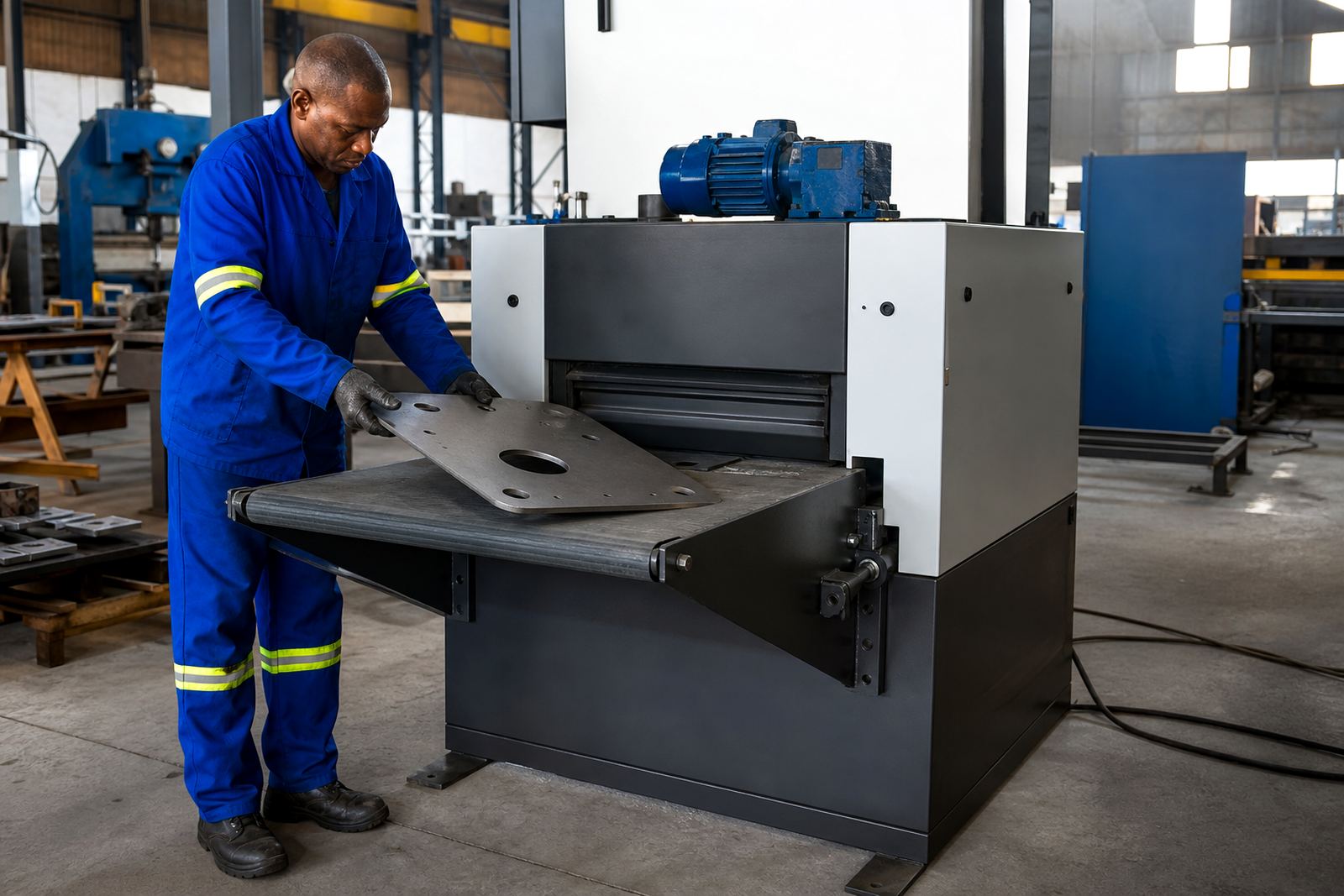
After reviewing the part mix and production rhythm, we supplied an edge-finishing machine suited to laser-cut sheet metal, with a combination of deburring and edge conditioning capability. The setup was chosen to suit mild steel parts up to 1250 mm wide, with a working thickness range from 0.8 mm to 6 mm, and enough control to handle both flat blanks and part edges without overworking lighter material.
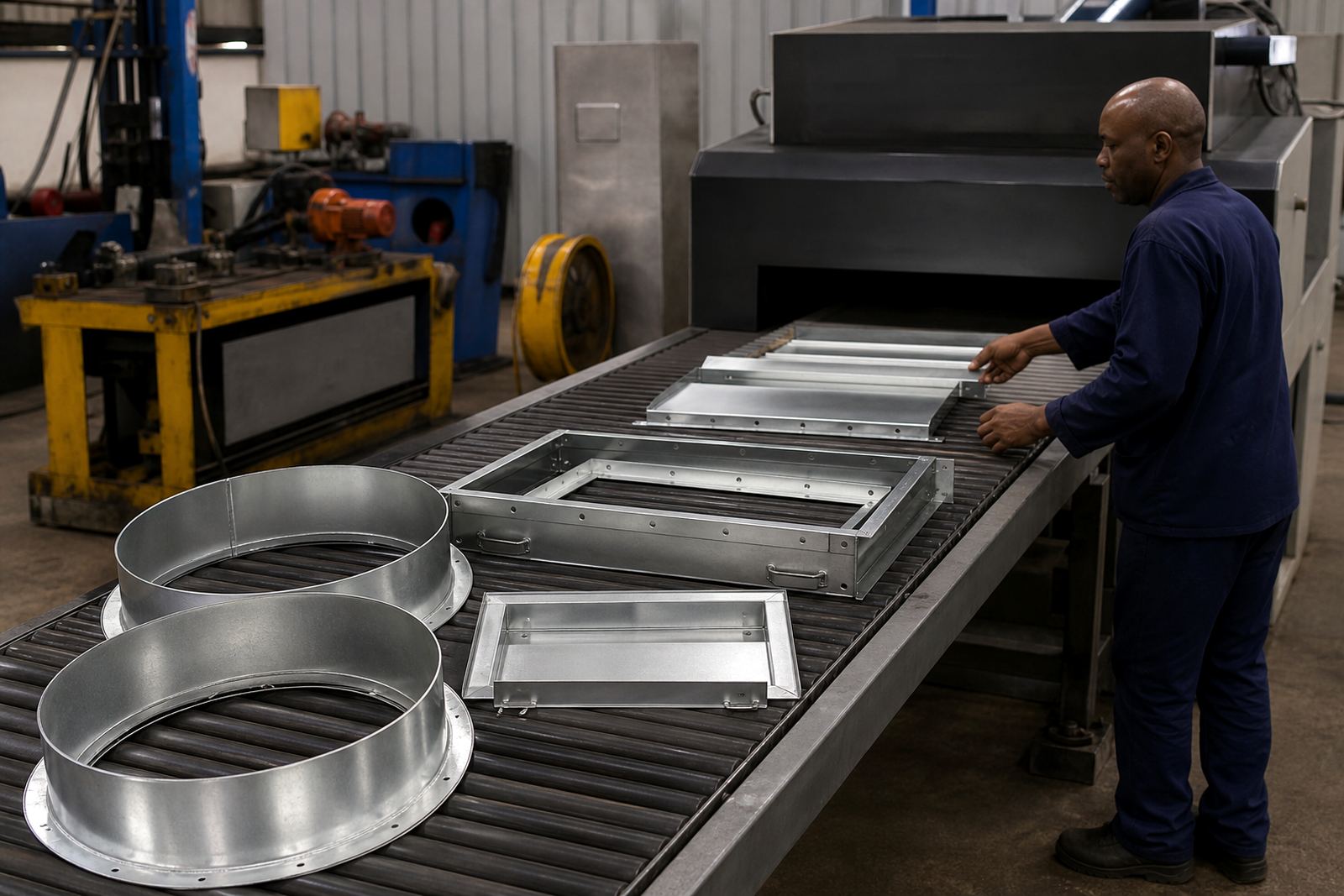
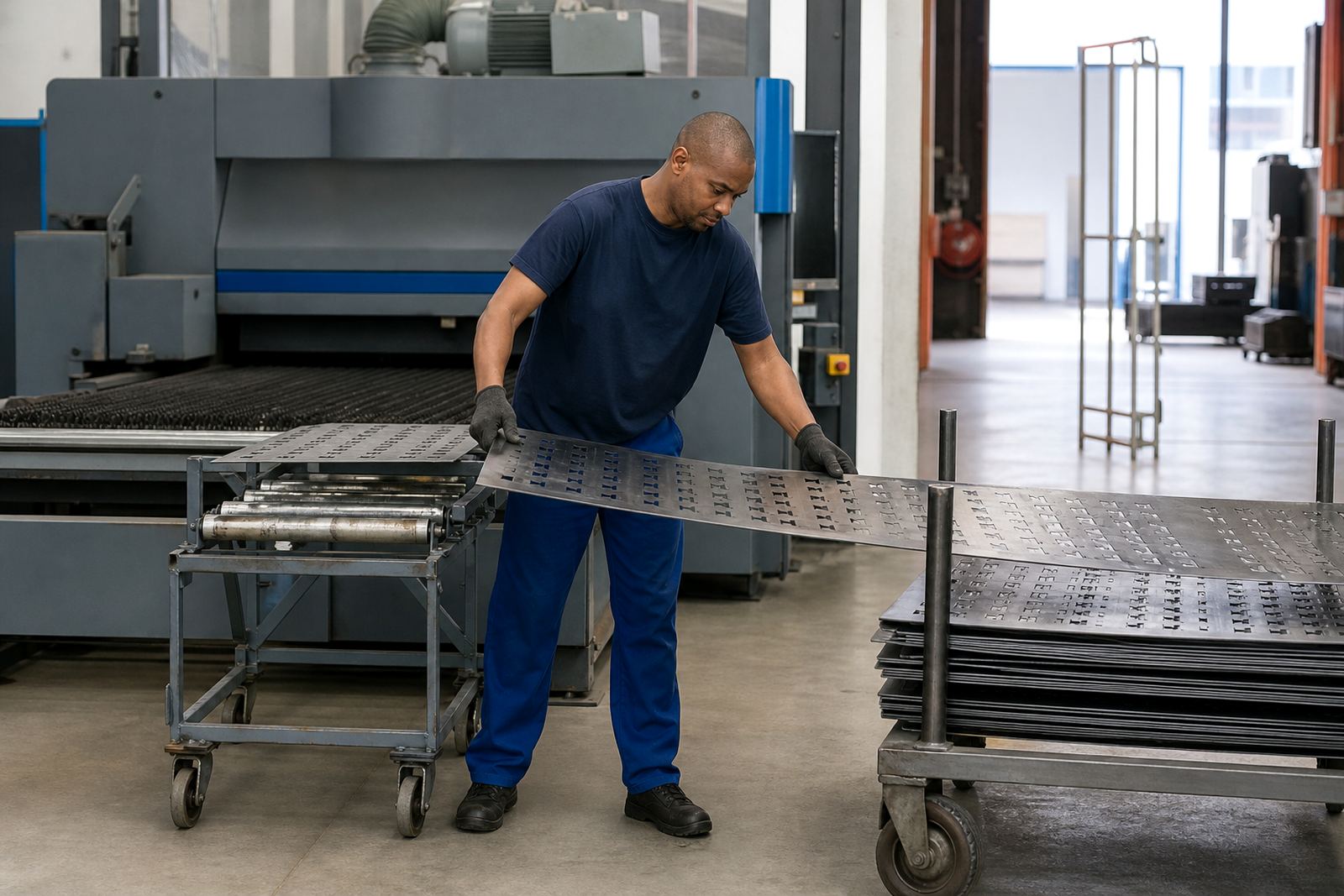
The machine was positioned as a link between laser cutting and assembly. We set the infeed and outfeed direction to match the workshop flow, so parts could come off the laser, go through finishing and move straight into sorting or bending. This reduced unnecessary handling, which matters when parts are small or when edges are sharp enough to cause injury risk.
We also worked through abrasive selection and process settings for the client’s most common jobs. That included a setup for repeatable edge breaking on sharp laser cut profiles and a second pass option for parts that needed a cleaner finish before powder coating or final fitment. A small but useful point: the operators wanted a simple changeover routine, so we kept the daily settings clear and easy to repeat.
Installation, training and first run
We completed the installation and first production run over two weeks. Week one covered delivery, machine positioning, alignment and power connection, followed by safe trial runs on sample parts. Week two focused on operator handover, process adjustment and live testing on the workshop’s real part mix. The handover was done with the people who would actually run the machine, not just supervisors.
Training covered:
- Safe loading and part handling
- Setting the finish for different thicknesses
- When to use a single pass and when to use a second pass
- Daily inspection points before starting a shift
- Basic abrasive replacement and wear checks
- Cleaning routines for dust and metal residue
We also showed the team how to spot the difference between a part that only needs edge breaking and one that needs full deburring. That cut down on over-processing, which had been wasting time. The workshop manager wanted something practical, not a lecture, and that is how we handled it.
Results after the first production month
Within the first month, the workshop saw a clear reduction in bottlenecks at the end of laser cutting. Parts were moving through finishing faster, and the assembly team no longer had to stop as often to clean sharp edges by hand. The biggest gain was not only speed, but steadier quality from batch to batch.
The client reported these results:
- Manual finishing time reduced by about 45 percent on common parts
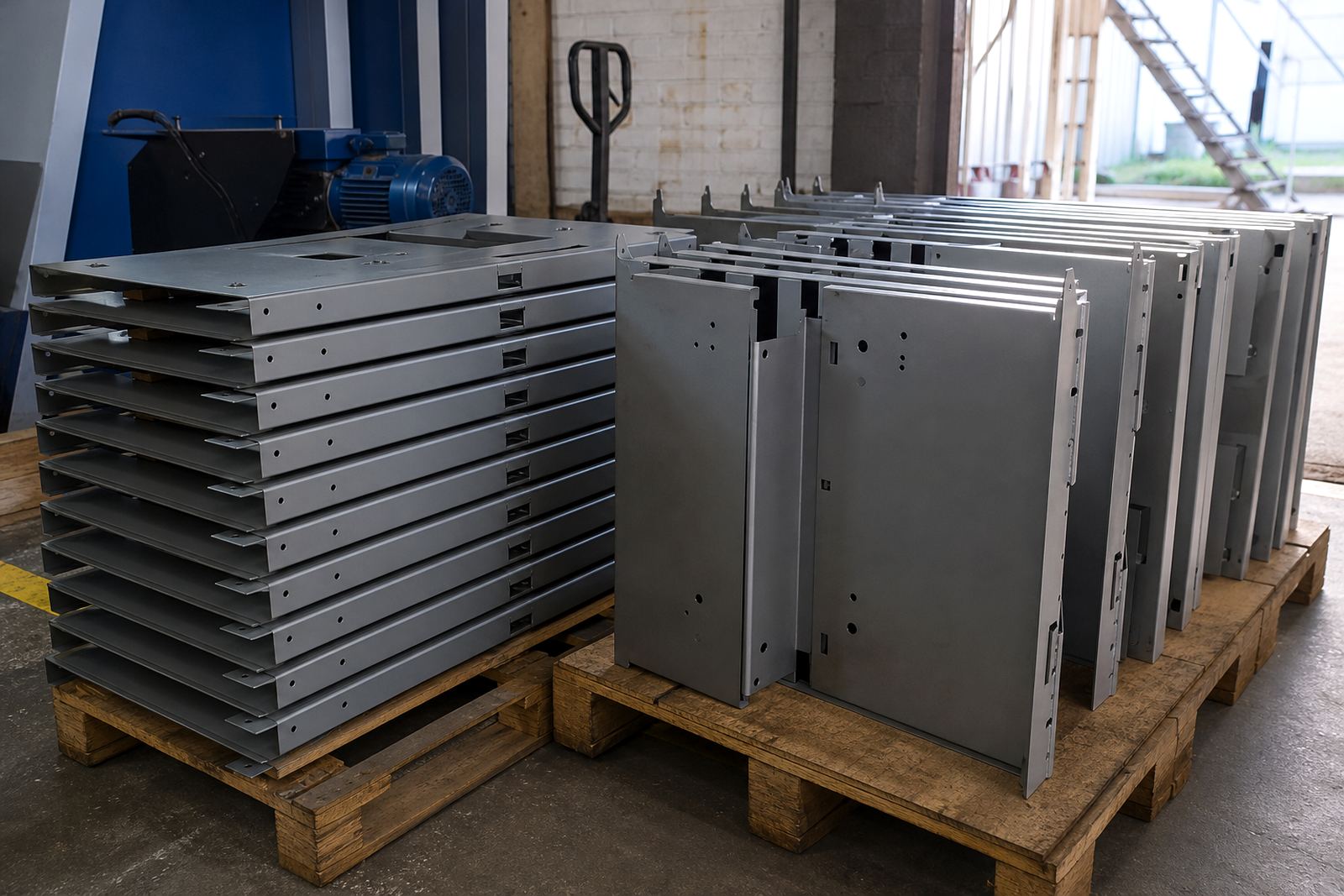
- Less rework from burrs, edge nicks and handling damage
- Faster transfer from laser cutting to bending and assembly
- Improved safety for staff handling freshly cut sheet metal
- More predictable output on repeat jobs and small batches
There was also a knock-on effect in planning. Because finishing time became easier to estimate, the workshop could schedule jobs with less guesswork. That matters when you are balancing urgent work, supplier lead times and customer collections in Cape Town traffic. The machine paid for itself in saved labour and fewer interruptions, not in one big dramatic moment but in the steady reduction of stoppages.
What we would repeat on the next site
If we were doing the same job again for another Western Cape workshop, we would follow the same approach: review the actual part mix first, map the material flow second, then choose the machine around the bottleneck rather than the catalogue. That is what made this project work. The equipment suited the job, and the job suited the equipment.
We would also recommend early input from the operators who handle laser output every day. They notice the small things first, like edge burr patterns, loading height, and where parts get snagged during transfer. Those practical details shape the final setup more than a brochure ever could. When the team buys into the process from the start, adoption is quicker and the machine earns its keep sooner.
For shops in Montague Gardens, Epping, Paarden Eiland and the wider Cape Town area, this type of project usually comes down to one question: where is the time being lost between cutting and assembly? Once that is clear, the right deburring and edge-finishing setup can remove the choke point without creating a new one.
Key facts
| Project location | Montague Gardens, Cape Town |
|---|---|
| Client type | Medium-sized sheet metal workshop |
| Material focus | Laser-cut mild steel sheet |
| Thickness range | 0.8 mm to 6 mm |
| Working width | Up to 1250 mm |
| Timeline | 2 weeks installation and training |