The Pinetown Workshop Brief
The client was a medium-sized metal fabricator in Pinetown, serving local industrial customers and a steady run of repeat orders. Their laser cutting output had increased, but the finishing area was slowing the line down. Parts were stacking up between cutting and dispatch, and the team needed a cleaner way to remove burrs, break sharp edges and keep parts moving.
The brief was straightforward enough: add a deburring cell that could handle larger daily part volumes, improve edge consistency and fit into the available floor space without disrupting the rest of production. The workshop also wanted a setup that could be managed by existing staff, not a line that would need constant supervision. They were running through the usual local pressures too, including power cuts, mixed batch sizes and tight lead times on short orders.
Constraints On Site And What Had To Fit
Space was limited, so the cell had to work in a compact footprint with clear infeed and outfeed movement. The floor was already busy with cutting tables, racks, packing space and fork-truck access, so we planned the layout around safe part flow and minimal cross-traffic. The client also wanted to avoid dust build-up around the finishing area, especially with the kind of fine metal residue that collects after repeated processing.
Because the workshop is in the greater Durban area, humidity was another factor. Exposed parts and spares need sensible storage, and the machine had to be positioned for regular cleaning and easy access to wear items. Load-shedding was also part of the picture, so the process needed a start-up routine that would not waste time after outages. That shaped the controls, the operating sequence and the maintenance approach.
- Available floor space: compact cell arrangement with direct infeed and outfeed
- Material mix: laser-cut mild steel and stainless sheet parts
- Production issue: bottleneck at deburring and edge finishing
- Site condition: coastal humidity, dust control and routine power interruptions
What We Supplied For The Cell
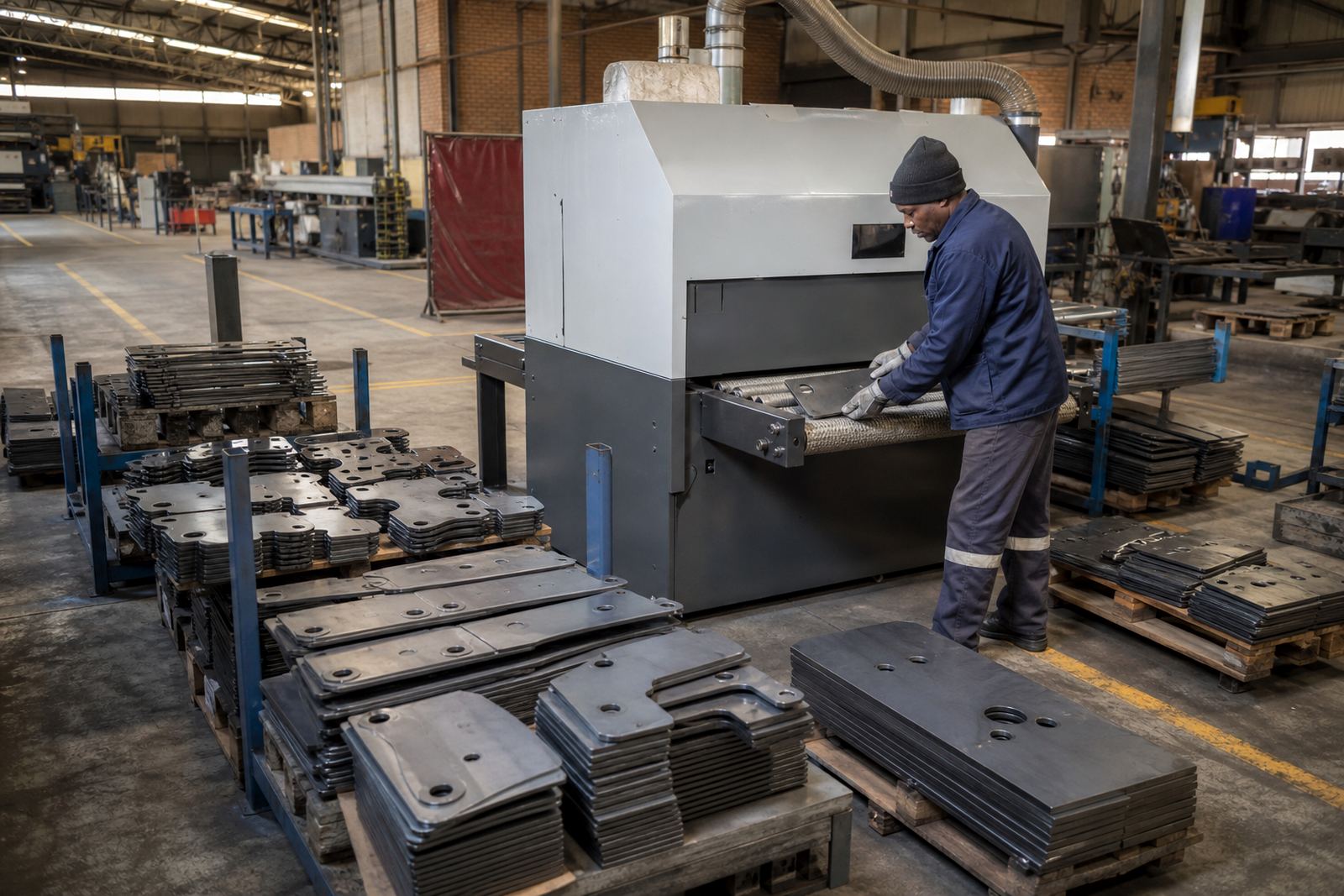
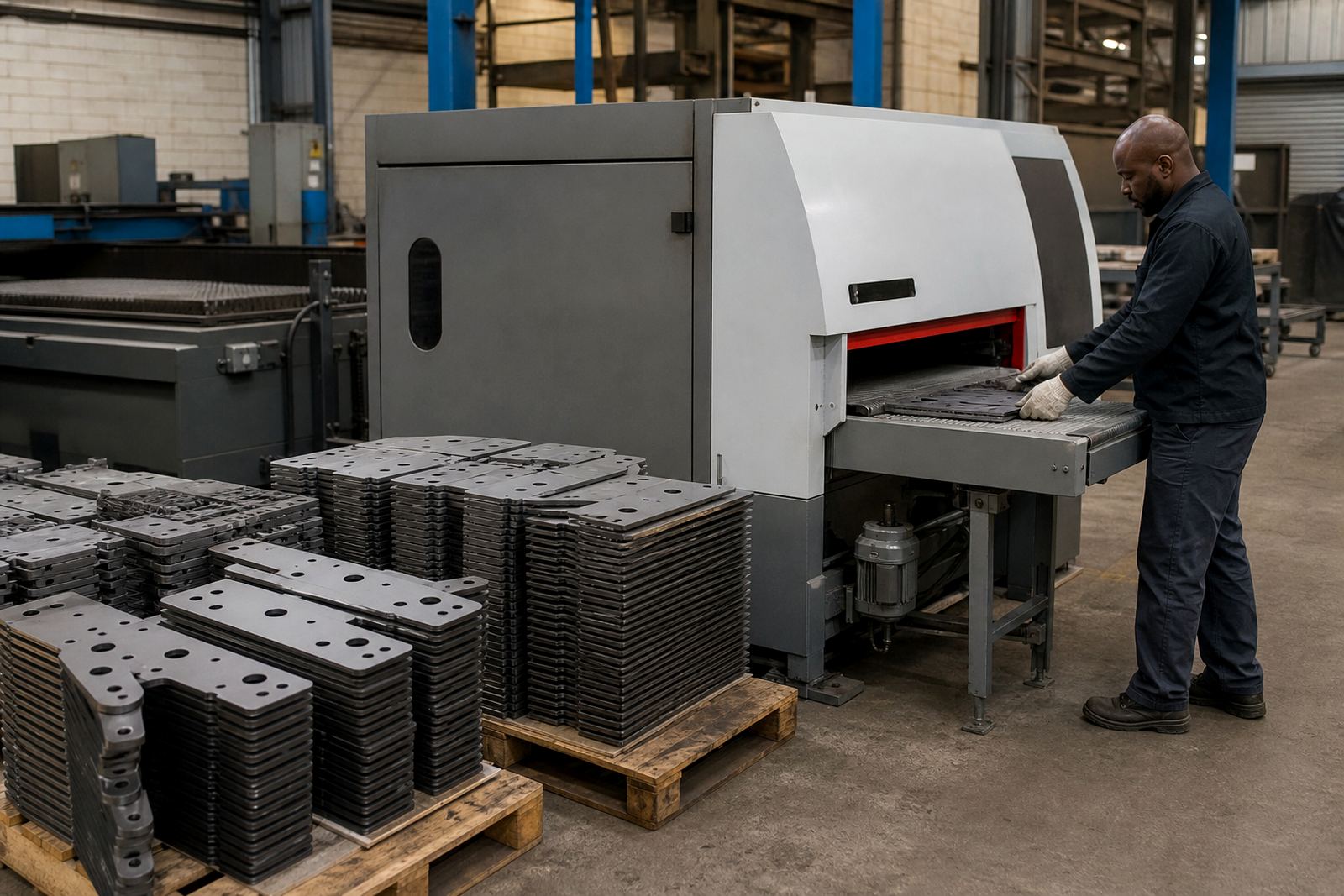
We supplied a deburring and edge-finishing machine set up for laser-cut sheet metal, with a working width suited to the client’s common part sizes and enough capacity for daily production runs. The machine was configured to remove dross, soften sharp edges and give a consistent finish before parts moved to bending, welding or assembly. We also supplied the supporting equipment needed to keep the cell practical, including extraction considerations, operator stations and a clean transfer point for finished parts.
The main aim was not just to sand parts, but to standardise the finish. In laser-cut work, that matters. One bad edge can hold up folding, scratch coated parts or create problems during assembly. The machine spec was chosen so the workshop could process mixed batches with less manual handling and fewer parts going back for touch-up. That means better repeatability, and less rework at the end of the day.
- Working width: 1000 mm class machine for typical sheet metal parts
- Material range: mild steel and stainless steel laser-cut components
- Process result: burr removal, edge rounding and surface conditioning
- Control style: simple operator settings for repeat work and batch changes
Installation, Training And Start-Up In 3 Weeks
The project ran over three weeks from final layout approval to commissioning. In week one we confirmed the floor plan, material direction and loading position. In week two the machine was installed, levelled and connected into the workshop flow. In week three we completed operator training, sample part testing and handover checks on the parts the client runs most often.
We trained the team on safe loading, speed selection, abrasive wear checks and cleaning routines. We also showed them how to adjust settings for different sheet thicknesses and how to keep the finish consistent across mixed batches. A few test pieces needed small changes on the first run, which is normal, but once the settings were dialled in the cell settled into a steady routine. The workshop manager wanted a clear maintenance plan from day one, so we left them with a practical service schedule and spares list.
Results After The Cell Went Live
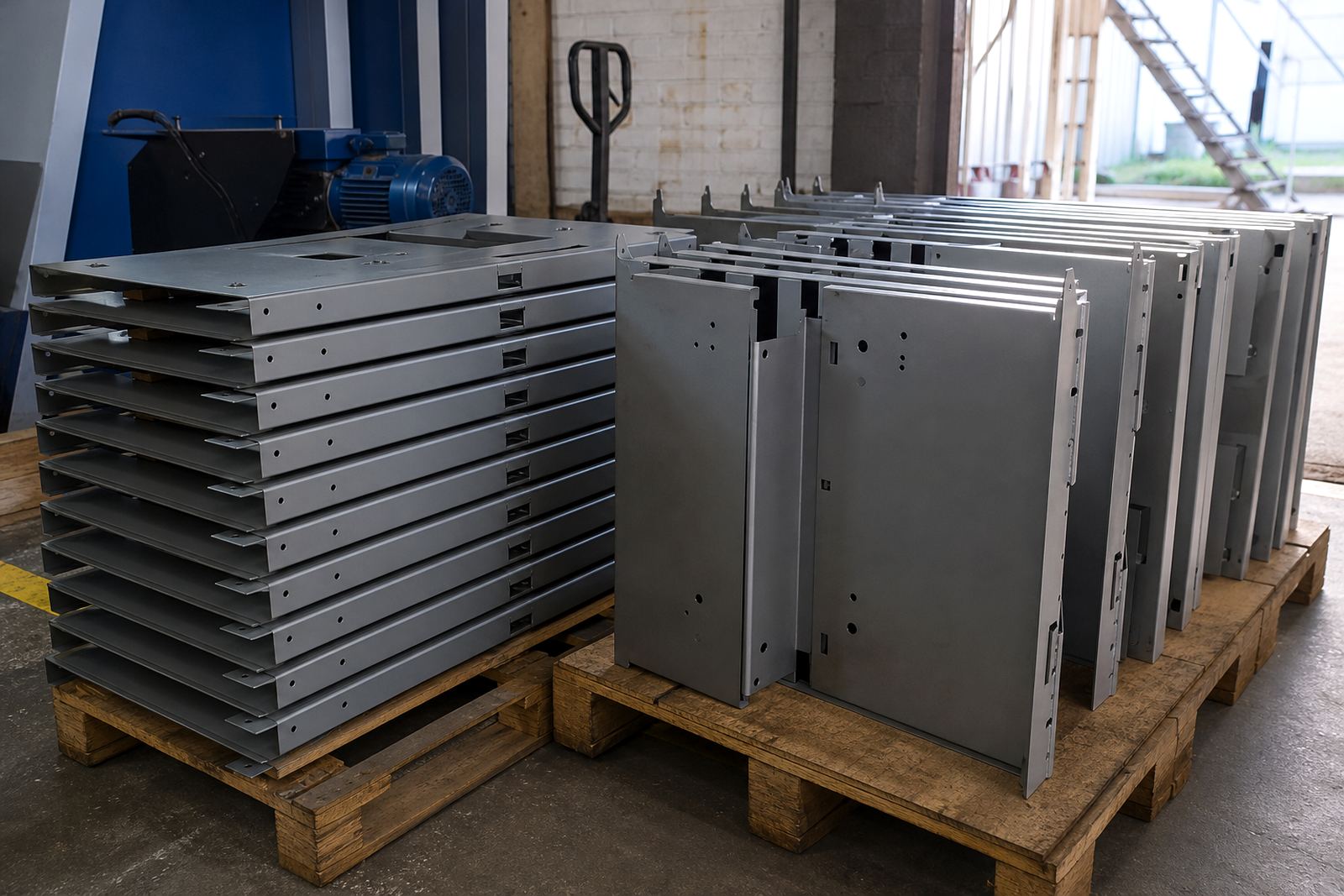
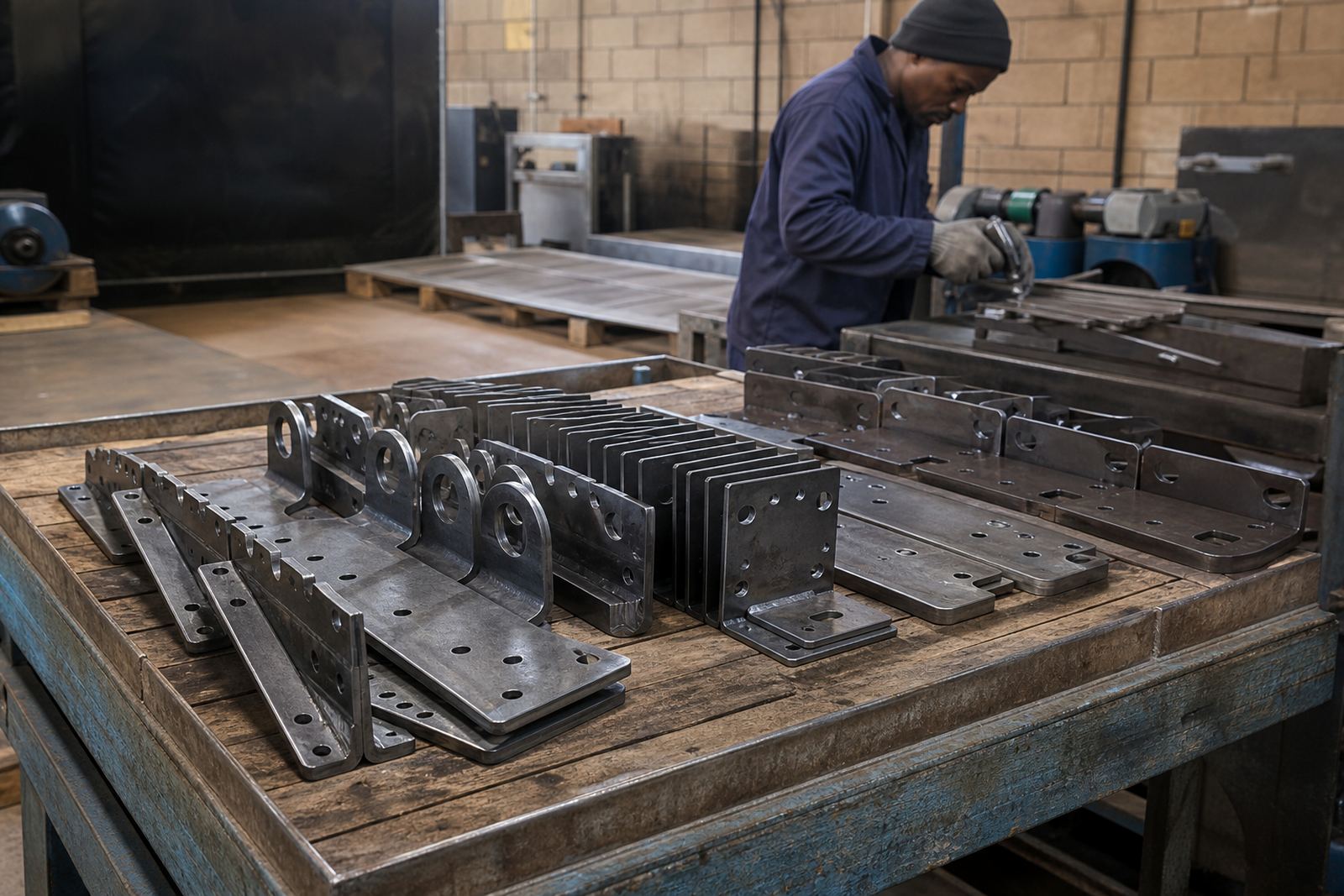
Once the cell was running, the workshop saw a cleaner handover between cutting and the next stage of production. Parts no longer sat waiting for manual edge work, which helped keep the cutting department moving. The improved finish also reduced the amount of sorting and rechecking at packing, and the team reported fewer sharp-edge complaints from downstream operators.
The biggest gain was consistency. With a set process in place, the workshop could process more parts per shift without sending staff back and forth for touch-ups. That matters in Pinetown where many fabricators are handling smaller batches for different customers in the same week. The new setup gave them a better way to absorb that mix, while still keeping output stable. It also helped reduce waste from overworking parts by hand, which had been costing time and abrasive stock.
- Higher daily throughput on laser-cut parts
- Less manual edge work and fewer touch-ups
- Better finish consistency across mixed batches
- Cleaner flow from cutting to bending and assembly
What We Would Do Again On A Similar Project
We would approach a similar job the same way: start with the actual part mix, not a general idea of what the workshop wants to process. That means checking the common sheet sizes, the thickness range, the heaviest daily volume and the next step in the production chain. It also means allowing for real site conditions, including power interruptions, floor access and how the team loads material during a busy shift.
For a workshop in KwaZulu-Natal, we would again recommend clear maintenance access, proper storage for wear items and a short operator training session before the machine goes live. A deburring cell works best when it fits the people as well as the parts. If the layout is awkward, the machine gets underused. If the process is simple and the support is local, the team keeps it in service and the finish stays dependable.
Key facts
| Project location | Pinetown, KwaZulu-Natal |
|---|---|
| Client type | Medium-sized laser cutting and metal fabrication workshop |
| Project timeline | 3 weeks from layout approval to commissioning |
| Machine type | Deburring and edge-finishing machine for laser-cut sheet metal |
| Typical material | Mild steel and stainless steel sheet parts |
| Main outcome | Higher throughput with cleaner, more consistent edge finishing |