Why enclosure parts need edge finishing before assembly
Electrical enclosure work leaves very little room for rough edges. A small burr on a door cut-out can scratch powder coat, cut seals, or stop a hinge from sitting flat. On mounting plates and gland plates, sharp edges also slow down assembly because fitters must stop and dress each part by hand. That adds time, and the finish can still vary from one operator to the next.
For manufacturers in Wadeville, Germiston, Johannesburg, Pretoria, Durban, Cape Town and Rustenburg, the aim is consistent parts that go straight from laser cutting to deburring, then on to bending, welding, coating and final assembly. That is where a dedicated machine earns its keep. It gives a repeatable edge finish, helps reduce rework, and keeps the line moving even when orders change sizes through the week.
In South African workshops, the pressure is usually on throughput and labour use. Many teams are running mixed batches of small wall-mounted enclosures, floor-standing cabinets and internal plates, often under load-shedding constraints. A properly planned deburring station helps you avoid a bottle-neck at the back end of production, and it also keeps hand finishing to a minimum which is where quality often slips.
Typical machine set-up for enclosure production
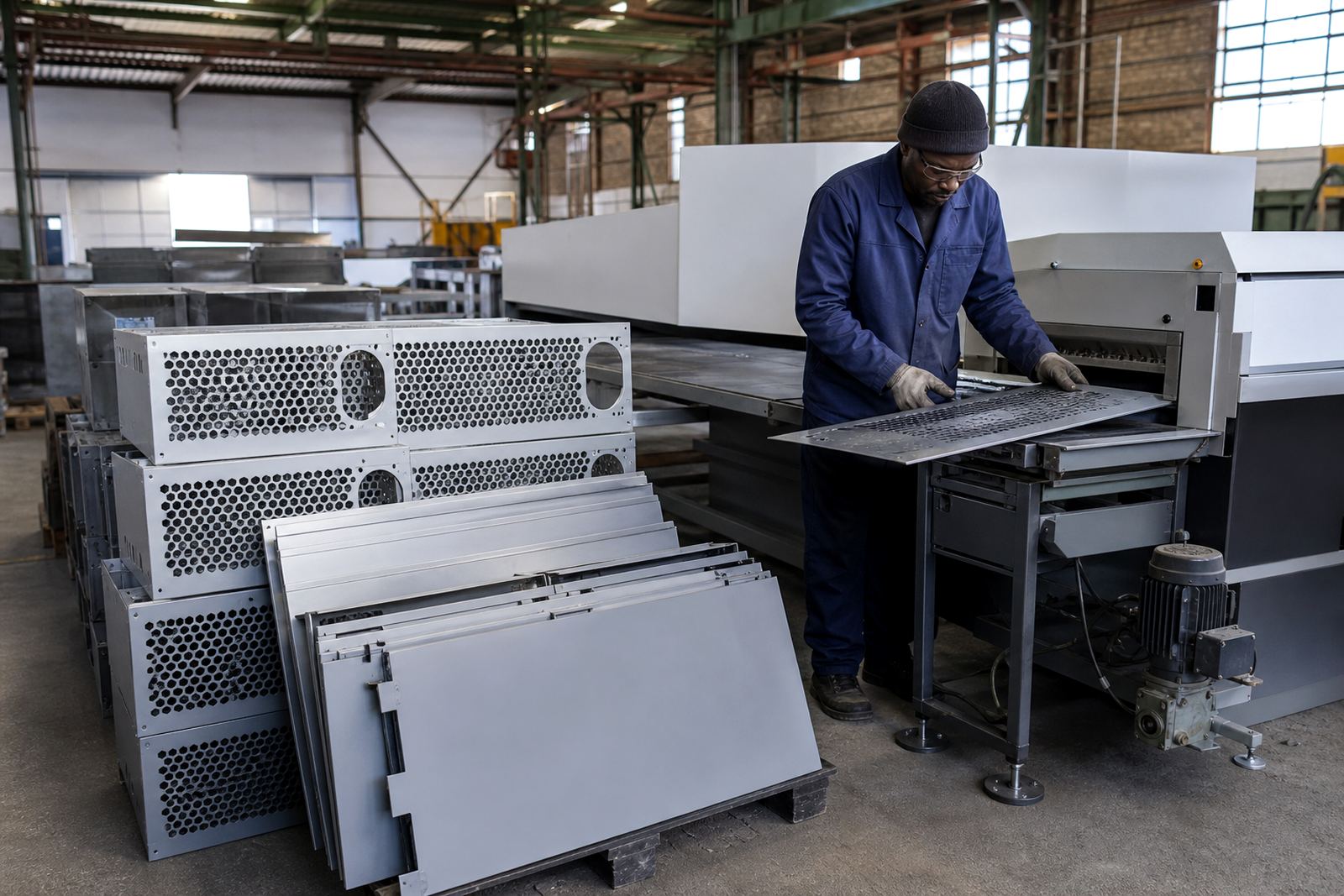
Most enclosure shops use laser-cut mild steel, stainless steel or aluminium sheets in common thicknesses from 0.8 mm to 3 mm, with some heavier plate work on mounting frames. A good deburring set-up usually includes a conveyor feed machine with one or more finishing stations, depending on the edge condition and the coating spec. For enclosure manufacturers, the key is controlled edge rounding without distorting the sheet or leaving swirl marks that show through paint.
The right machine choice depends on part mix. If you produce many flat sheets, doors and side panels, a wide-belt finishing machine with adjustable pressure is often enough. If your parts come with heavier slag or dross from laser cutting, you may need a stronger first-pass removal stage before the final edge finish. Some workshops also benefit from a separate brush station for light oxide removal on mild steel before powder coating. The layout should allow parts to travel in one direction from cutting to finishing to bending or assembly, not back and forth across the shop.
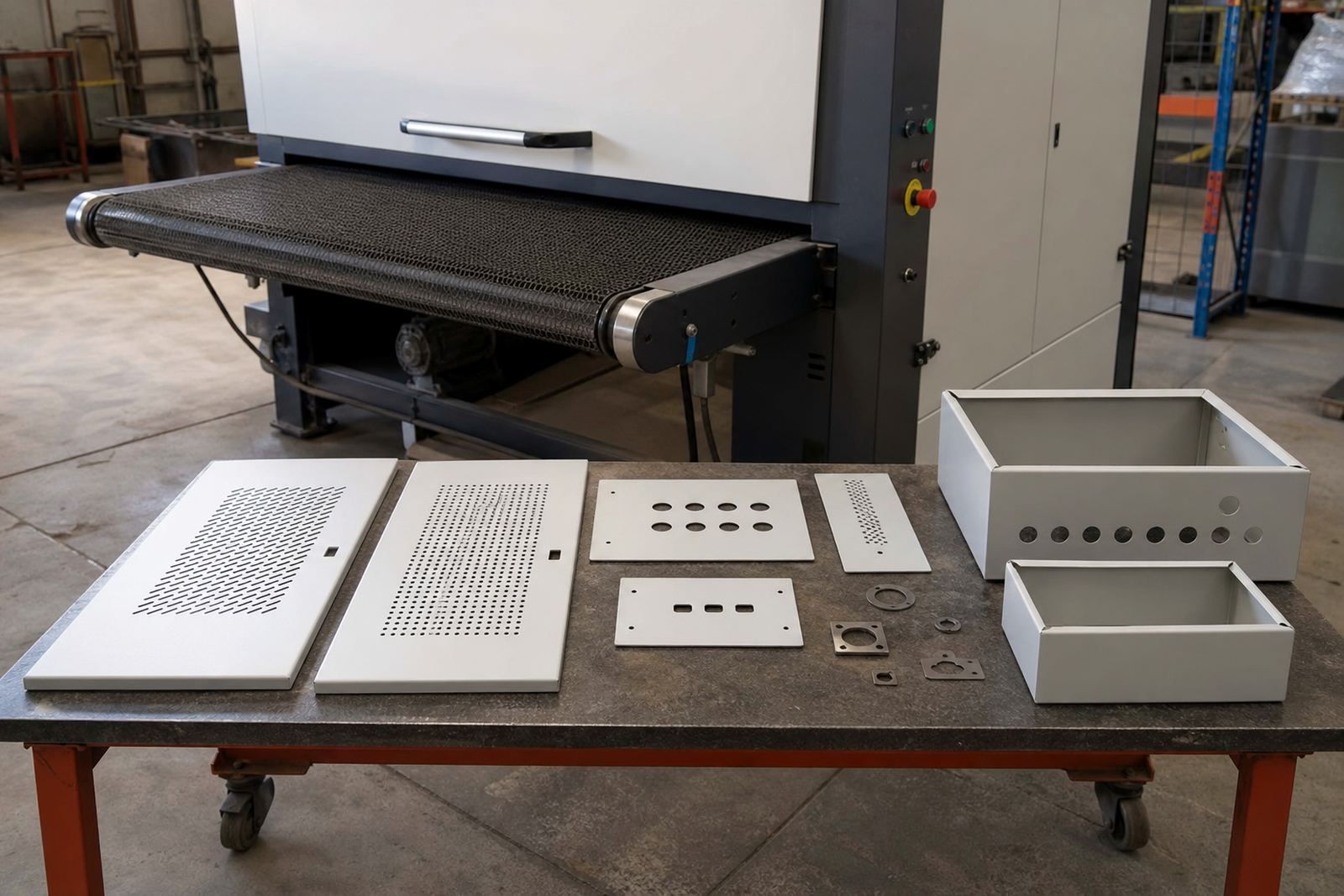
- Laser-cut doors and side panels with cut-outs for hinges, vents and locks
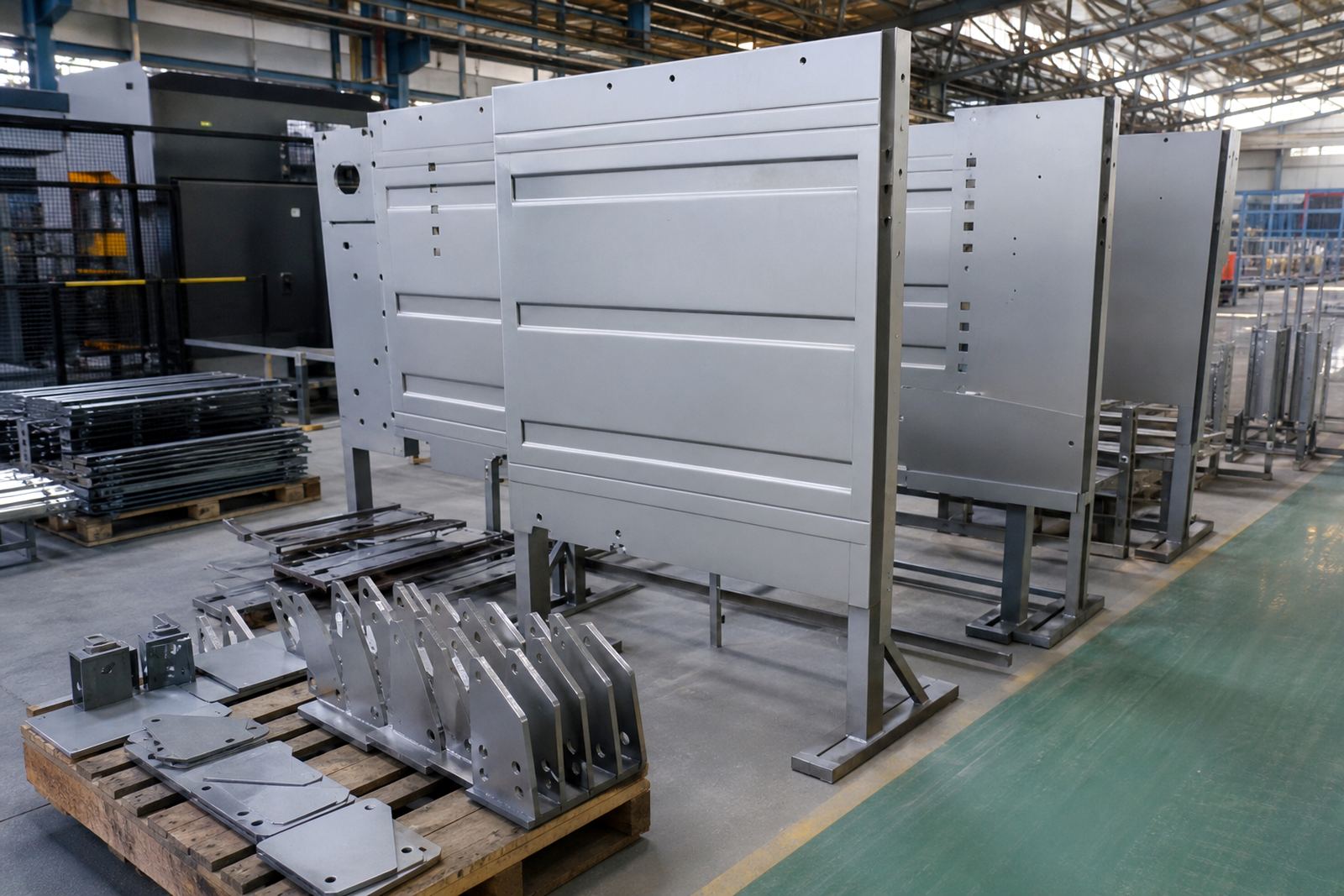
- Mounting plates, gland plates and back panels that must sit flat
- Stainless steel parts where surface marks must be kept under control
- Small batch work and repeat production on the same machine setting
Planning the line so the machine supports production
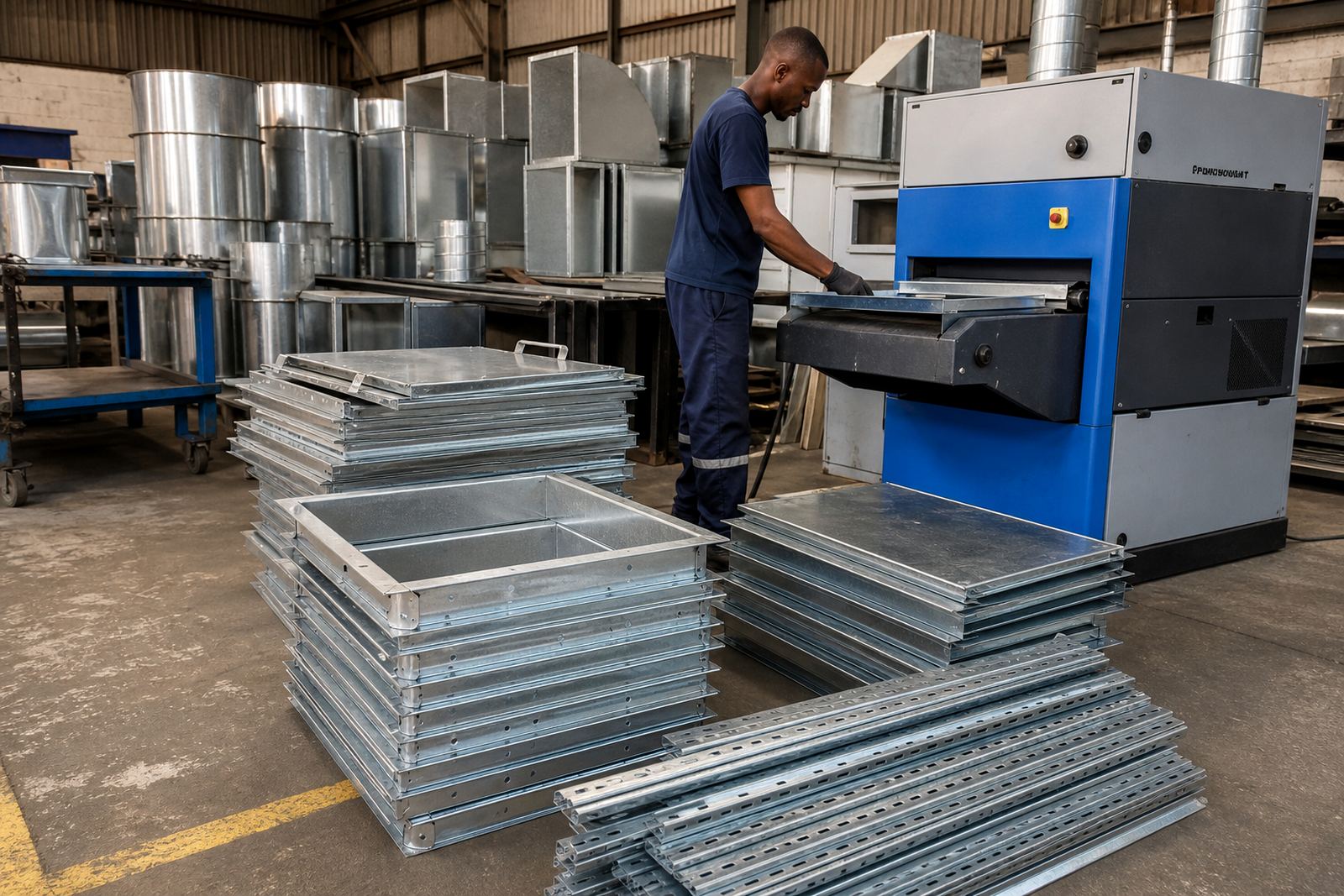
Before buying a deburring machine, map the full route of the part through the workshop. In many enclosure plants, the problem is not only the machine itself, but the floor space around it. You need enough infeed and outfeed room for full sheets, safe handling space for one or two operators, and clear access for maintenance. If the machine sits too close to the laser or the powder coating area, dust and scrap can become a problem. If it sits too far away, handlers waste time moving parts around the shop.
In Germiston and the East Rand, many factories work in older industrial buildings with limited power supply and uneven floor space. That makes planning important. Check the electrical load, the extraction needs if dry dust is involved, and whether you need roller tables or lift assist for heavier sheets. We also look at how parts are stacked after cutting, because scratches during handling can undo the benefit of clean edging. A practical layout keeps the process simple and the path short, so the machine is used often enough to justify it.
- Allow for full sheet handling if you process large door blanks or cabinet sides
- Keep the finishing line close to the laser cutting area to reduce transport damage
- Plan for dust extraction and cleaning access, especially in stainless work
- Set a fixed inspection point for first-off parts after machine set-up
Common mistakes that cost time and money
A frequent mistake is choosing a machine for one type of part only, then finding it struggles with the rest of the workload. Electrical enclosure makers often mix thin sheet with heavier plate, or mild steel with stainless. If the machine settings are too aggressive, delicate panels can warp or show surface damage. If they are too light, burrs remain and operators still need to hand finish the parts. The result is a machine that sits under used and does not solve the actual problem.
Another issue is skipping sample testing. In enclosure work, a door cut-out can look fine until the fitter tries to mount a latch or gasket. Sample part testing shows what the edge really looks like after one pass, and whether a second pass is needed for certain materials. It also helps you judge the finish before coating. That saves a lot of frustration later, especially when customer specs are strict on appearance and edge quality.
Teams also forget about maintenance discipline. Brushes, abrasive belts and wear parts need checking on schedule, not only when the finish gets poor. In South African conditions with dust, heat and occasional power interruptions, small problems can turn into bigger ones fast. Preventive care keeps the machine steady and reduces breakdown repairs when work is already behind.
Budget ranges for enclosure manufacturers in Rand
Budget depends on sheet size, finish requirement and how much automation you need. For smaller enclosure shops focused on light duty parts, entry level machines can start from about R350 000 to R650 000. Mid-range machines suited to steadier production and mixed sheet thicknesses often sit between R700 000 and R1.4 million. Heavier duty lines with multiple finishing stages, better dust control and higher throughput can move from about R1.5 million to R3 million or more.
When planning the spend, do not look only at purchase price. Add machine installation, operator training, preventive maintenance, abrasive replacement, spares supply and any relocation support if the line must fit into an existing workshop. If you are replacing a manual finishing station, include the labour saving and the reduction in rework. For many enclosure producers, the value shows up in faster assembly, fewer coating defects and more predictable output.
It is also worth budgeting for annual service contracts and a machine audit after the first few months of use. That helps keep the line aligned with your actual workload, not just the original estimate. If your production changes from small cabinets to larger switchboard doors, settings and handling may need to be adjusted.
Where Deburring supports enclosure production nationwide
Deburring works from Wadeville, Germiston and supports enclosure manufacturers across South Africa through local demos, service visits and practical process advice. Our team helps with machine installation, operator training, sample part testing, process optimisation and production planning help. We also support customers with breakdown repairs, spares supply, abrasive replacement, relocation support and annual service contracts.
For shops in Johannesburg, Pretoria, Durban, Cape Town and Rustenburg, the goal is the same: clean edges, steady output and less hand work before coating and assembly. Whether you are making compact wall boxes or larger industrial enclosures, we can help match the machine to the mix of parts and the pace of your factory. That includes support for new lines and for workshops that need to lift quality without blowing the budget.
If your team is dealing with rough laser edges, coating defects or too much manual touch-up, a proper deburring set-up can change the whole flow of the job. It is a practical investment, not a showpiece, and it should earn its place on the floor every day.