What truck body builders need from finishing equipment
In a body shop, the cut is only the first step. Side panels, floor members, hinge plates, gussets and reinforcing strips still need burr removal and edge finishing before welding, powder coating or final fitment. If those parts go through with sharp edges, you get scratched hands, poor paint adhesion and rework on the floor.
For truck body builders in Johannesburg, Germiston, Pretoria, Durban, Cape Town and Rustenburg, the main pressure is throughput. A fabricator may be running laser-cut mild steel in batches for dropsides, load bins, tippers or trailer bodies, then needs a clean edge every time. Our machines are set up for that work, with repeatable finishing on sheet metal used in body and trailer building.
Many shops still rely on grinders, flap discs and hand files for edge cleanup. That works for one-off jobs, but it slows production when you are building a run of identical panels. A proper deburring machine takes pressure off skilled welders and fitters, and gives a more even finish across the job.
Typical parts that benefit in body and trailer work
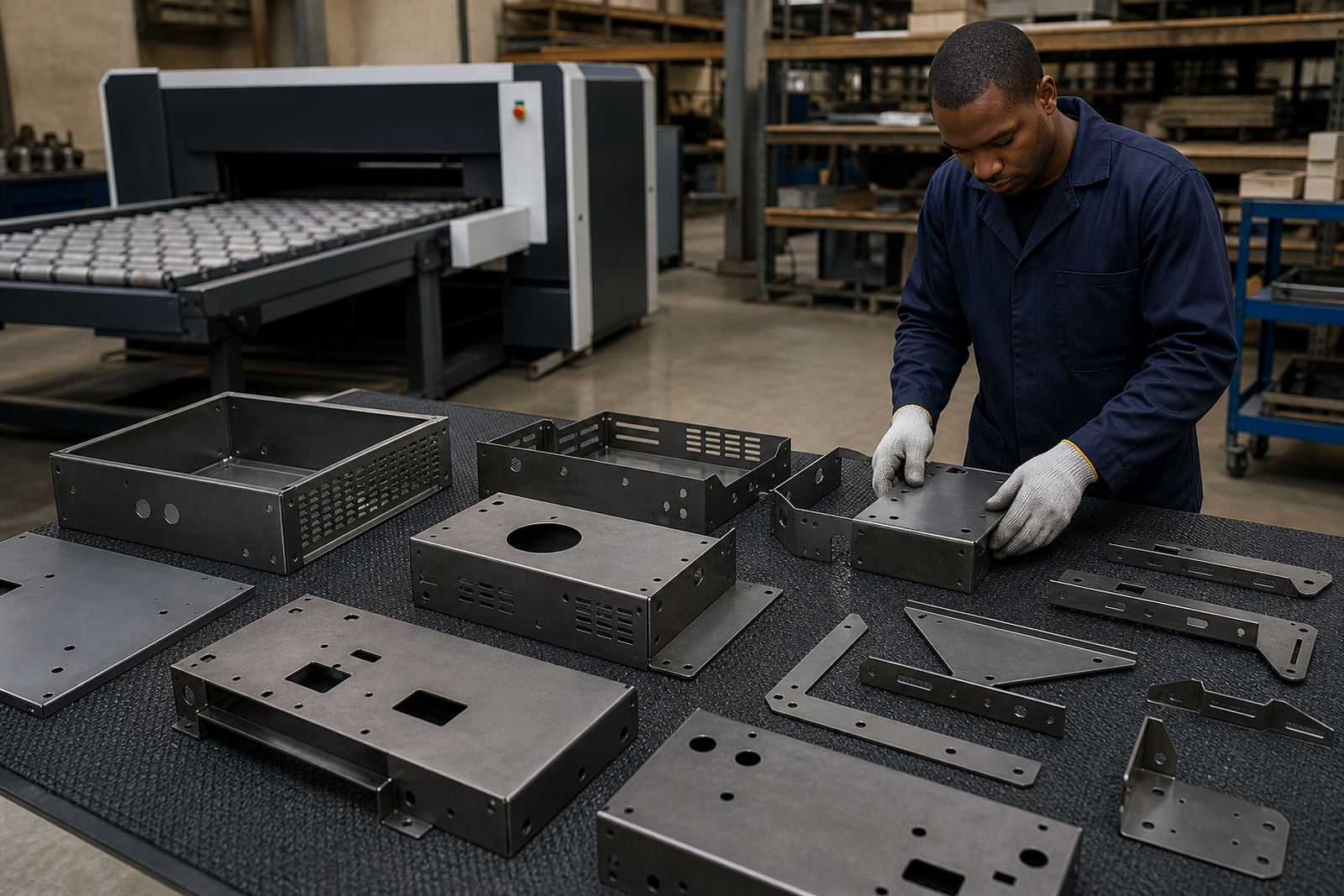
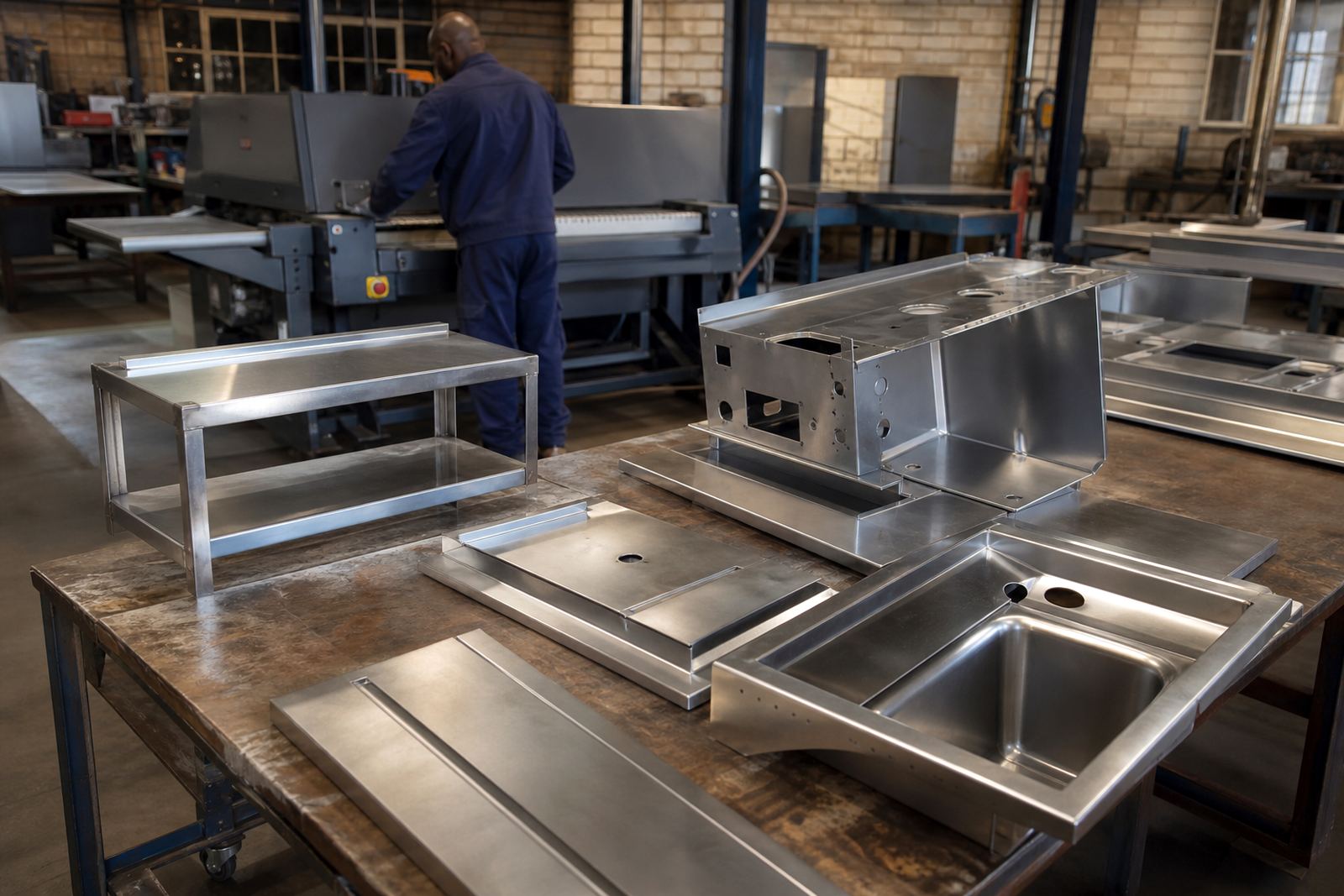
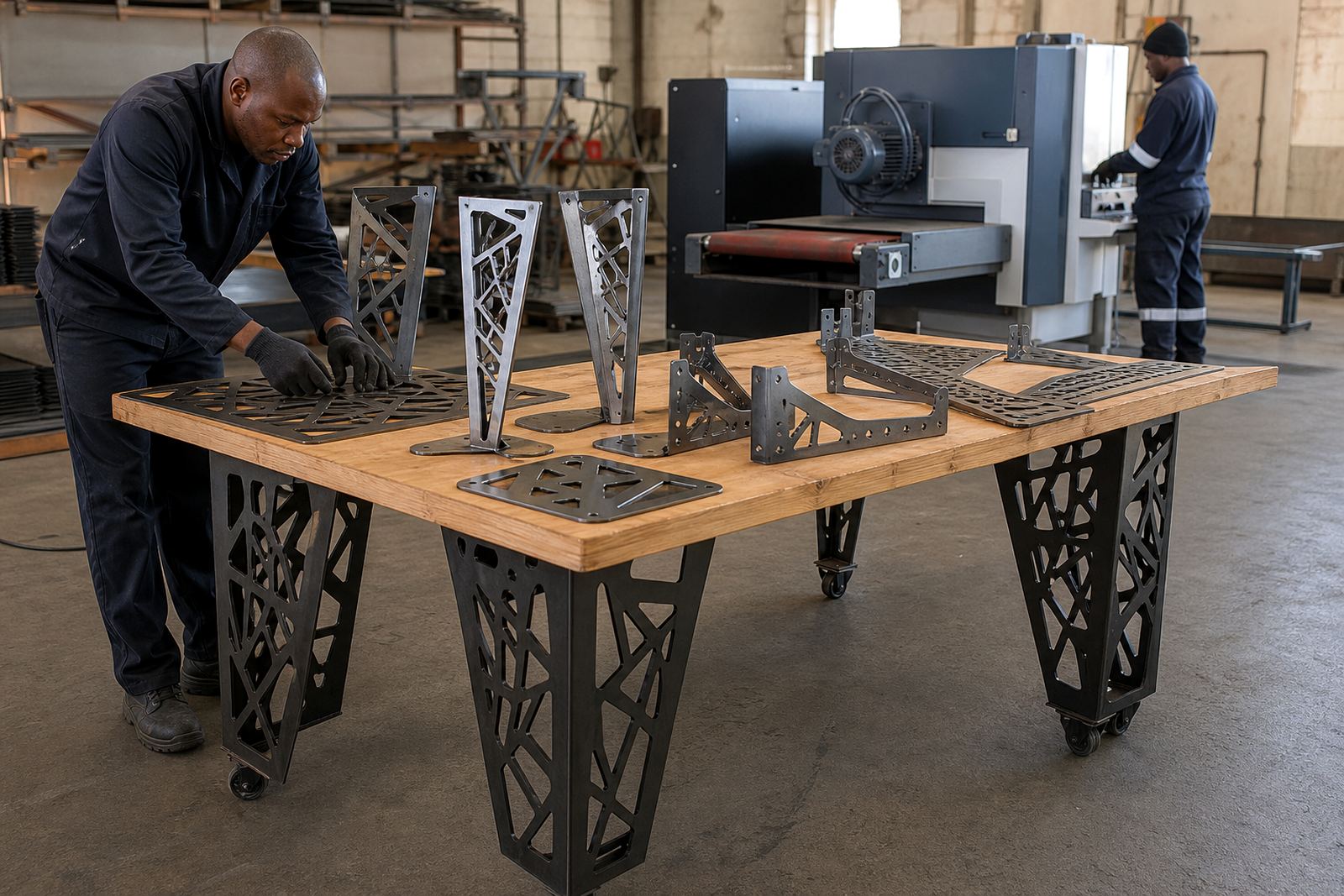
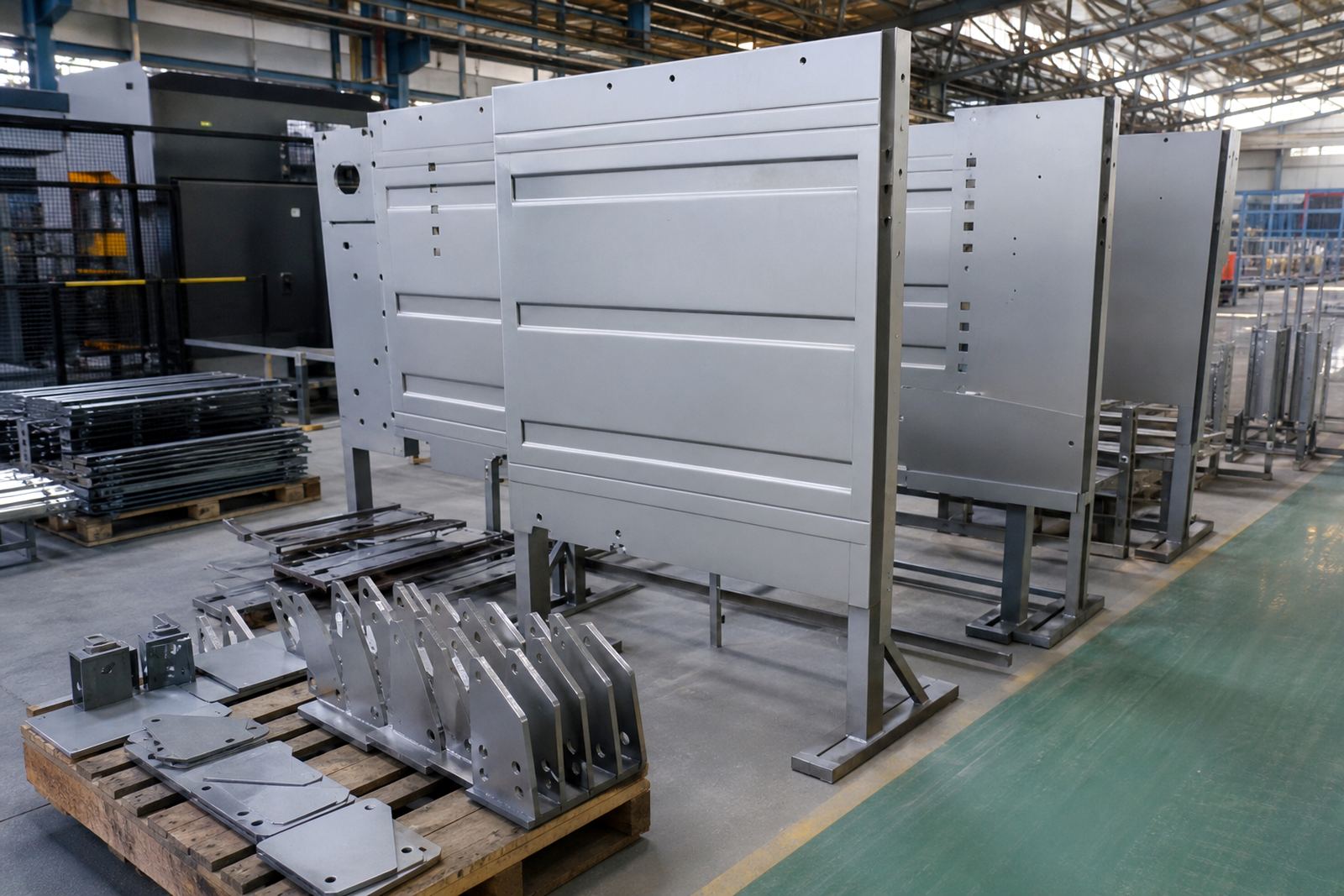
Truck body building covers a wide mix of parts, and most of them come off a laser or cutting table with sharp edges, small burrs or heat-affected lips. The right finishing setup helps on both visible and hidden components.
- Side panels and cladding sheets
- Brackets, cleats and hinge plates
- Reinforcement ribs and gussets
- Floor sections and cross-members
- Mounting plates for lights, locks and tie-downs
- Trailer body trims and frame supports
Coastal yards in Durban and Cape Town often face extra moisture and storage delays, so it helps when parts are finished cleanly before they go into stock. In inland plants, dust from cutting and grinding can build up fast. Either way, cleaner edges reduce handling damage and make the next process quicker.
For shops doing mixed work, the same machine can support small bracket batches in the morning and larger panel runs later in the day. That matters when your team is balancing contract body builds, repairs and urgent replacements for fleet customers.
How to plan the finishing area around the cut shop
Good layout makes a bigger difference than many shops expect. If laser cutting, deburring, drilling, welding and coating are all too far apart, parts get carried around the shop too many times. That adds damage risk and wastes man hours.
A practical plan is to keep the deburring machine close to the cut-off point, with a clear path to welding and assembly. For a mid-sized fabrication operation in Wadeville or the East Rand, the machine should sit where one person can load flat parts without fighting forklifts or trolleys. Leave enough space for infeed and outfeed, plus a clean area for stacked parts and labels.
- Place the machine near laser output, not across the shop.
- Keep compressed air and extraction lines easy to access.
- Allow for trolley parking and pallet movement on both sides.
- Plan lighting so operators can inspect edges properly.
- Separate finished parts from raw cut stock to avoid mix-ups.
Power supply also matters. In South Africa, load-shedding and voltage dips can interrupt production, so your finishing area should be part of the same continuity plan as the rest of the shop. That may include scheduling finishing during stable power windows or pairing the machine with your backup supply strategy.
Machine set-up choices for body builders
The right equipment set depends on the metal thickness, part size and daily volume. Some body builders only need edge-finishing for light sheet and small brackets. Others need a wider setup that can handle repeated runs of bigger side panels and reinforcement parts.
Our clients usually want a machine that gives consistent burr removal without overworking the material. That means choosing the right feed speed, contact arrangement and finishing method for the type of cut parts you produce. A sample part test is often the best starting point, especially if you are working with mixed gauge material or tight folded sections.
Common questions we help with include whether the shop needs a standalone finishing machine, what size opening suits the largest panel, and how the machine will fit beside existing bending and welding equipment. We also look at how many operators will use it, and whether the line should support one-off repair work or steady production batches.
- Light to medium sheet metal finishing for panel shops
- Edge cleanup for brackets and tabs before welding
- Consistent finishing for repeat production batches
- Support for coated parts that need careful handling
Our team in Wadeville supports machine installation, operator training, process checks and annual service contracts, so the equipment stays aligned with production needs after commissioning.
Common mistakes that slow down body building jobs
The biggest mistake is treating deburring as an afterthought. If the team leaves edge finishing until the end, the job queue builds up and finished panels sit around waiting for clean-up. That creates bottlenecks right before assembly and dispatch.
Another common issue is buying a machine that is too small for the longest or widest parts in the business. If your side panels need awkward handling to fit the machine, operators will avoid using it and revert to hand work. The result is mixed quality across the job.
We also see shops underestimating maintenance. Deburring machines need routine checks, abrasive replacement and basic cleaning. In dusty fabrication shops, that is especially important. If dust and swarf are left to build up, finish quality drops and downtime starts to creep in.
Other mistakes include poor operator training, ignoring sample part testing and not planning where finished parts will be stacked. A busy body shop can lose time fast if people are walking back and forth to find the right batch, or if sharp parts are mixed with coated stock.
Budget ranges and what South African fabricators usually allow
Budgets vary by machine size, automation level and the production rate you need. For truck body builders, it helps to think in terms of job flow rather than just purchase price. A lower-cost setup may suit a small repair and build shop, while a larger plant handling fleet work in volume may need a more capable machine with stronger support and faster throughput.
As a rough guide, South African fabricators often look at the following budget bands:
- Entry-level finishing support for smaller batches: from about R250 000 to R500 000
- Mid-range production setup for steady body work: about R500 000 to R1.2 million
- Higher-capacity systems for larger workshops: from about R1.2 million upward
Installation, training, relocation support and service cover should also be included in the planning. If a machine is going into a workshop in Durban, Cape Town or other high-humidity areas, it is worth budgeting for storage discipline and routine care as well. The cheapest option is not always the best value if it slows the line or needs too much manual finishing later on.
We help fabricators match the machine to the work, the floor space and the likely monthly output. That way the finishing step supports production instead of becoming another chokepoint.
Support for local body builders across South Africa
Deburring supports truck body builders from Wadeville, Germiston and across South Africa, including Johannesburg, Pretoria, Durban, Cape Town and Rustenburg. Our work covers machine installation, operator training, preventive maintenance, breakdown repairs, spares supply, machine audits, sample part testing and production planning help.
If your shop builds side panels, brackets, floor supports or trailer components, we can help you assess whether your current finishing step is holding production back. A short part test often shows where time is being lost and what kind of machine fit makes sense for the workload.
For many fabricators, the goal is simple: fewer sharp edges, less hand finishing and a cleaner part going into assembly. That saves time on the floor and gives a better result for the customer.