Why HVAC Parts Need More Than a Clean Cut
In ducting and ventilation work, the cut itself is only part of the job. A laser can leave a sharp edge, light dross, and heat marks that slow down assembly, handling and folding. When the same type of component is produced all week, those small defects add up fast.
Fabricators supplying offices, warehouses, hospitals and industrial plants across Johannesburg, Pretoria, Durban, Cape Town and Rustenburg usually want parts that fit first time. That means cleaner edges on panels, brackets, flanges, access doors and reinforcing pieces. It also helps reduce glove damage, scratches during stacking, and complaints from site teams who are fitting duct runs under pressure.
For HVAC work, the aim is not just a neat finish. It is repeatable parts that move from cutting to bending, welding and installation without extra touching up. That is where a deburring and edge-finishing machine earns its place on the floor.
Typical Equipment Set For A Ducting Line
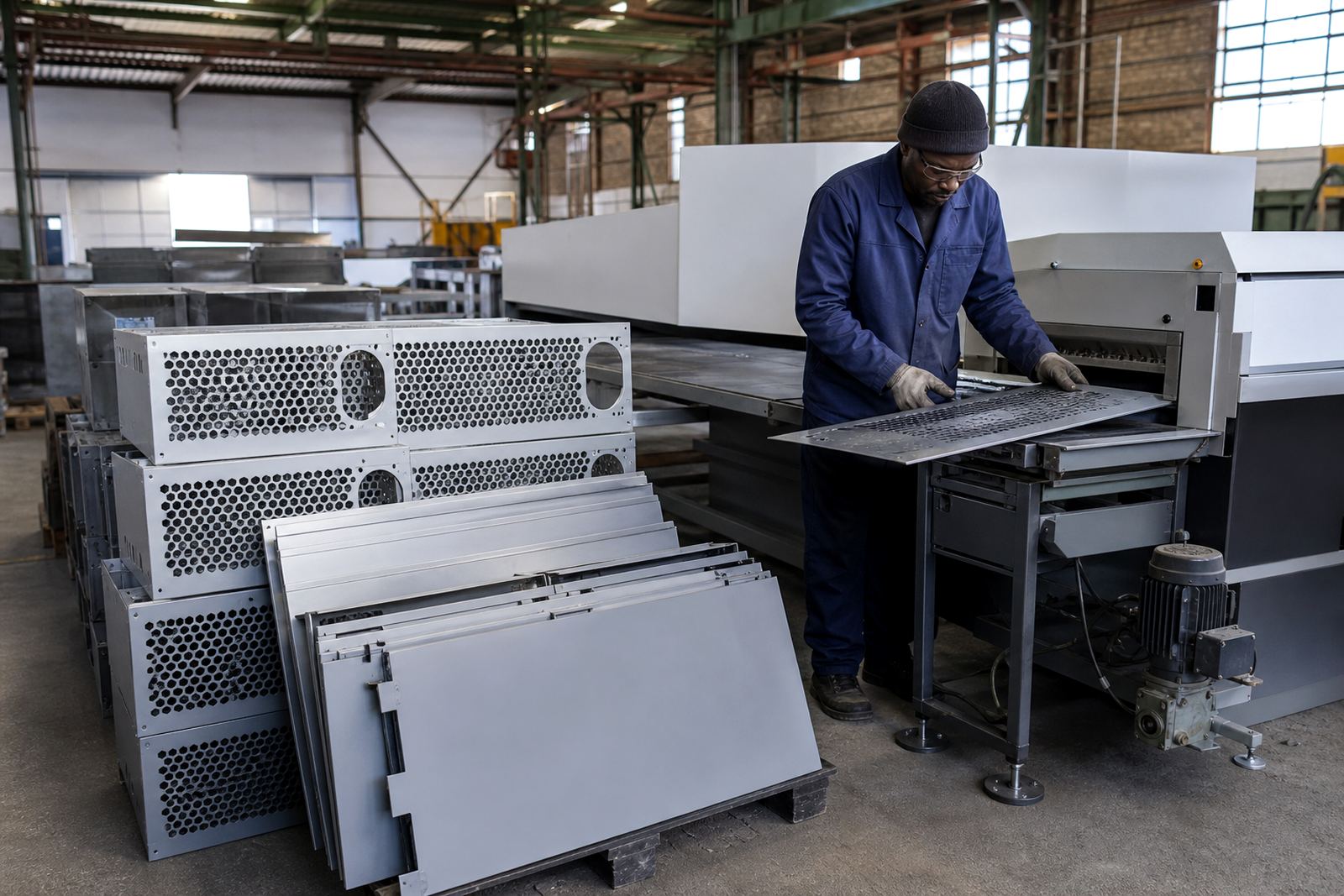
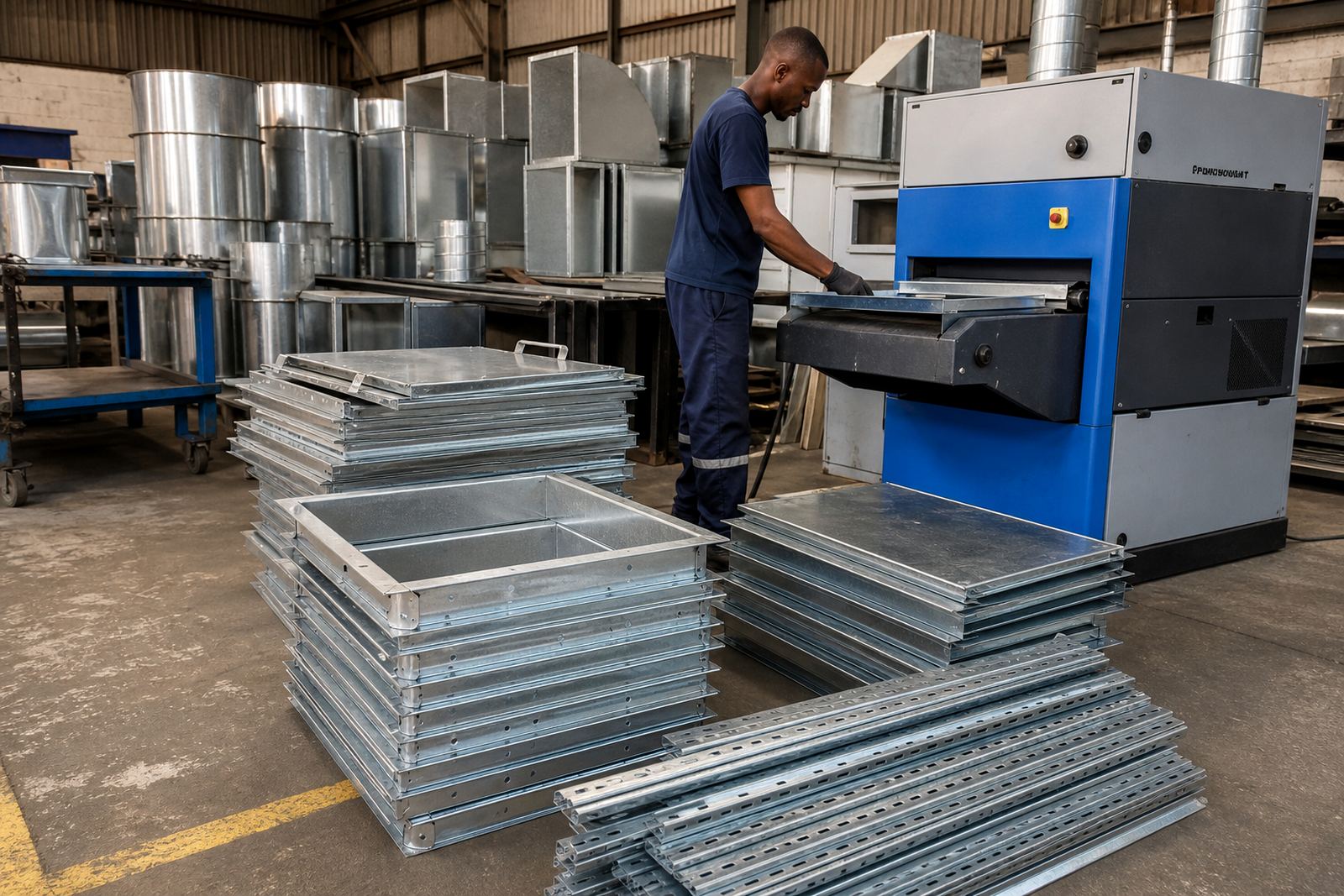
Most HVAC sheet metal shops do not need a huge, complicated setup to get better output. A practical line often starts with laser-cut sheets, a conveyor or transfer table, then a deburring machine set for sheet thicknesses commonly used in ducting and ventilation work. Depending on the product mix, the machine may be paired with a cleaning stage for dust and fine burr removal before folding or assembly.
In smaller shops, the machine is usually placed close to the laser and the folder so parts do not travel far. In busier plants, the deburring unit sits between cutting and the main fabrication area, with enough space for offload, inspection and rework if needed. A good layout keeps parts moving in one direction, instead of doubling back through the shop.
- Laser-cut sheet metal from mild steel or stainless steel
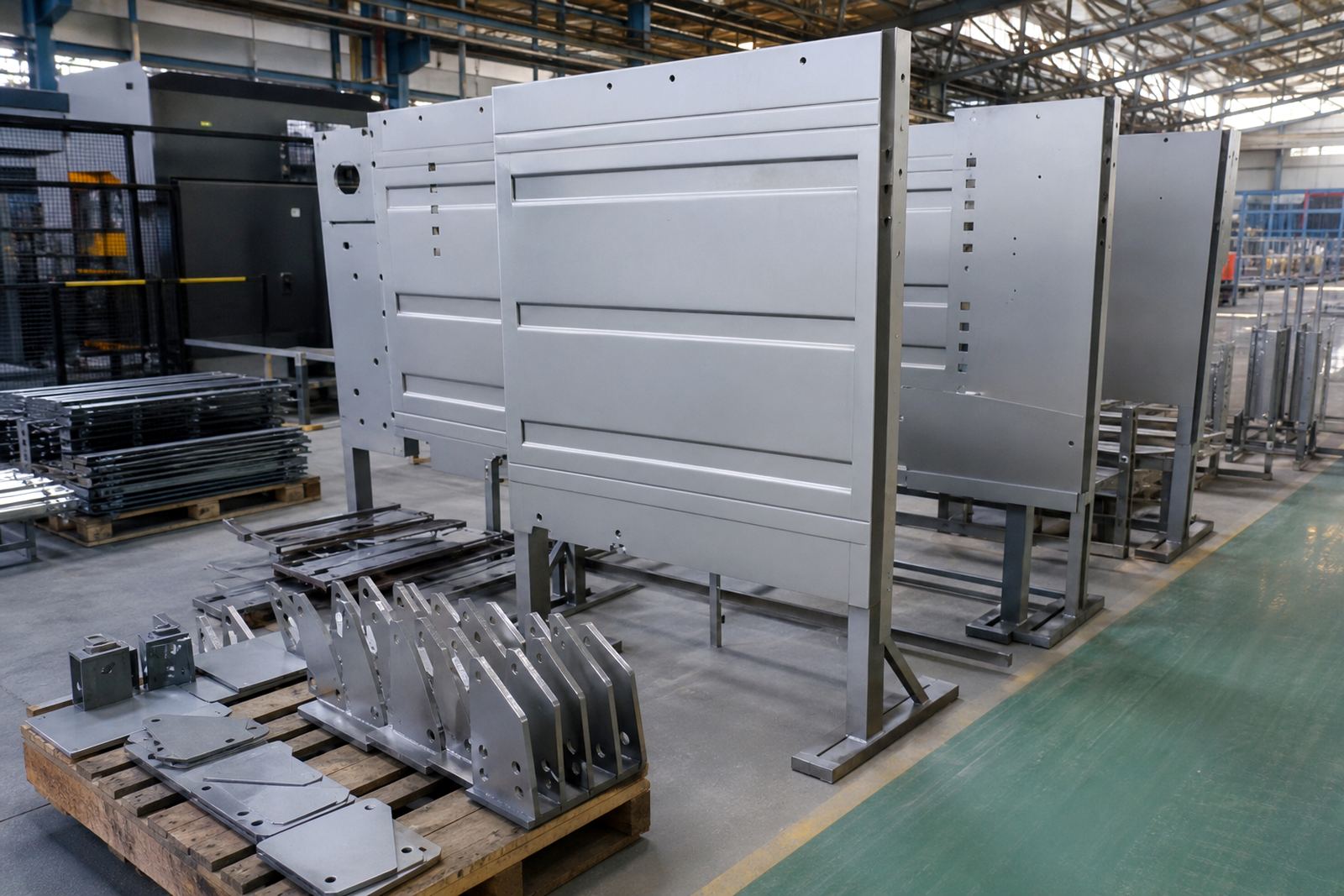
- Flat panels for ducts, fittings, access doors and covers
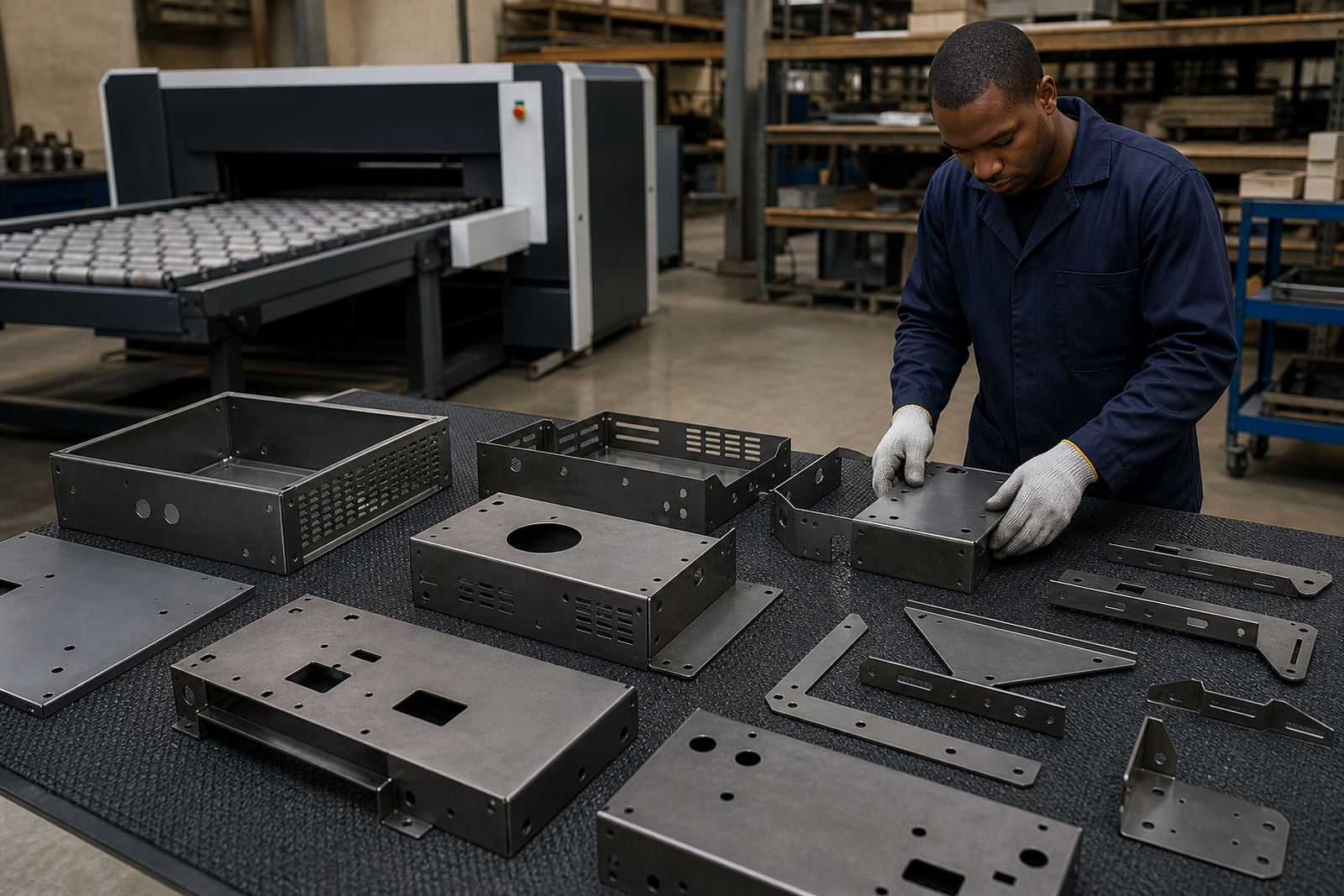
- Parts with internal cut-outs, slots and hole patterns
- Small to medium batch work with repeated sizes
- Edges that must be safe to handle before folding and assembly
Where humidity is a factor, especially in coastal areas like Durban and Cape Town, shops also need to think about storage and machine care. Fine dust and moisture together can make maintenance harder, so a routine cleaning plan matters.
Planning The Shop Layout Around Repetitive Parts
HVAC work often looks simple from the outside, but the volume can be steady and unforgiving. Planning should start with the part sizes you run most often, then the amount of floor space needed for sheet handling, stacking and operator movement. If the machine is too far from the laser or folder, the job loses time at every lift.
For Wadeville, Germiston and the East Rand, many fabricators work in mixed premises where space is tight and power supply can vary. That makes it worth checking the electrical supply, dust extraction, and loading route before any installation. If the shop has to cope with load shedding, a backup plan for lighting, control equipment and downstream handling is worth sorting early. A machine can only help if the rest of the process keeps moving.
Good layout planning should also cover safety and access. Operators need a clear path for sheets, enough room for inspection, and space for maintenance without blocking production. If the same line also handles general fabrication jobs, mark out zones for HVAC parts so they do not get mixed with heavier plate work or sharp offcuts.
- Keep the laser, deburring unit and folder within a short transfer path
- Allow room for stacking sheets before and after finishing
- Plan for dust extraction, compressed air and maintenance access
- Separate HVAC batches from general fabrication where possible
- Check power stability and backup needs before commissioning
Common Mistakes That Slow Down HVAC Production
One common mistake is leaving deburring until the end of the process, after parts have already been bent or partially assembled. That can lead to scratches, extra labour and inconsistent edges. It is usually better to finish the flat parts first, then move them on to folding and fit-up.
Another issue is choosing a machine that is not matched to the sheet thickness or part mix. Ducting shops often handle a wide range of sizes, from small brackets to larger panels. If the settings are too aggressive, parts can pick up unwanted marks. If they are too light, the burr stays behind and the hand finishing comes back into the workflow anyway.
Some shops also forget about operator consistency. Even a good machine can be underused if the team is not trained on feed direction, abrasive wear, inspection points and basic cleaning. That is why machine setup and operator training should go together. It saves time later, and it reduces waste from rework.
It is also worth watching for poor material handling. Sharp edges, stacked parts and loose swarf can damage finished surfaces. A clean staging area and regular housekeeping are simple, but they make a difference.
Budget Ranges For South African Fabricators
Budgeting for HVAC deburring equipment depends on output, part size, automation level and whether the shop needs installation support, training or relocation help. A smaller operation focused on light ducting parts may look at entry-level solutions in the lower six figures, while a higher-throughput fabricator running long shifts can require a larger investment. The right machine is the one that fits the actual production mix, not just the brochure spec.
As a working guide, many South African fabricators plan for a total project budget that may include machine purchase, delivery, installation, operator training, initial abrasive replacement, and any shop changes needed for power or material flow. In practice, that can range from around R350 000 for a lean setup to well above R1 500 000 for a more advanced line with stronger output demands. Annual service contracts and spares supply should also be built into the numbers.
For businesses in Johannesburg, Pretoria, Durban, Cape Town and Rustenburg, budgeting should include downtime costs too. If a machine is not maintained, the hidden cost often shows up in missed dispatch dates, extra labour and parts that need to be reworked. A proper preventive maintenance plan usually costs less than unplanned stoppages.
Support, Training And Service From Wadeville
Deburring is based in Wadeville, Germiston and supports manufacturers and fabricators across South Africa. The team works with sheet metal shops that need practical advice on machine selection, layout, sample part testing and ongoing production support. For HVAC work, that often means checking whether the machine can handle the part range, the edge quality required, and the day to day pressure of repetitive production.
Support can include machine installation, operator training, preventive maintenance, breakdown repairs, abrasive replacement, machine audits, sample part testing, process optimisation, spares supply, relocation support, production planning help and annual service contracts. Where needed, demos and support are arranged through Wadeville Support, Germiston Support, Johannesburg Demos, Pretoria Demos, Durban Demos, Cape Town Demos, Rustenburg Support and East Rand Support.
For HVAC fabricators, that kind of support matters because the work is time-sensitive and the parts repeat all year. A machine that is set up correctly, serviced on time and matched to the job will keep producing cleaner edges and better fit-up, even when the workshop is busy.
If your shop is running laser-cut ducting parts and hand finishing is holding production back, the next step is usually a sample part test and a look at your layout. That gives a proper basis for choosing the right machine and planning the workflow around it.