

Home / Industries / Furniture Metal Components

Industries

Furniture Metal Components

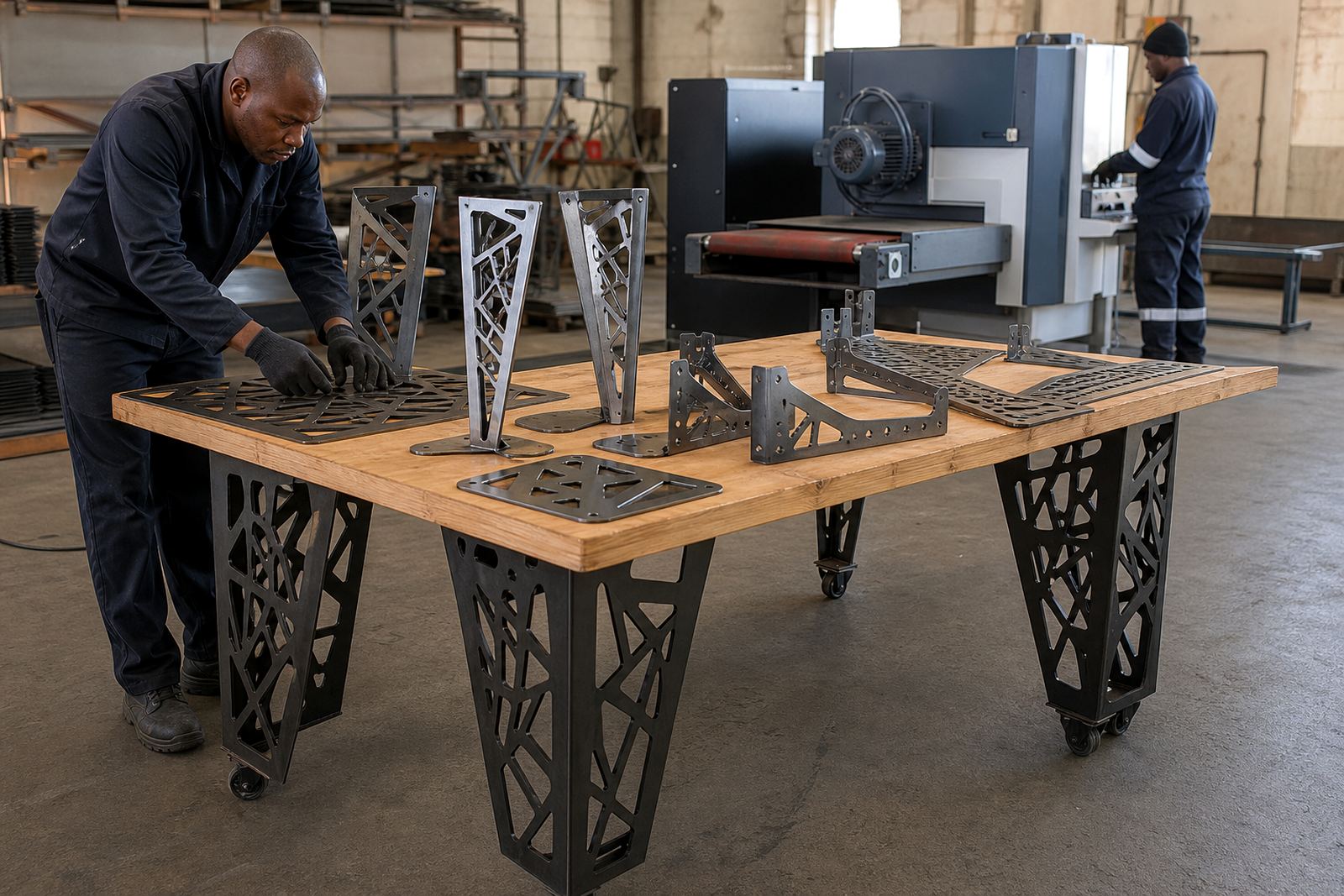
Furniture makers need clean edges on brackets, frames, bases and decorative metal parts before coating, welding or assembly. Deburring machines help remove sharp burrs and slag fast, so parts leave the cutting area safer and more consistent.

Furniture Metal Components

Where Furniture Metal Parts Need Better Edge Quality

In furniture manufacturing, the cut is only part of the job. Laser-cut sheet metal for legs, cross braces, mounting plates, handles, decorative trims and internal supports still needs clean edges before powder coating, welding or assembly. If burrs stay on the part, they can scratch finishes, cause poor fit-up and create extra rework at the bench.

For manufacturers in Johannesburg, Pretoria, Durban, Cape Town and Rustenburg, the pressure is usually the same: mixed batch sizes, shorter lead times and more customer expectation around finish quality. A deburring line gives you a repeatable result on mild steel, stainless steel and aluminium parts, especially where visible edges matter on office furniture, retail displays and hospitality pieces.

Furniture components often have small holes, slots and folded sections. Those details need careful edge-finishing because a sharp corner on one part can ruin the look of an entire assembly. On coastal jobs, such as Durban or Cape Town, a cleaner edge also helps with coating consistency where humidity can affect surface prep.

Typical Machine Set for Furniture Component Work

The right equipment depends on your material mix and volume. A typical setup for furniture parts includes a deburring machine with one or more abrasive heads, a fine finishing stage for visible surfaces and, where needed, a separate unit for oxide or edge smoothing after laser cutting. Some factories also add vacuum extraction or dust control for cleaner workshop conditions.

For sheet metal furniture work, a practical line usually handles flat parts ranging from small brackets up to larger panels and frames. The focus is not only on removing burrs, but on keeping the face finish even so parts can go straight to welding or coating without extra filing.

  • Laser-cut brackets, shelves and connector plates
  • Decorative panels, end caps and trim pieces
  • Chair, table and bed frame components
  • Mounting plates and folded support parts
  • Stainless or mild steel parts going to powder coating

When part shapes vary a lot, the machine set should allow quick adjustment for thickness changes and mixed batches. That matters in South African workshops where one shift may run ten styles of part and the next shift is all repeat work.

Layout Planning for Busy Workshops

A good layout keeps parts moving in one direction: cutting, deburring, inspection, then welding, packing or coating. If the machine sits too far from laser output, operators waste time carrying sheets across the floor. If it is squeezed into a corner, cleaning becomes difficult and the machine sees more dust than it should.

In Wadeville and across the East Rand, many fabricators work in tight industrial spaces with shared access, limited power stability and not much room for stock. That makes planning important. Leave space at the infeed and outfeed for full sheet support, fork access and safe part handling. If you run on generator or backup during load-shedding, check the start-up load and keep the installation accessible for maintenance.

  • Place the deburring machine close to the laser or cutting bay
  • Allow enough floor space for sheet handling and offcut removal
  • Keep compressed air, extraction and electrical supply within easy reach
  • Plan for operator movement, not just machine footprint
  • Separate finished parts from raw cut material to avoid mix-ups

Good layout planning also helps with quality control. If a supervisor can inspect the first few parts quickly, faults get caught before a full batch is processed.

Common Mistakes That Cost Time and Money

One common mistake is choosing a machine only on purchase price. A cheaper unit can struggle with mixed thicknesses or leave inconsistent edges, which means more hand work later. Another mistake is underestimating how often the abrasive medium needs replacing. If the workshop runs daily, wear items should be part of the operating budget from the start.

Some factories also try to use one process for every part type. That does not work well when a visible decorative panel needs a finer finish than a hidden structural bracket. For furniture makers, quality is often judged by the visible edge and the fit at assembly, so the process should match the part, not the other way around.

We also see workshops skip training and then blame the machine when results vary. Small changes in feed speed, part spacing or thickness can affect the finish. A short setup session and clear operating method usually solves more problems than a full workshop of guesswork. It saves a lot of time, and the production manager stops chasing the same issue every week.

Budget Ranges for South African Furniture Fabricators

Budgets vary by part size, throughput and finish requirement. A small workshop handling light furniture components may start with a single deburring and edge-finishing machine in the lower price range, while a higher-volume plant with thicker material and more visible finishes will need a larger investment. As a working guide, many South African buyers look at budgets from around R450 000 to R2.5 million or more, depending on specification and automation level.

It is sensible to budget for installation, operator training, tooling, maintenance items and any layout changes at the same time as the machine purchase. For a busy factory, those extra items are not optional. They affect uptime, part quality and the speed at which the machine starts paying for itself.

If your plant is in Pretoria, Durban, Cape Town or Rustenburg, factor in service access and spare parts support as well. A machine that sits idle because of a worn component or missed service can cost more than the price difference between two models.

Support for Production Teams and New Lines

Furniture metal component work often grows in steps. A business starts with one laser, then adds new product lines, more shifts and tighter delivery dates. When that happens, the deburring stage becomes a bottleneck unless the equipment is matched to the workflow. Machine audits, sample part testing and process optimisation help confirm what the line can handle before you commit to larger volumes.

Our team in Wadeville, Germiston supports clients across Johannesburg, Pretoria, Durban, Cape Town and Rustenburg, with demos and service support where needed. Pieter Johannes van der Merwe leads the business, supported by Thandiwe Mokoena, Sibusiso Dlamini, Ayesha Patel, Johan Kruger and Lerato Nkosi. Clients can reach us through the enquiry form on our contact page for machine installation, training, preventive maintenance, spares supply, breakdown repairs and annual service contracts.

For furniture makers, the goal is simple: cleaner edges, fewer handling issues and a more consistent finish on every batch. That improves the look of the final product and makes the whole shop floor run better.

What our Deburring Machine customers say

Verified Google reviews

Questions we get asked

What furniture metal parts benefit most from deburring?

Laser-cut brackets, frames, bases, decorative trims, mounting plates and any visible sheet metal part that must assemble cleanly or take a coated finish.

Do I need one machine for both structural and decorative parts?

Often yes, but the machine setup should allow different finish levels. Structural parts may need fast edge removal, while visible parts may need a finer surface finish.

What should I budget for a furniture component deburring line?

A practical starting range is often from about R450 000 to R2.5 million or more, depending on part size, output rate and the level of automation required.

Planning something? Send the team a message.

Contact form