
Why security products need proper edge finishing
Security work is unforgiving. A bracket with burrs, sharp corners or heat-affected slag can slow assembly, damage cables and make final installation harder. On housings and mounting plates, poor edge quality also shows up later as chipped powder coating, poor panel alignment and unsafe handling for installers. If you are cutting steel for access control cabinets, gate motor covers, alarm enclosures or perimeter system parts, the finish has to be consistent from the first part to the last.
Many shops still rely on hand filing or flap discs after laser cutting, especially when production is small. That works for a few pieces, but once orders grow, the labour adds up quickly. A proper deburring and edge-finishing setup lets you process parts at a steady pace, with less variation and fewer reworks. It also helps when you need neat parts for export jobs or local municipal projects where appearance and fit are both checked. For security products, a clean edge is not cosmetic, it is part of the product spec.
Typical equipment set for this kind of work
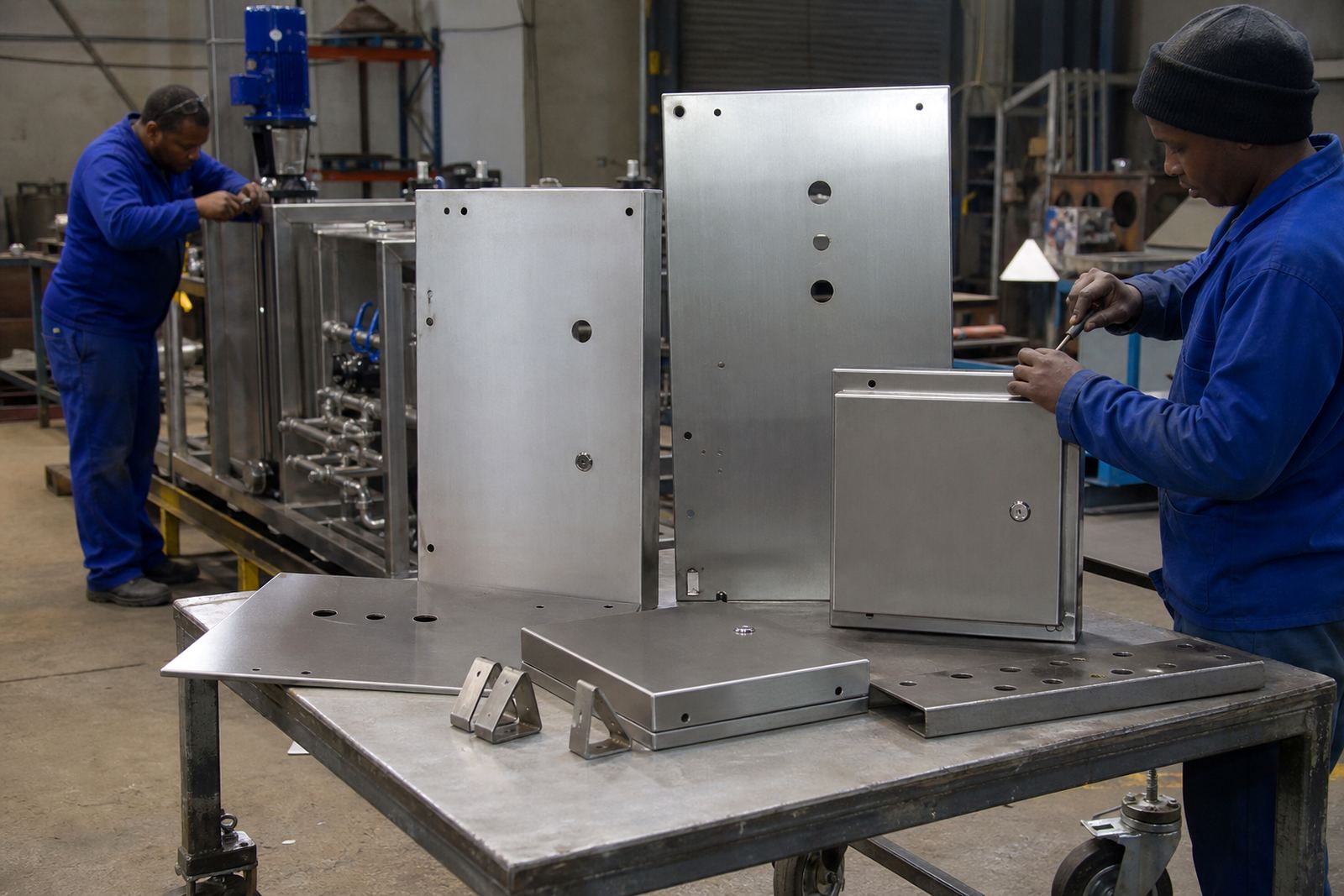
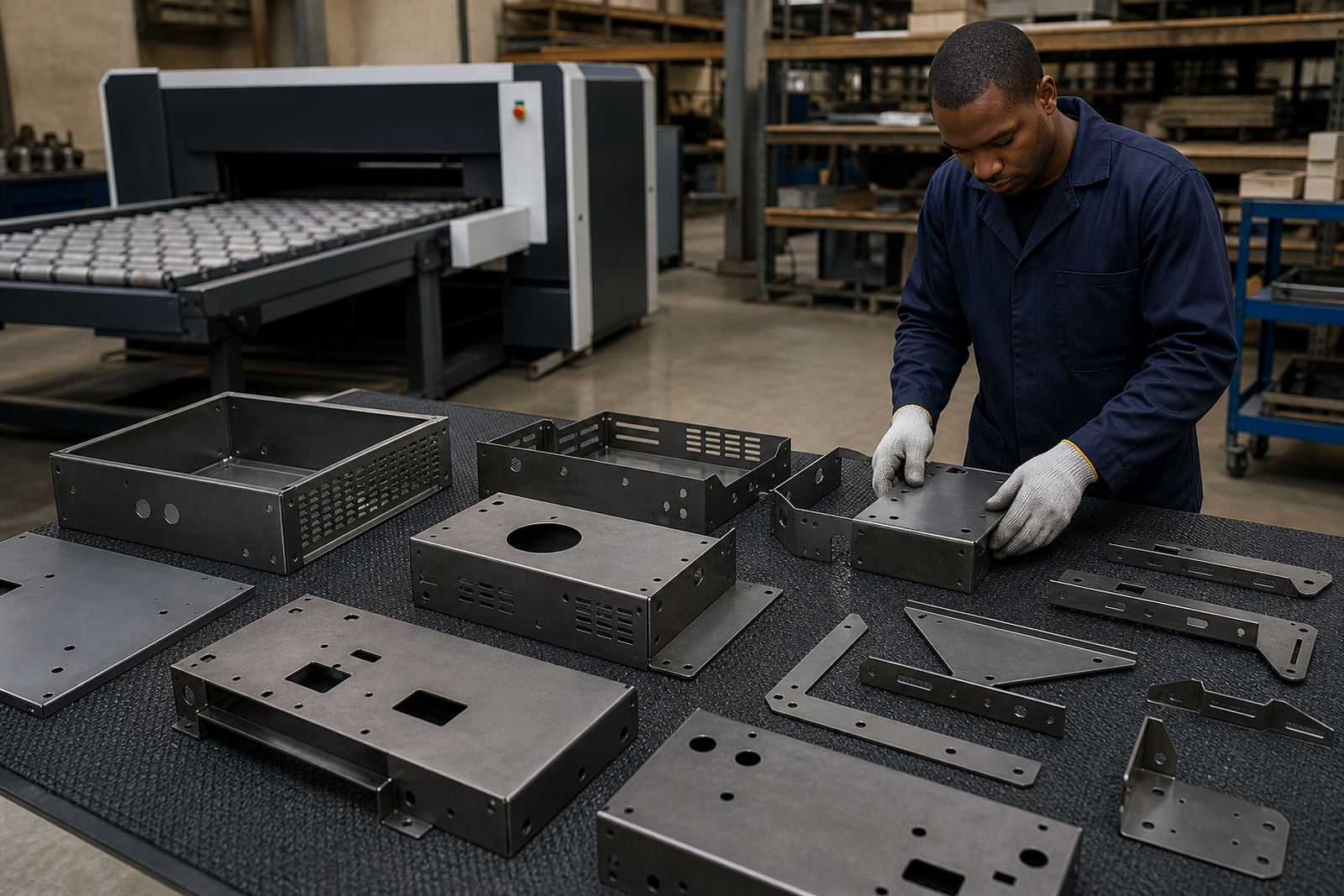
Security product workshops normally handle a mix of flat sheet parts, light brackets and small folded components. The right equipment depends on your material range, hole pattern density and daily output. Some shops only need a compact machine for smaller batches, while others need a wider format line that can carry multiple parts at once.
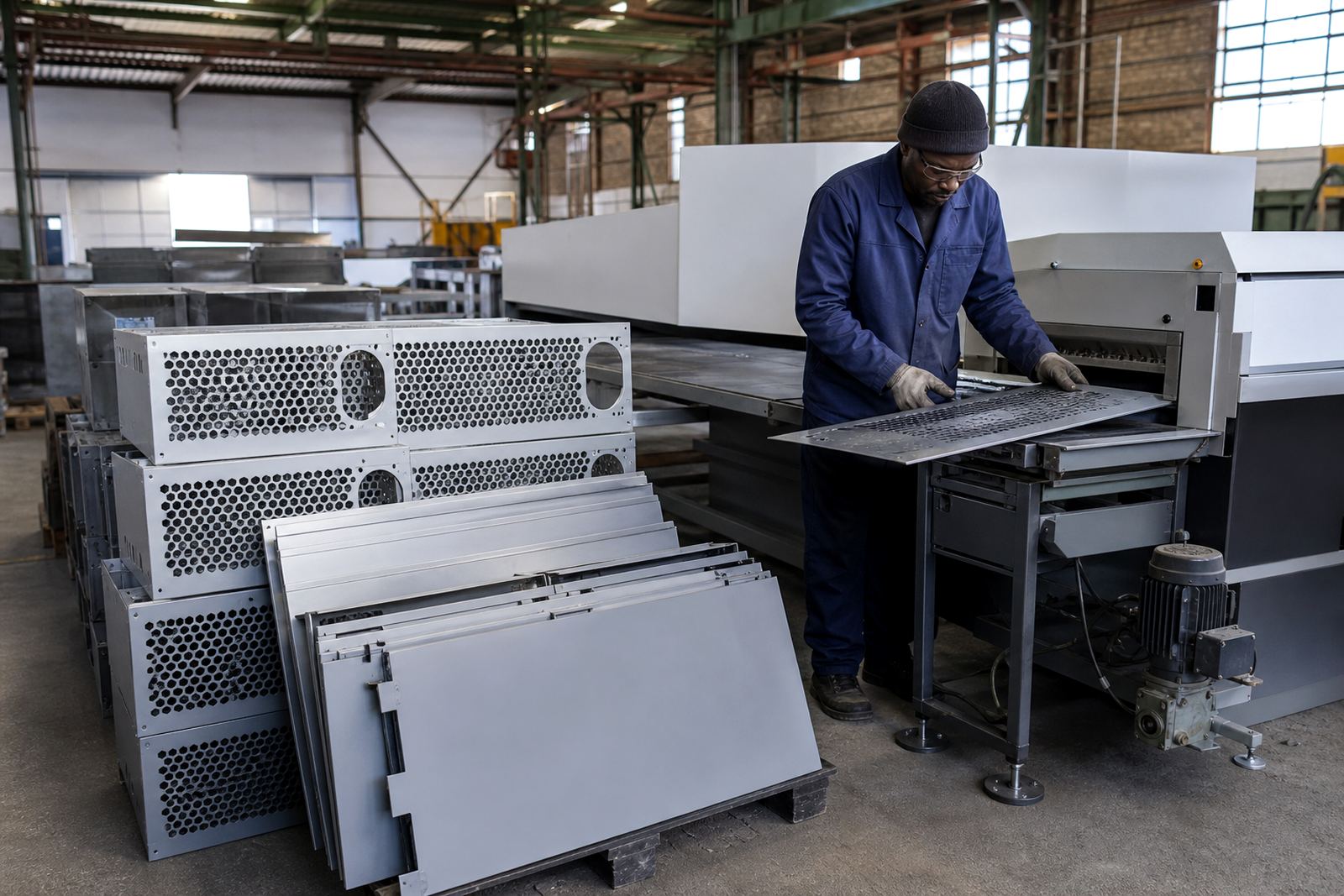
Most customers looking at this use case are finishing laser-cut mild steel, galvanised sheet and sometimes stainless steel for outdoor or coastal installations. A good setup may include a deburring unit with abrasive belts, top and bottom edge finishing, and a controlled feed system for repeatable results. Where parts are thin and prone to distortion, a gentler setup is often better than aggressive grinding. For thicker plates, you may also need a heavier feed and more frequent abrasive replacement.
- Laser-cut housings and lids
- Brackets for alarms, access control and gate systems
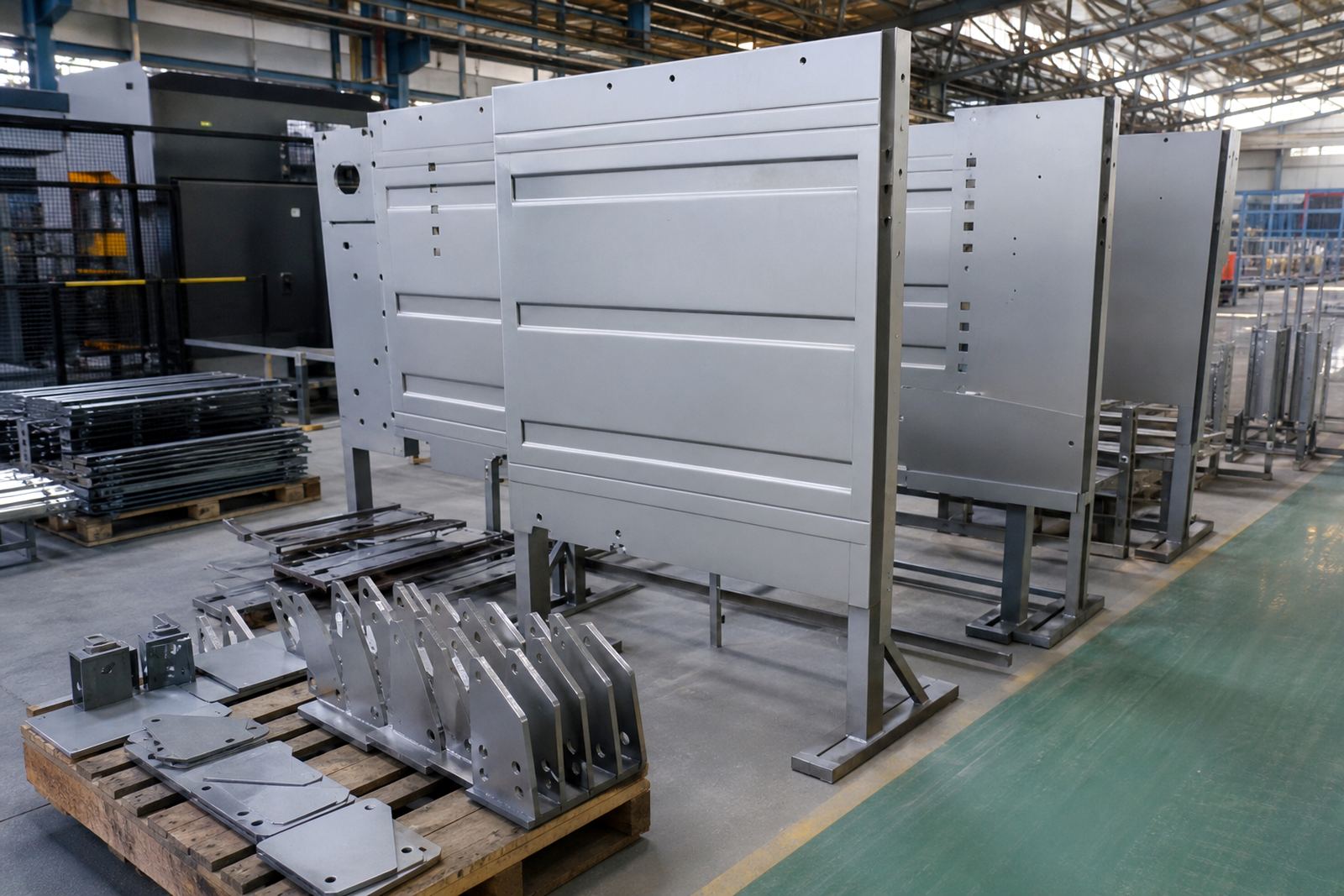
- Frames for enclosures and mounting plates
- Small folded parts that need burr removal before assembly
- Stainless parts for outdoor security hardware
Planning the layout before you buy
In Wadeville, Germiston and the wider East Rand, space is often tight and power is not always reliable. That means machine planning should start with the basics: floor space, infeed and outfeed clearance, dust extraction, and how the machine will sit next to your laser and folding section. If the machine is too far from cutting, parts get handled too many times and scratches start creeping in.
We normally advise fabricators to map the route from cutting to finishing to packing. Keep a clear flow so cut parts move in one direction, and avoid crossing traffic with forklifts or pallet jacks. If you are working under load-shedding, make sure your production plan allows for restart time, inspection and batch tracking. A machine that is easy to adjust and simple to clean can save hours every month.
Also think about your mix of part sizes. Security jobs often include many small components, and small parts can tip, overlap or snag if the feed method is wrong. That can lead to marks on visible faces or inconsistent edge results. It is better to test a representative sample before deciding on final layout, rather than discovering issues after installation.
Common mistakes we see in security workshops
The biggest mistake is buying for current volume only, not the next 12 to 24 months. A machine that can only keep up when the shop is quiet becomes a bottleneck the moment a housing or bracket contract lands. The second mistake is underestimating how much time is lost to manual touch-up. If operators spend too long chasing burrs, the finishing department becomes the most expensive part of the shop.
Another frequent issue is ignoring the material mix. Galvanised sheet, mild steel and stainless do not all behave the same way, especially on edge finish and scratch sensitivity. Coastal customers in Durban and Cape Town also need to consider humidity and storage. If parts sit too long before finishing, surface condition can vary and the coating team will notice it. We have also seen shops skip sample testing and then struggle with part distortion on longer brackets, which means the batch has to be reworked. That is avoidable with a proper trial run.
- Choosing a machine that is too small for future orders
- Not allowing space for infeed, outfeed and inspection
- Skipping sample part testing on real production parts
- Mixing materials without adjusting the process
- Leaving finishing too late in the production flow
Budget ranges for South African buyers
Budget depends on part width, material type, throughput and the finish you need. For smaller security fabrication shops handling light batches, entry-level finishing equipment can start from about R350 000 to R650 000. Mid-range machines that handle more consistent daily production generally sit between R700 000 and R1,4 million. Larger systems with stronger capacity, better handling and more process control can move from R1,5 million upwards.
Remember to budget for installation, operator training, maintenance, abrasives and spare parts. If your site needs relocation support or a workshop re-layout, that also belongs in the numbers. A machine that reduces manual finishing, improves coating results and cuts scrap can pay back faster than a cheaper unit that constantly needs hand correction. If you are supplying security product jobs to Johannesburg, Pretoria, Rustenburg or further afield, a dependable service plan matters just as much as the purchase price.
We often recommend starting with a sample testing session first. It gives you a clear picture of cycle time, edge quality and the real operating cost per part, rather than guessing from a brochure or a quote alone.
How Deburring supports security product manufacturers
Deburring is based in Wadeville, Germiston and supports fabricators across South Africa, including Johannesburg, Pretoria, Durban, Cape Town and Rustenburg. Our team works with laser-cut sheet metal producers who need clean, reliable finishing for security products and related assemblies. Pieter Johannes van der Merwe leads the business, with support from Thandiwe Mokoena, Sibusiso Dlamini, Ayesha Patel, Johan Kruger and Lerato Nkosi.
We assist with machine installation, operator training, preventive maintenance, breakdown repairs, abrasive replacement, machine audits, sample part testing, process optimisation, spares supply, relocation support, production planning help and annual service contracts. If you are not sure what size of machine suits your workload, we can assess your parts and advise on layout, cycle time and throughput. Clients usually start through the enquiry form on our contact page, then we arrange the next step from there. It saves time and helps us match the machine to the job instead of the other way round.