
Why water treatment panels need clean edge finishing
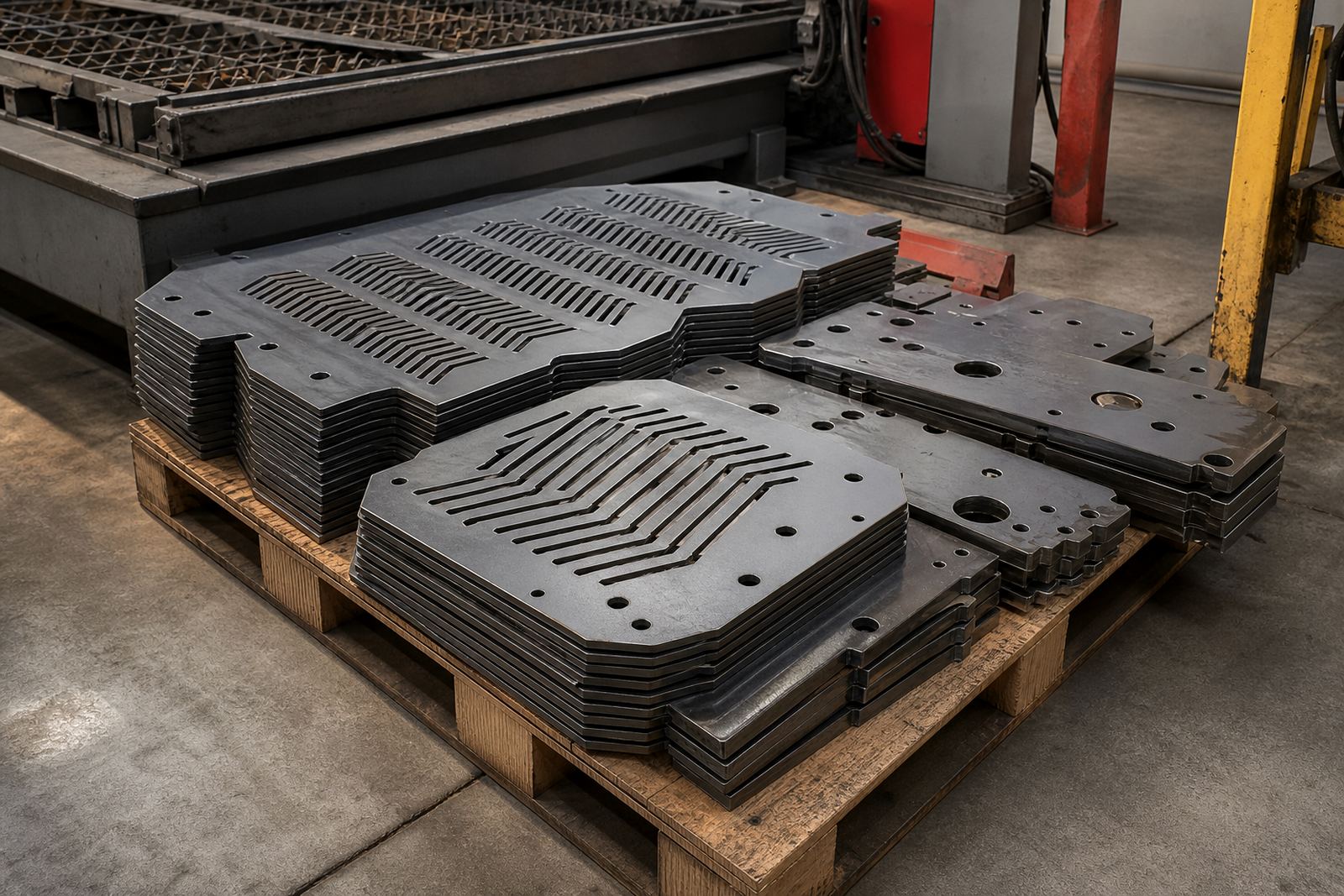
Water treatment panels are built from laser-cut sheet metal that must slot together neatly, line up with glands and brackets, and take welds without extra grinding. If the cut edge is left with burrs, dross or sharp corners, the team loses time on assembly and the finished panel can look untidy before it even leaves the workshop.
For panel and skid builders, the challenge is not only the cut quality from the laser, but also the handling of mixed parts. Small covers, mounting plates, gland plates and internal frames often move through the shop together, so the finishing step has to be repeatable. A proper deburring and edge-finishing process helps keep parts consistent from the first panel to the last.
In coastal areas like Durban and Cape Town, clean edges also matter before coating. Sharp burrs can trap moisture or leave thin coating at the corner, which is not what you want on equipment that may sit near wash-down areas, chemical dosing rooms or humid plant rooms.
Typical machine set for panel and skid builders
A water treatment workshop usually works with mild steel, stainless steel and sometimes aluminium parts, often in 1 mm to 6 mm sheet, with the odd heavier bracket or mounting frame. The right equipment depends on part size, throughput and whether the shop is mainly building small control panels or larger skid assemblies.
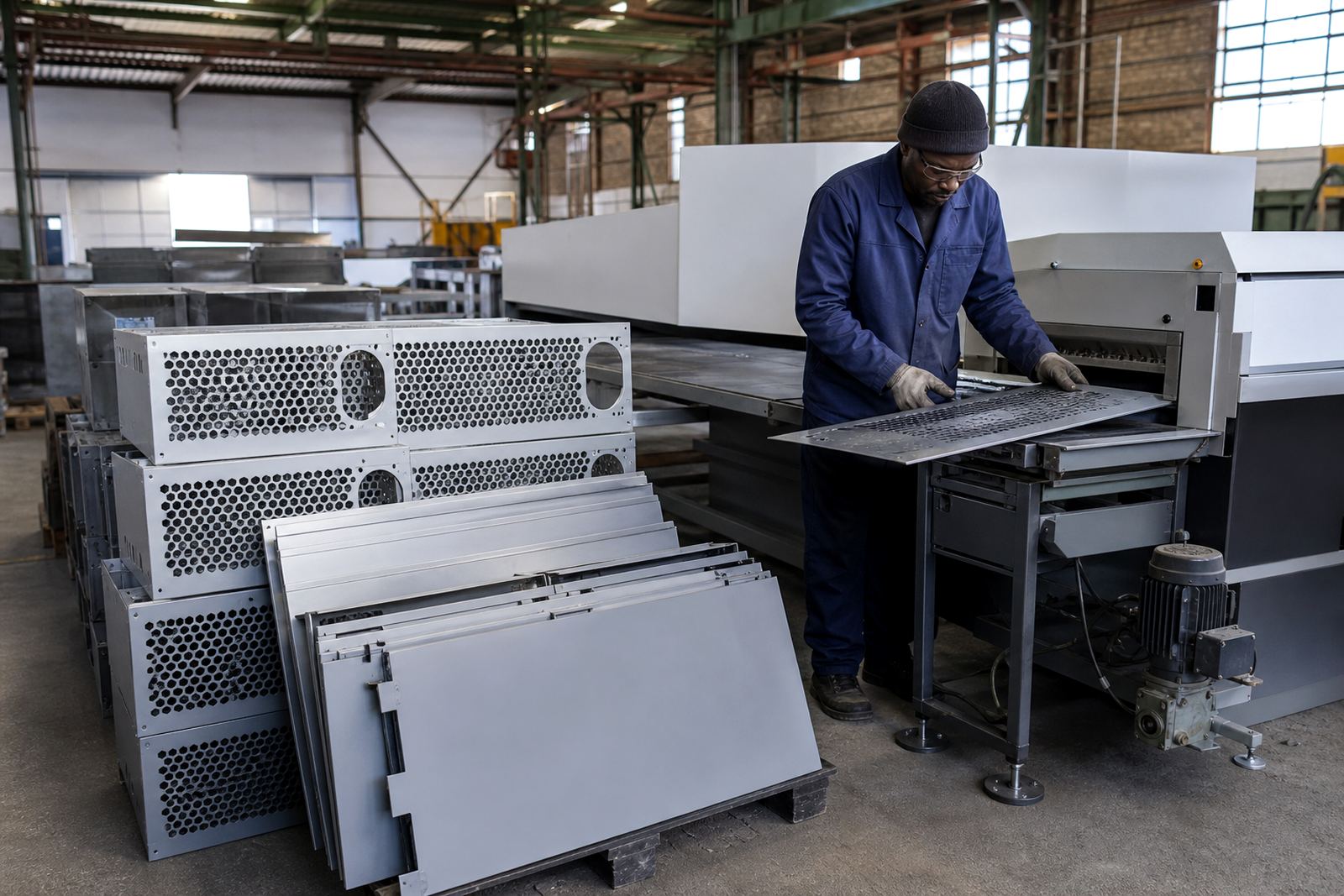
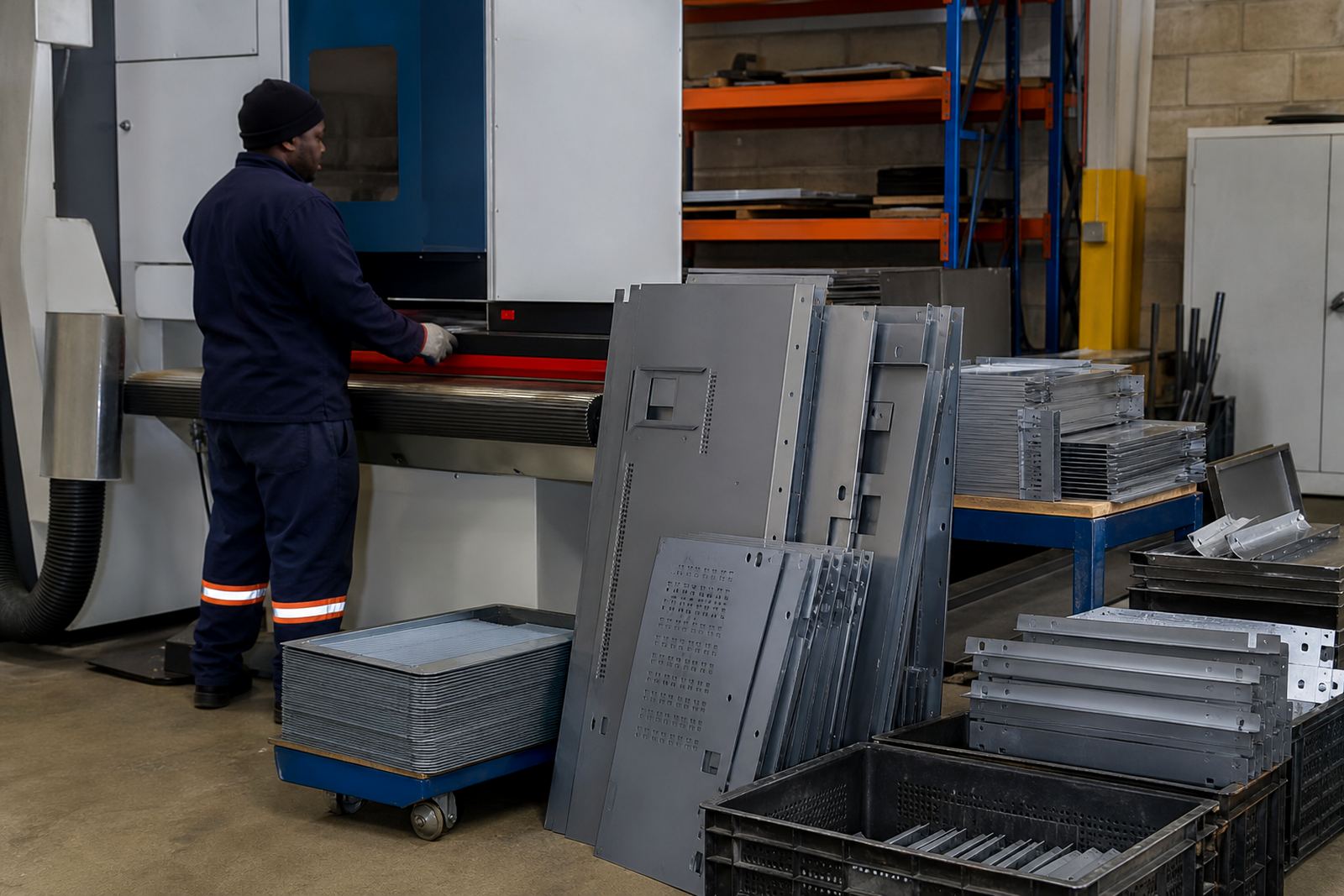
Many fabricators look at a compact finishing line with a deburring unit, edge-rounding capacity and a parts handling table or return system. For higher output, a wider machine and consistent feed setup are useful when the shop is running full laser shifts and needs parts moving straight into weld prep or coating prep.
- Laser-cut panel blanks and gland plates
- Mounting brackets, cable tray supports and internal frames
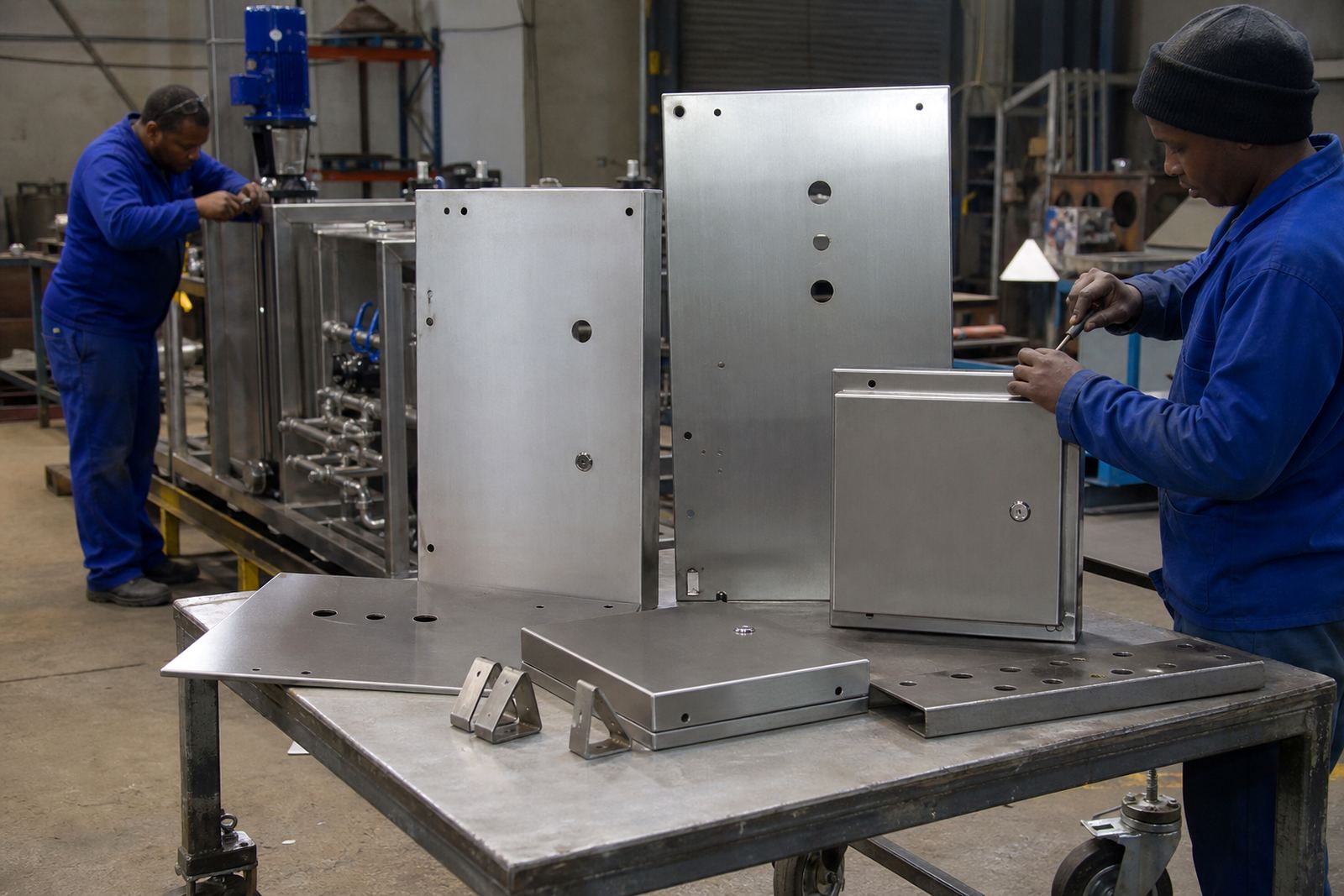
- Skid side plates, covers and access panels
- Stainless parts that need a cleaner finish before passivation or coating
- Mixed batches where burr removal must be consistent across many part sizes
For smaller Gauteng workshops, a practical machine can be enough to support one laser and one assembly bay. For busier shops in Johannesburg or Pretoria, a more automated setup can reduce hand finishing and help keep production moving even during load-shedding recovery periods.
Layout advice for a better panel shop flow
Good layout starts with the laser exit point and ends at the welding bench or coating prep area. If finished parts have to cross walkways or be repacked twice, you lose time and increase the chance of scratches, mix-ups or missing hardware. A sensible line places the deburring machine near laser nesting, then keeps sorting, inspection and assembly close by.
It helps to plan for part size and dust control at the same time. Water treatment jobs often include small precision pieces, so operators need enough working room to separate parts without bending tabs or damaging cut-outs. In shops with limited floor space, a compact in-line arrangement may work better than a wide U-shape that forces extra turning and handling.
- Keep incoming laser parts on labelled trolleys or racks
- Place inspection after deburring so burrs are caught early
- Allow space for stainless parts to be kept separate from mild steel
- Plan extraction and cleaning so fine swarf does not spread into assembly areas
- Make sure the line can still operate during power interruptions or generator changeover
For coastal sites, it also makes sense to plan storage and daily cleaning around humidity. Dry part storage and a clear path from finishing to assembly can save a lot of rework later.
Common mistakes that slow down assembly and coating
One common mistake is assuming the laser finish is enough. On water treatment panels, burrs around slots, holes and tapped insert positions often get found only when the fitter starts assembly. That is when the job stops, someone reaches for a file or grinder, and the whole batch becomes slower.
Another problem is using manual grinding for every part. It may seem cheaper at first, but labour adds up fast and the finish is not always the same from operator to operator. For jobs that need repeatability, especially where the same enclosure type is made over and over, manual finishing can become the bottleneck.
Shops also get caught out by mixed material handling. Stainless and mild steel should not be treated the same in storage, sanding, cleaning or post-process handling. If parts are mixed after deburring, the team may later find contamination marks, coating defects or extra cleaning work. A small slip here can cost hours later.
Finally, some builders under-plan for maintenance. Abrasive parts wear out, filters fill up and production stops if spares are not on hand. In places like Rustenburg or Durban, where delivery timing can already be tight, a short delay in getting consumables can hold the whole assembly schedule.
Budget ranges for South African workshops
Budget depends on throughput, part width and how much labour you want to remove from hand finishing. For a smaller fabricator building control panels and light skid components, a practical entry level setup can start from about R450 000 to R850 000. That is usually aimed at basic deburring and edge-finishing needs with limited automation.
For a mid-sized workshop supplying multiple projects a month across Johannesburg, Pretoria or the East Rand, many buyers plan in the range of R900 000 to R1,800,000. This often suits higher daily output, wider parts and more consistent finishing before welding or powder coating.
Larger production shops that want better feed control, stronger process consistency and reduced manual handling may need budgets from around R2,000,000 upwards, depending on part size and options. The real cost should also include installation, operator training, maintenance planning and abrasive replacement so the machine can keep working properly after day one.