
Why kitchen fabrication needs cleaner edges
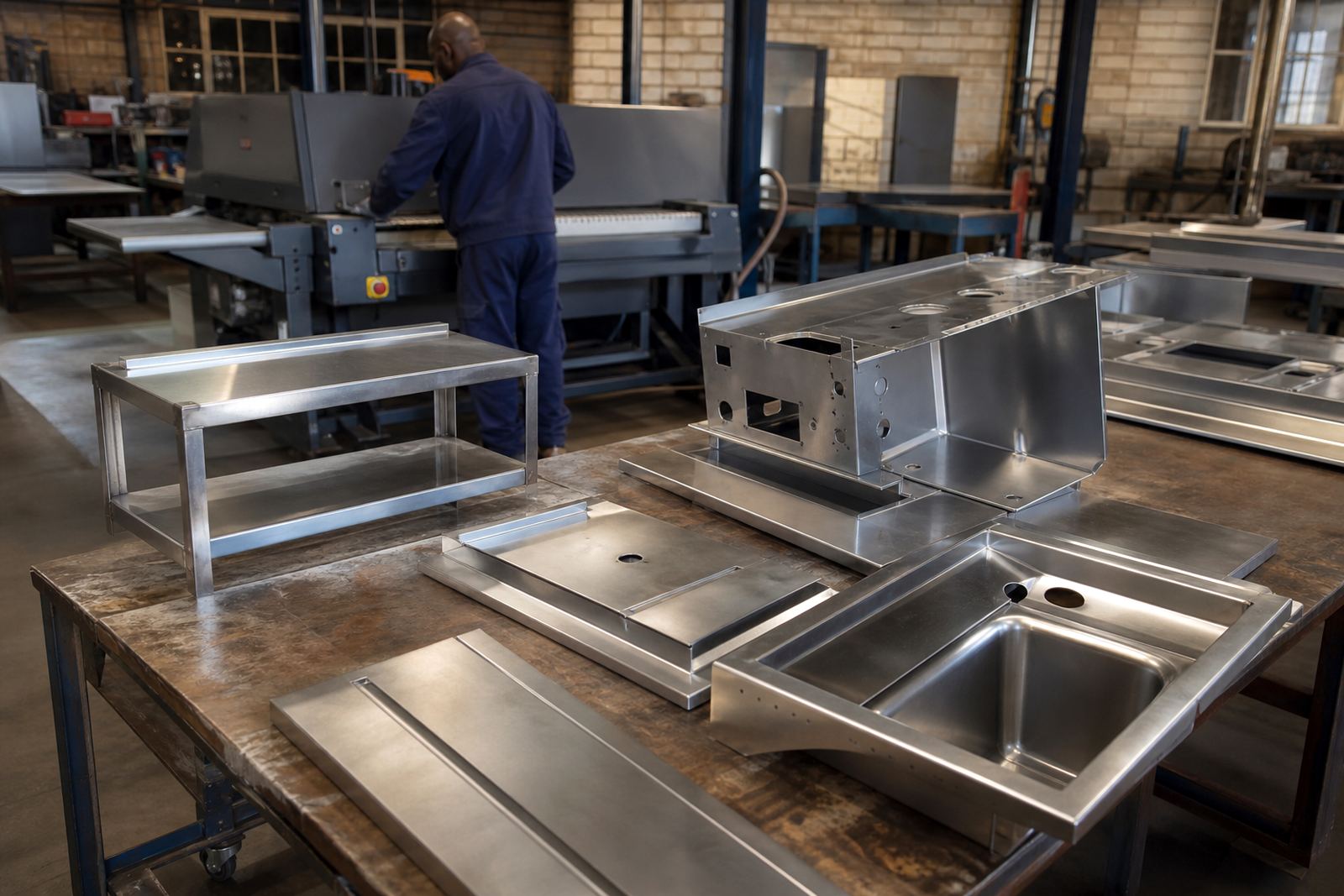
In kitchen equipment work, the edge finish is not cosmetic only. Stainless steel parts for counters, cabinets, shelves, splashbacks and prep tables must be handled safely, assembled quickly and cleaned properly on site. Sharp burrs and heat-affected edges can slow down welding, make folding inconsistent, and leave sharp points that are a risk to fitters and end users.
For fabricators supplying Johannesburg, Pretoria, Durban, Cape Town and Rustenburg, the pressure is usually on speed and repeatability. A good deburring process reduces rework, cuts down on hand sanding and helps every batch look the same, even when the job mix changes daily.
- Cleaner handling for installers and workshop staff
- More consistent assembly on folded and welded parts
- Less manual grinding before packing or dispatch
- Better results on stainless parts that must be wiped down often
Typical machine set for commercial kitchen parts
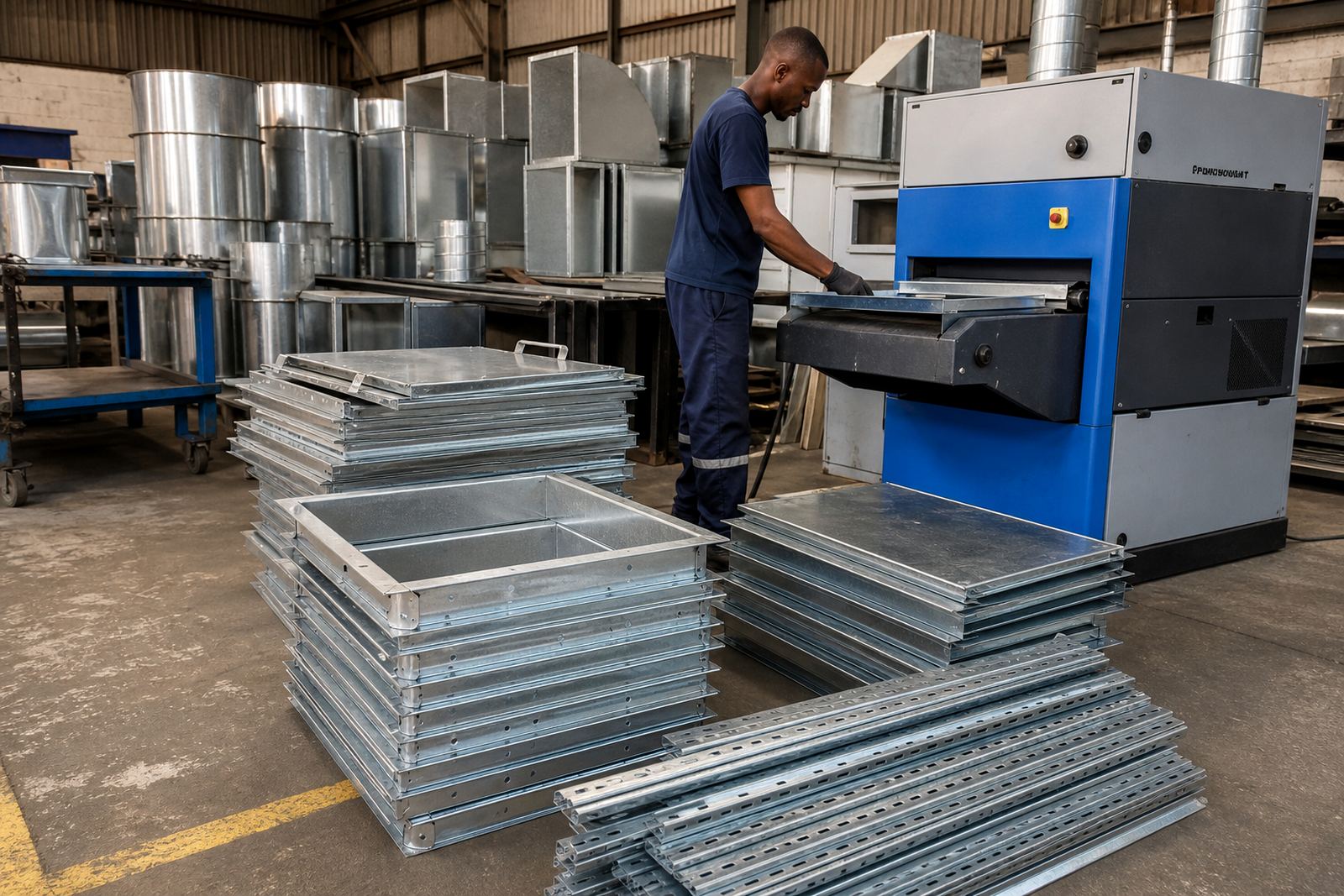
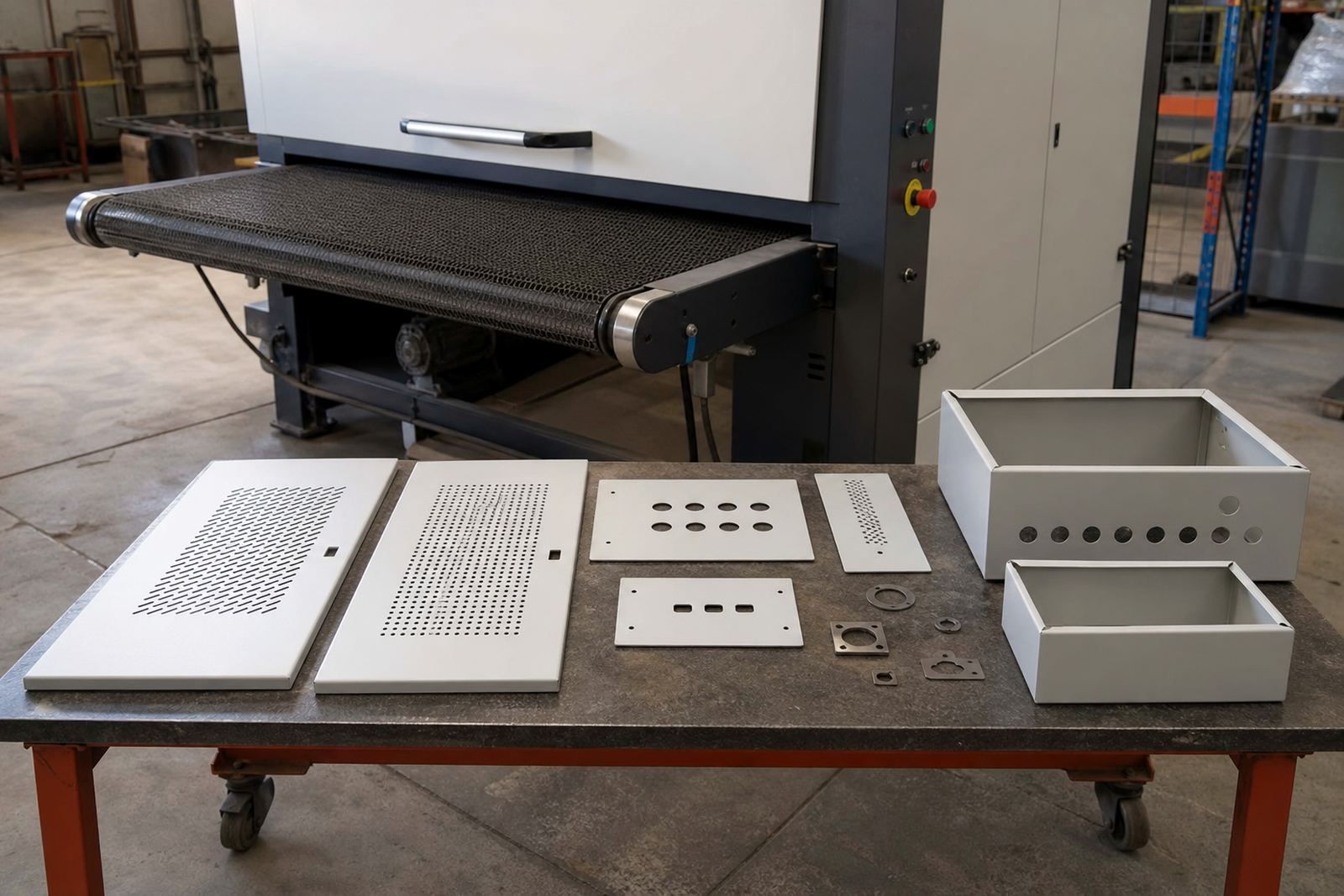
Most kitchen equipment fabricators work with laser-cut stainless sheet in common thicknesses from 0.9 mm to 3 mm, with some heavier brackets and support pieces going thicker. A practical setup usually starts with a deburring machine suited to flat sheets, followed by edge-finishing capability for parts that need a more refined touch before fabrication or dispatch.
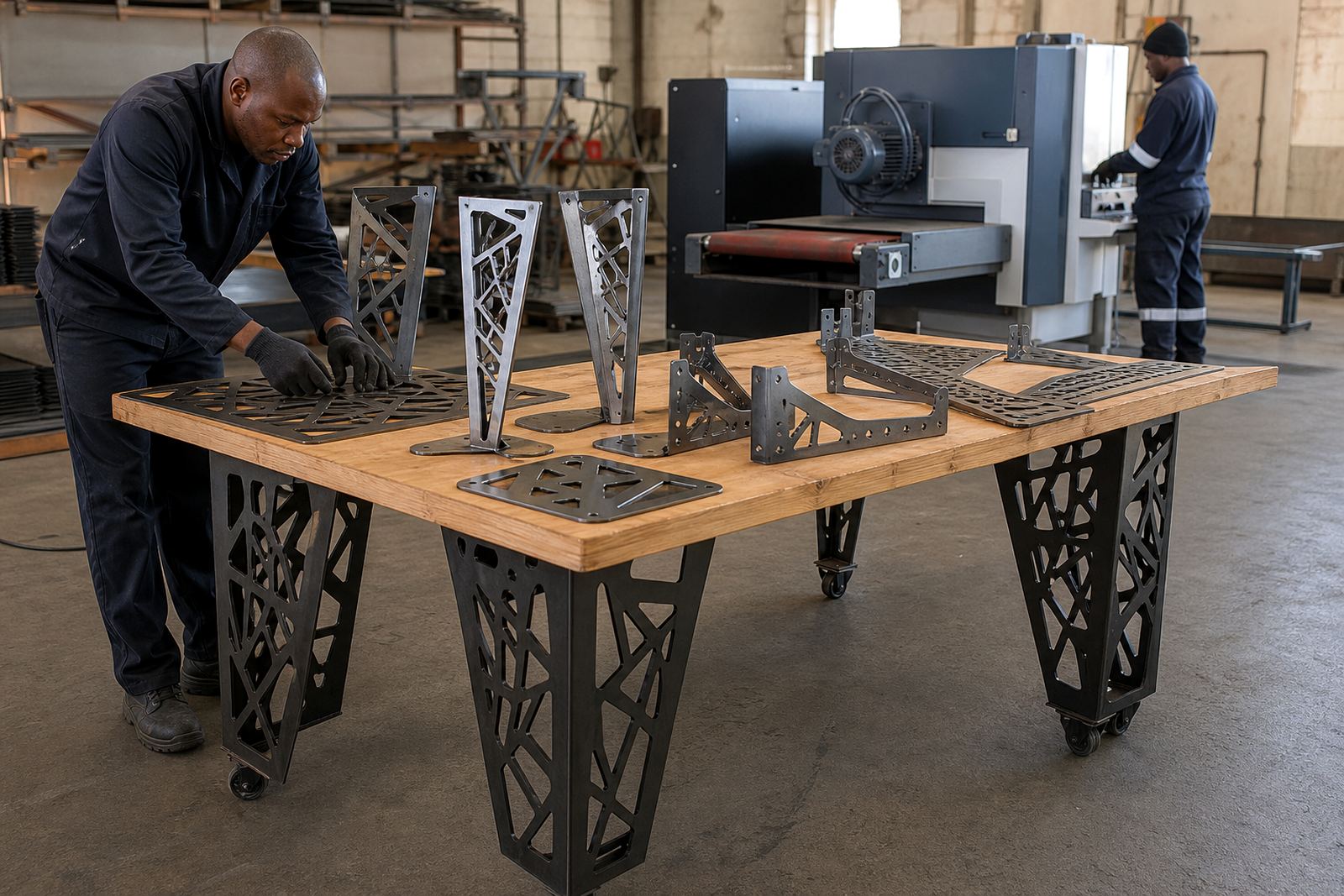
The right setup depends on what leaves your laser. If your mix includes panels, drawer fronts, gussets, shelves and reinforcement plates, the machine should handle varied part sizes without slowing the line. On busy days, it helps if the feed and handling layout allows one operator to keep moving parts through without bottlenecks.
- Laser-cut stainless sheet parts for sinks, counters and cupboards
- Flat panels that need burr removal on both sides
- Small components that are awkward to finish by hand
- Parts with consistent hole patterns and cut-outs
In a kitchen workshop, the finish often needs to be clean enough for direct fit-up, but also practical enough for mass production. That balance is where machine finishing pays off.
Planning the workshop layout around your flow
Before buying equipment, look closely at how material moves through the shop. In Wadeville and the East Rand, space is often tight and every metre matters. If the deburring station is too far from the laser or folding area, parts get handled more than they should and the job slows down. If it sits too close to a dirty grinding area, stainless can pick up marks and dust.
A sensible layout keeps incoming cut parts, finishing, inspection and packing in a straight flow. For larger fabrication shops, that may mean placing the machine near the laser exit and close to a trolley route for sorted parts. For smaller teams, a compact machine can still work well if the operator has enough space to load and offload safely. In humid coastal areas like Durban and Cape Town, it is worth planning for storage and maintenance too, since moisture can affect tooling and machine care.
- Keep the deburring station near the laser and folding area
- Allow room for trolleys, part trays and offloading
- Separate clean stainless finishing from heavy grinding dust
- Plan power supply and extraction before the machine arrives
Common mistakes we see in kitchen shops
One common mistake is buying a machine that is sized for general sheet metal but not for food-grade work. Kitchen fabrication needs controlled finishing, not just aggressive material removal. Another issue is choosing equipment without checking the part mix. If your work includes lots of small stainless parts, the machine must be able to handle them without snagging or creating edge marks.
We also see shops underestimate maintenance and operator training. A machine can be a good fit, but if the team does not understand abrasive wear, feed speed or inspection checks, the finish becomes uneven. During load-shedding, some fabricators also forget to plan production around power interruptions, which can leave parts half-finished and delays stack up.
- Buying for one job type only, then trying to use it on everything
- Ignoring small parts that may tumble or mark during finishing
- Skipping operator training and setup checks
- Not budgeting for abrasives, spares and routine maintenance
Budget ranges for South African fabricators
Budget depends on throughput, part size and the finish you need. For smaller kitchen fabrication operations, entry-level deburring and edge-finishing machines can start around R350 000 to R650 000. Mid-range production units generally sit between R700 000 and R1,5 million. Higher-capacity systems with more automation, wider working widths or more advanced finishing options can move above R2 million.
When planning cost, include installation, training, sample part testing, spares, abrasive replacement and routine servicing. A machine that fits your current output but leaves room for growth is usually better value than one that is under-sized or over-complicated. If your team works across multiple sites or needs relocation support later, that should be part of the decision from the start.
For many fabricators, the real saving comes after installation, when parts move through faster and the team spends less time cleaning up burrs by hand.
Support for stainless kitchen work across South Africa
Our team in Wadeville, Germiston supports fabricators working on commercial kitchen equipment across Johannesburg, Pretoria, Durban, Cape Town and Rustenburg. That includes machine installation, operator training, preventive maintenance, breakdown repairs, sample part testing, process optimisation, spares supply and annual service contracts.
We work with workshop managers, production teams and owners who need practical help with the finish on stainless parts. If you are planning a new line, upgrading an existing one, or trying to reduce hand finishing on laser-cut sheets, we can help assess the process and recommend a setup that matches your output. Clients reach us through the enquiry form on our contact page.
- Wadeville Support and Germiston Support
- Johannesburg Demos and Pretoria Demos
- Durban Demos and Cape Town Demos
- Rustenburg Support and East Rand Support