Why mining support fabrication needs proper edge finishing
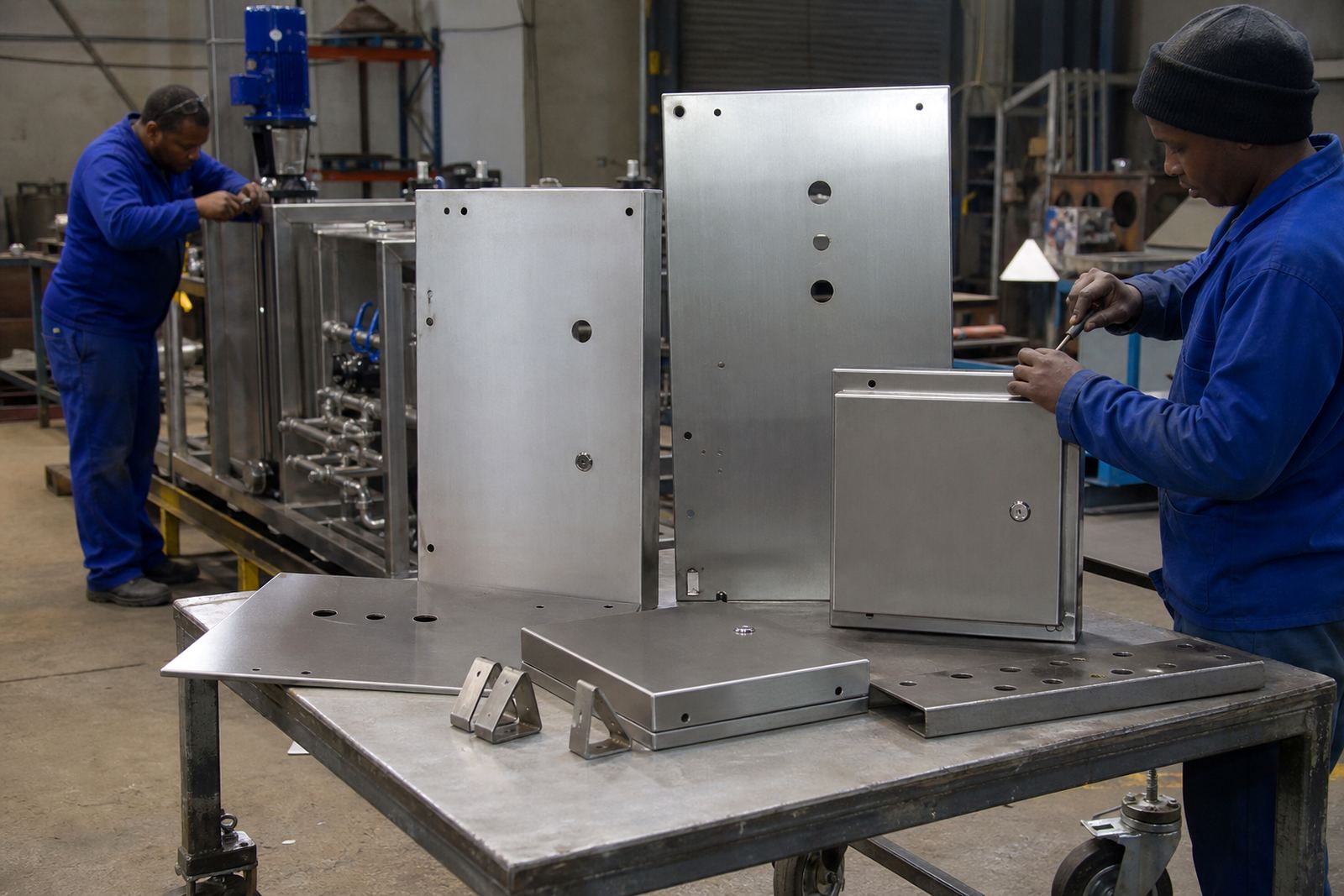
In mining support work, parts are often thick, sharp and handled many times before they ever reach site. Brackets, gussets, wear plates, guards and frames can come off a laser with burrs, dross and sharp edges that slow down welding, assembly and inspection. If the edge is not finished properly, you get more rework, more glove tears and a higher chance of injury in the workshop.
For fabricators in Wadeville, Germiston and the wider East Rand, the pressure is usually on turnaround. A cutting machine may be productive, but if the back end is still manual, the job backs up fast. Deburring changes that by giving you a repeatable finishing step after cutting, so the team can move parts through production with less handling and fewer hold-ups.
Mining support fabrication also deals with mixed batches. One order might include 6 mm mild steel parts, then a run of heavier plate, then smaller items with internal cutouts. A proper machine setup takes that variety in its stride, which matters when customers in Johannesburg, Pretoria, Rustenburg or Durban expect delivery on time and with the same finish on every batch.
Typical machine set for a mining support workshop
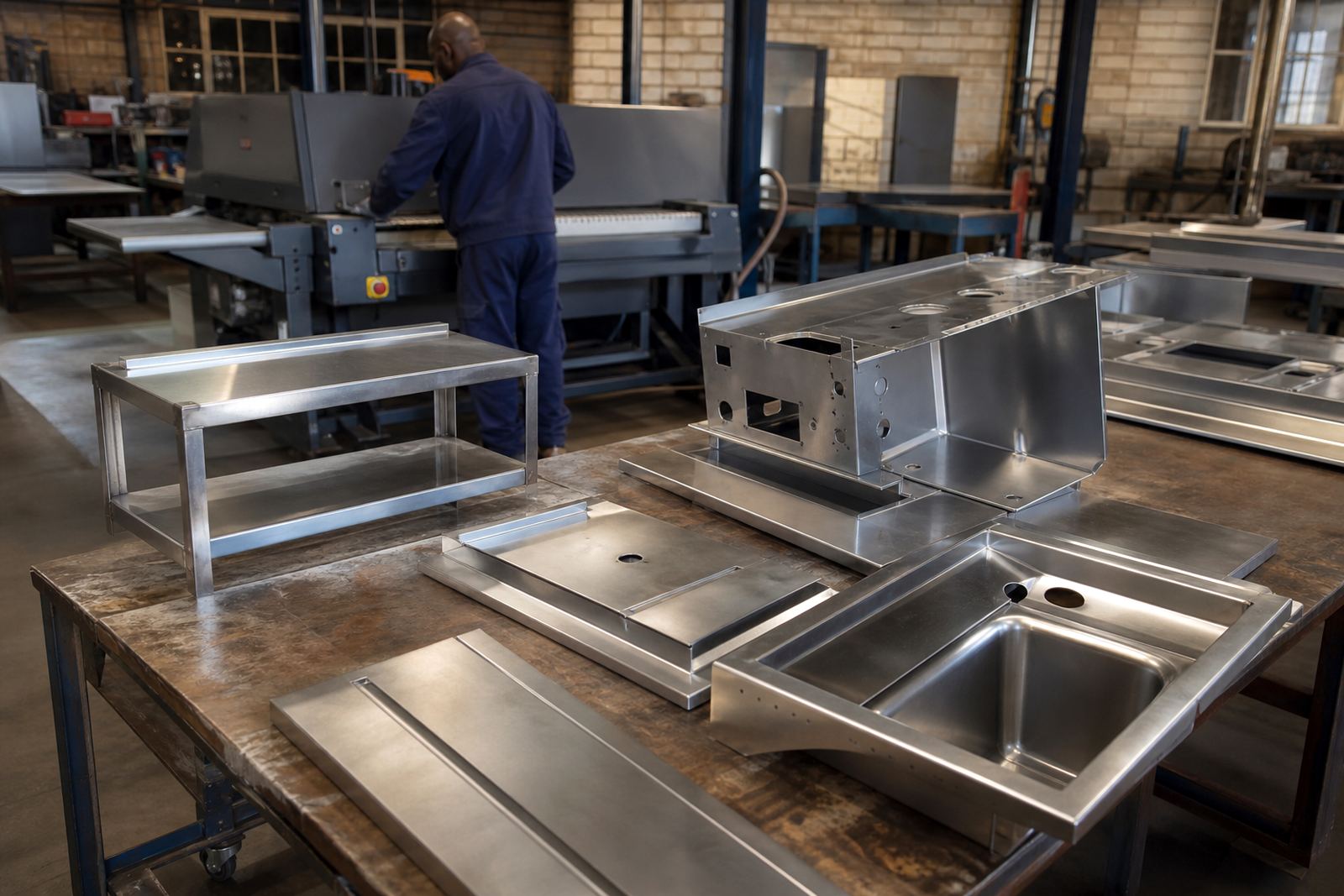
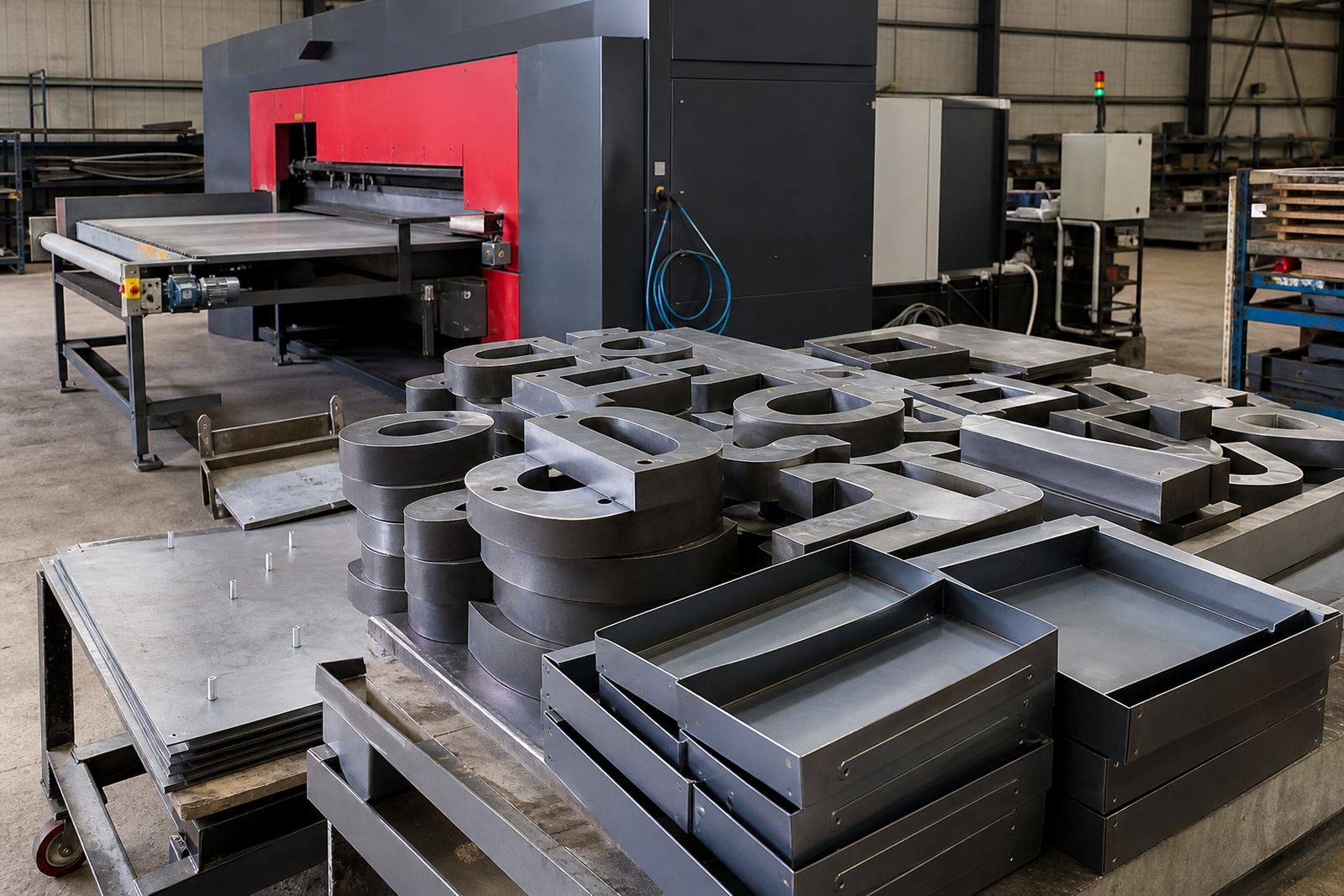
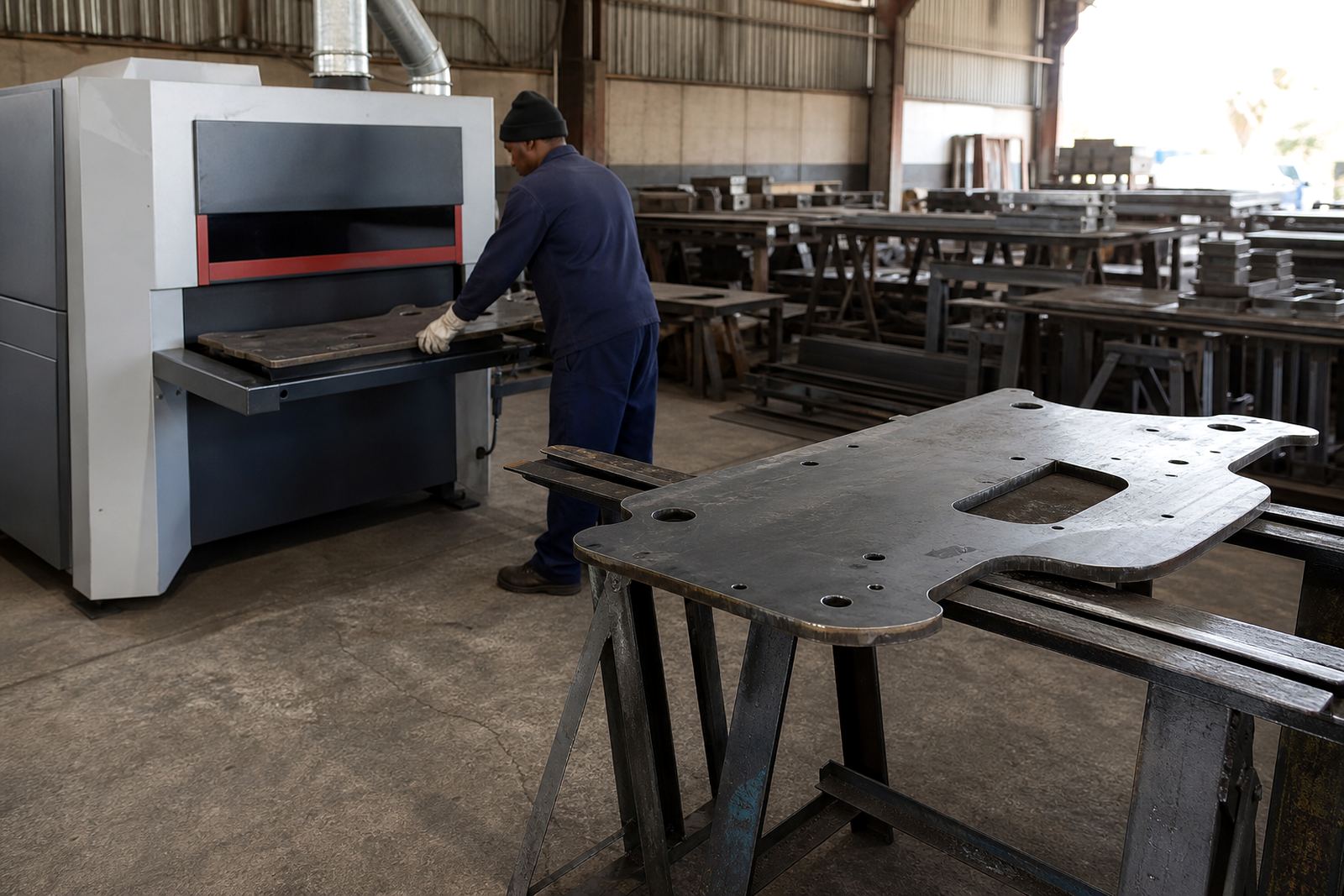
Most workshops start with one deburring machine matched to their daily cutting volume and material range. For laser-cut sheet metal, the usual setup includes a deburring unit for burr removal, an edge-rounding or finishing pass for safer handling, and a dust extraction or collection solution to keep the area clean. In some plants, a second pass is added for parts that need a more consistent edge before coating or welding.
The right machine depends on the kind of work you do. If you are mostly cutting brackets and support parts, you may need a compact machine with stable feed and simple controls. If your work includes larger plate components, a wider table and stronger transport system makes more sense. We also look at floor space, power supply, and whether the workshop has backup power for load-shedding or generator changeover.
- Laser-cut mild steel, stainless steel or aluminium parts
- Edges that need burr removal before welding, handling or powder coating
- Mixed batches with small and medium size components
- Workshops wanting to reduce hand grinding and flap disc use
- Sites with limited floor space and practical power constraints
Layout and planning advice for busy fabrication floors
The best layout is one that keeps parts moving in one direction. Place the deburring machine near the laser exit or sorting area, not across the workshop where operators have to carry parts back and forth. If your workflow allows, set up a simple route from cutting to deburring, then to welding, bending or assembly. That reduces lost time and helps prevent scratches or mix-ups.
Floor condition matters too. The machine must sit level, with enough room for loading, offloading and routine cleaning. In humid coastal areas such as Cape Town or Durban, we also plan for corrosion control and sensible storage of consumables. In hotter inland workshops around Germiston or Pretoria, dust build-up and heat can affect performance if the area is not managed properly.
A good installation plan also considers power quality. Some workshops run from mixed supply conditions, and a machine should be installed with proper isolation, correct cable sizing and a safe start-up sequence. If you are planning to move an existing line, factor in the downtime for relocation, levelling and recommissioning, otherwise the move can take longer than expected.
Common mistakes we see in mining support shops
Many workshops buy on price alone and only later realise the machine does not suit the work. A finishing machine that handles light sheet well may struggle with heavier plate, and then operators start making up the difference by hand. That defeats the point and usually pushes costs up instead of down.
Another common mistake is underestimating the mix of parts. If your order book changes week by week, you need a machine that can cope with different thicknesses and hole patterns. The same goes for internal cutouts and small components, where poor handling can cause parts to tip, scratch or jam. Teams also often forget to budget for consumables, spares and operator training, which leads to downtime later on.
- Choosing a machine that is too small for the real workload
- Ignoring extraction, dust control and housekeeping
- Leaving no space for infeed and outfeed staging
- Not training operators on safe loading and inspection
- Skipping maintenance until the machine starts marking parts
Budget ranges for South African fabricators
Budget depends on the size of the machine, the finishing process required and the level of support you want after installation. For a smaller workshop handling laser-cut support parts, entry-level solutions can start from about R350,000 to R650,000. Mid-range machines for steady production often sit between R700,000 and R1,500,000. Larger or more specialised systems can move beyond R2 million, especially where automation, wider working widths or added finishing functions are needed.
It is worth looking at the full cost, not just the purchase price. Include installation, operator training, site preparation, service cover, consumables and the effect of reduced hand finishing. If your team is currently spending hours on manual deburring, the saving in labour and repeat work can be meaningful. In a busy shop, that saving often matters as much as the machine itself.
For many clients, the better question is not what the machine costs, but what each finished part is costing them now. When the volume is steady and the work is repetitive, the payback can be sensible, particularly where weld prep and safe handling are critical.
Support for plants in Germiston and across South Africa
We work from Wadeville, Germiston and support fabricators across Johannesburg, Pretoria, Durban, Cape Town and Rustenburg. That includes machine installation, operator training, preventive maintenance, breakdown repairs, abrasive replacement, machine audits, sample part testing, process optimisation, spares supply, relocation support, production planning help and annual service contracts.
Pieter Johannes van der Merwe leads the business, with Thandiwe Mokoena handling sales, Sibusiso Dlamini on service, Ayesha Patel on applications, Johan Kruger in the workshop and Lerato Nkosi looking after customer support. That team structure helps when a client needs a practical answer, not a long sales story. If a part finish is not right, we look at the machine setting, the incoming cut quality and the workflow around it.
For mining support fabricators, the aim is simple: fewer sharp edges, safer handling and a cleaner handover to the next operation. If you want to discuss your current part mix, send an enquiry through our contact page and we can look at the right setup for your workshop.