Why sign shops need better edge finishing
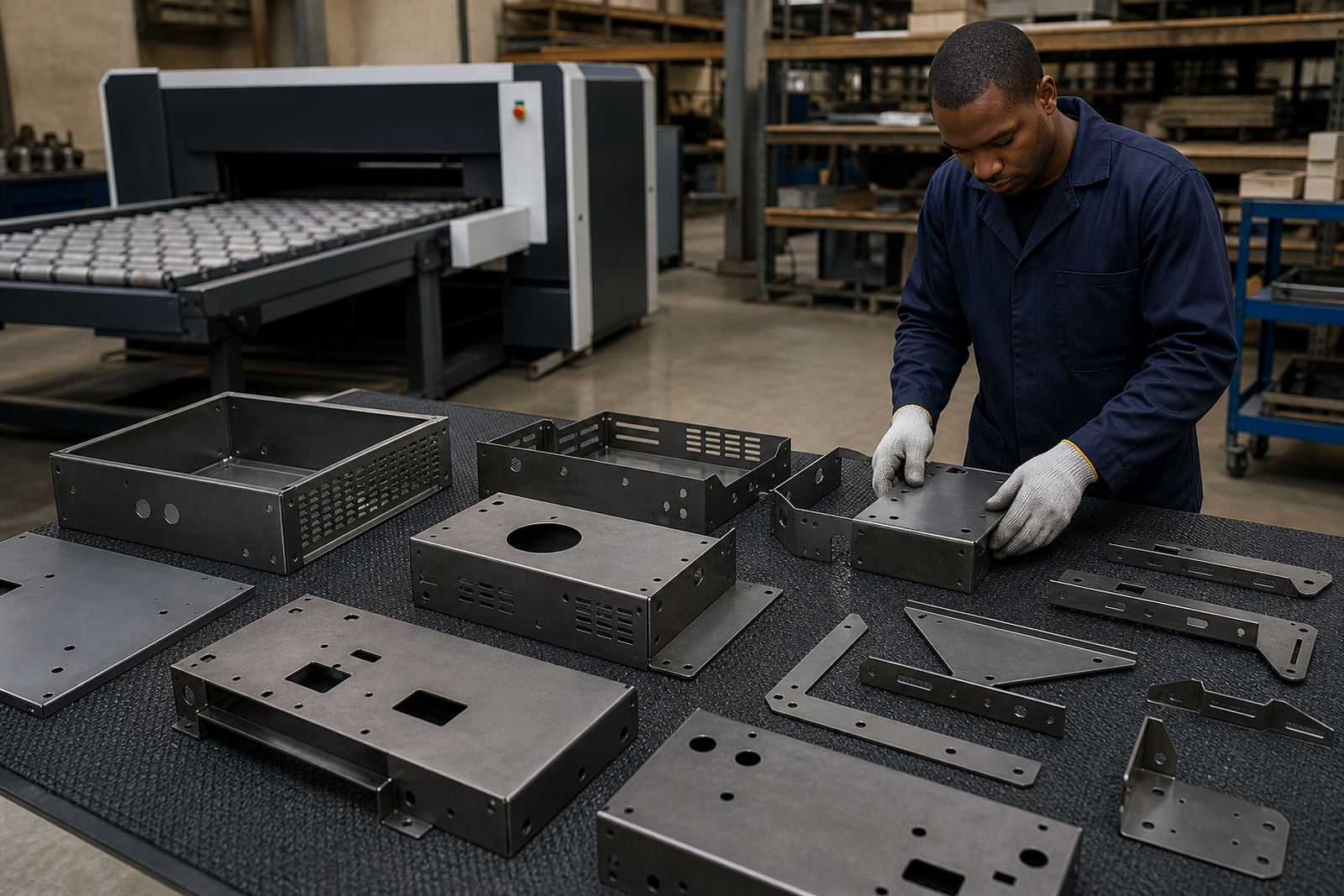
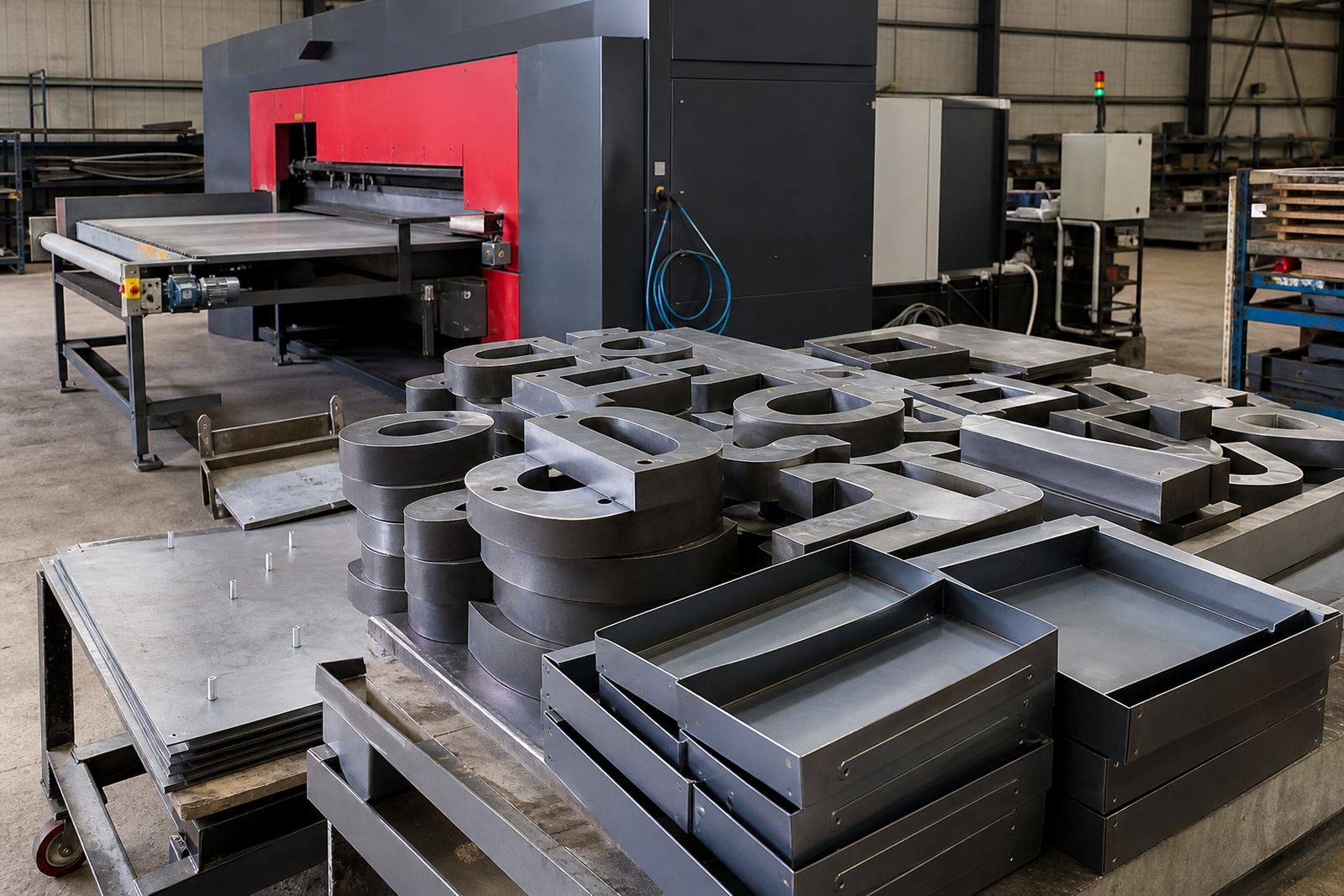
In sign fabrication, the cut is only part of the job. Once the laser has done its work, you still have sharp edges, dross, heat marks and small burrs that can slow assembly and create problems later on. If you are producing cut letters, fascia panels, lightbox parts or backing trays, the edge needs to be safe to handle and neat enough for powder coating, riveting or bonding.
Many sign shops work with thin mild steel, aluminium and stainless sheet in 0.9 mm to 3 mm ranges. Those jobs often move fast and the parts are small, which means hand finishing becomes a bottleneck. One operator sanding every piece can keep up for a while, but the minute orders stack up, the workshop starts to feel it. In coastal areas like Durban and Cape Town, exposed edges also need a cleaner finish before coating because humidity can show up weak prep very quickly.
Typical machine set-up for cut letters and trays
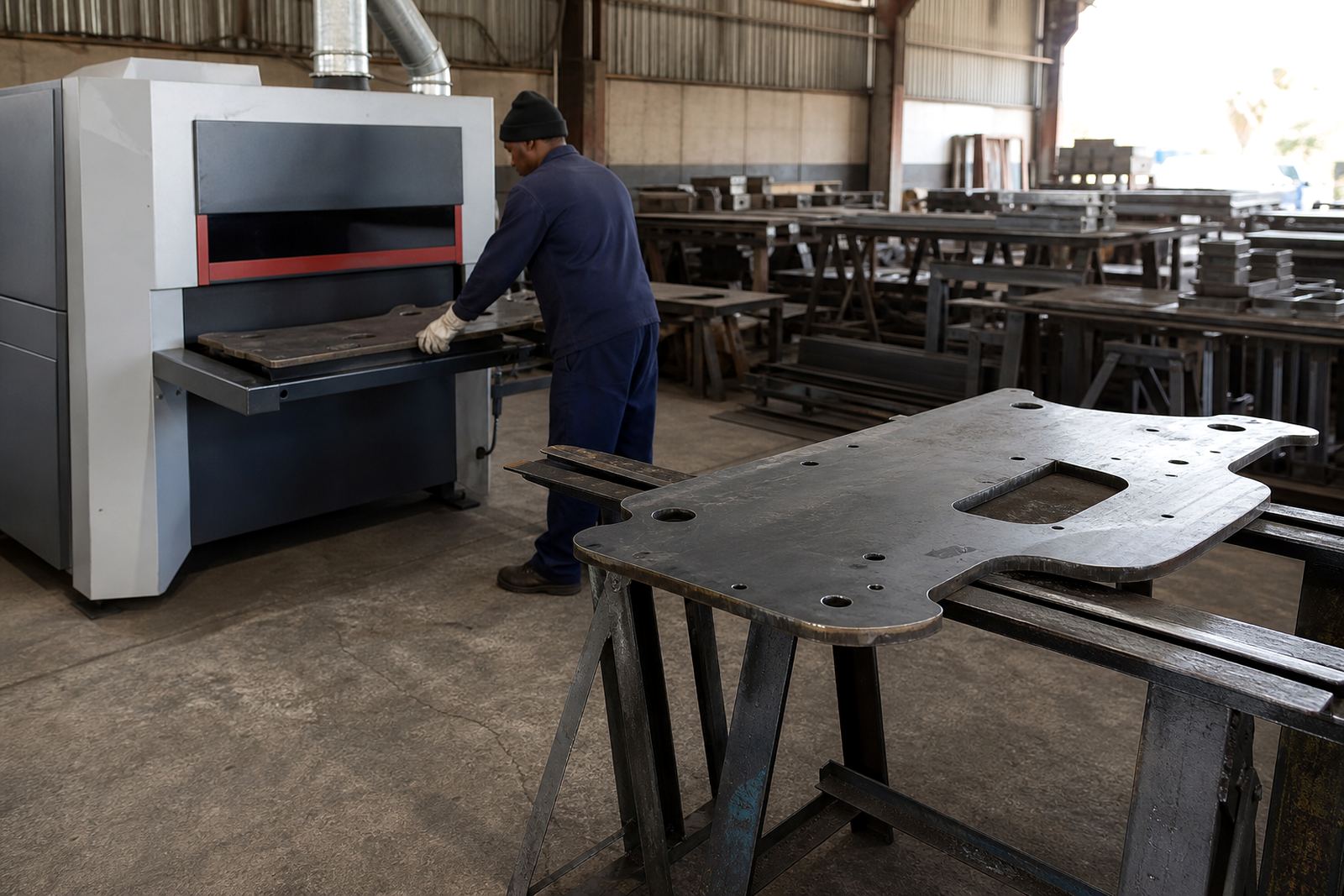
A sign fabrication line usually needs more than one step, especially if you handle mixed jobs through the week. A deburring machine can be used after laser cutting and before folding, welding or coating. For many shops, the best setup is a compact flow where parts come off the laser, are sorted by job, then move straight into edge finishing.
- Laser-cutting machine for flat parts and nested sheets
- Deburring and edge-finishing machine for burr removal and edge radius
- Optional manual station for small touch-ups on tight profiles
- Folding machine for trays, channel letters and returns
- Welding or fastening station for assembly work
- Cleaning and pre-coating area before powder coating or paint
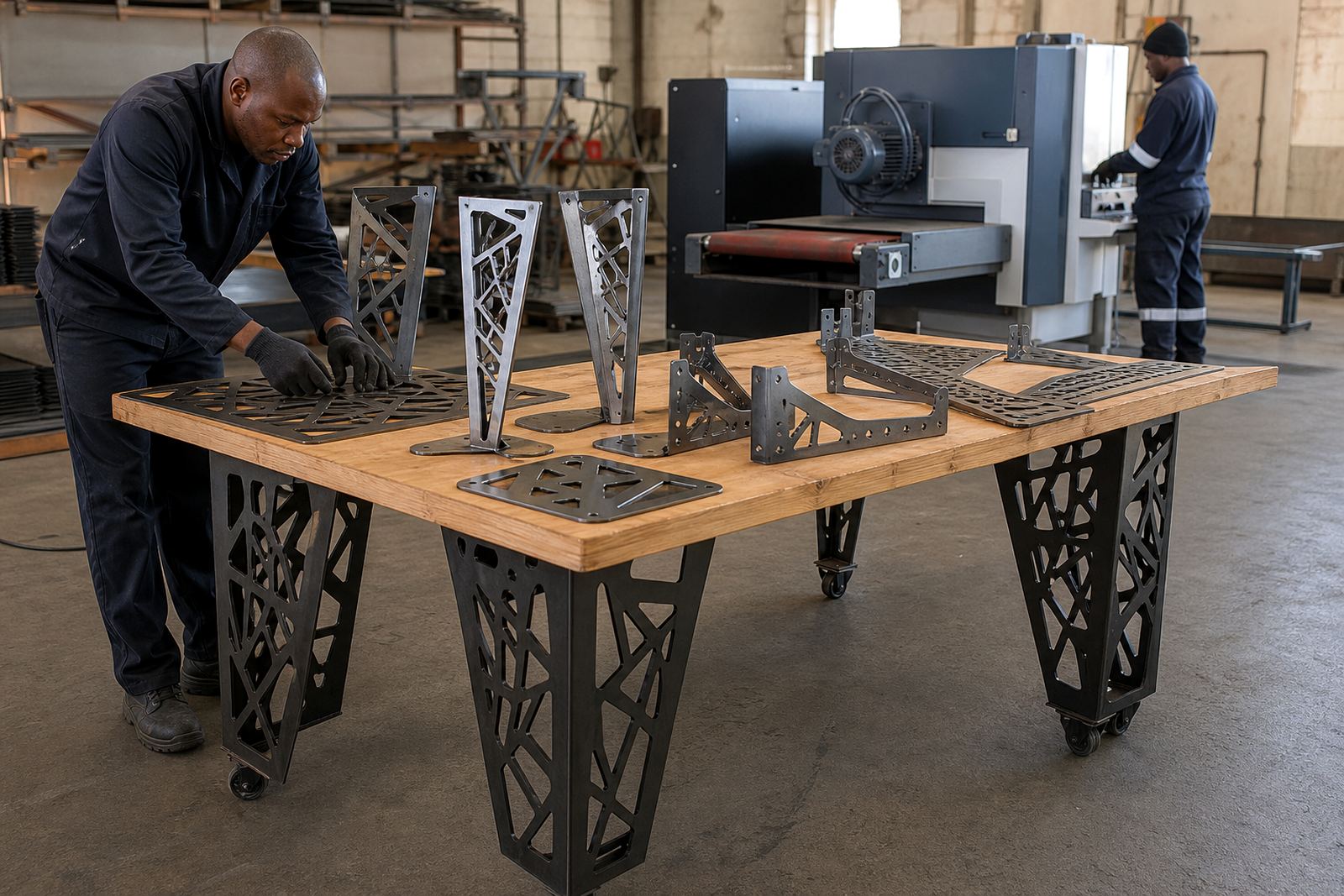
For sign work, the machine should handle small parts without pushing them around, and it must cope with mixed shapes. Letters, brackets and tray parts often have cut-outs and narrow webs, so stable feed and predictable pressure matter. A workshop that handles both signage and light fabrication may also want variable settings for different sheet thicknesses, because a 1 mm tray is not the same as a 3 mm support bracket.
Layout and planning advice for busy workshops
Good planning saves floor space and time. In Wadeville and the wider East Rand, many fabrication shops work in tight bays where forklifts, sheet stock and finished goods all share the same floor. A deburring machine should sit close to the laser and the folding area, but not so close that dust and scrap become a problem. Keep a clean route for loaded trolleys and leave enough space for sheet infeed and outfeed.
Think about power supply and air use as well. Load-shedding and voltage dips can interrupt production, so it helps to plan your machine area with proper backup power for controls and safe shutdown procedures. If the workshop has poor extraction or high dust levels, the finishing station should be placed where the operator can inspect parts properly without fine grit blowing back onto clean sheet. It sounds small, but that one detail saves rework.
For shops that run delivery work across Johannesburg, Pretoria or Rustenburg, it is also worth planning for job batching. Put similar material types together and finish them in one run. That reduces changeover time and keeps the line moving instead of stopping for every small order.
Common mistakes on sign fabrication jobs
The most common mistake is leaving edge finishing to the end and treating it as a quick manual task. That usually leads to uneven edges, more scratches and a lot of wasted labour. Another problem is matching the wrong machine to the wrong mix of work. A shop focused on tiny letter components needs a different approach from one producing large trays and panel frames.
- Ignoring burr direction after laser cutting, which can cause coating defects
- Choosing a machine that cannot handle narrow parts or short offcuts
- Running mixed materials without proper setting changes
- Skipping inspection before folding or welding, which hides bad edges
- Underestimating maintenance, especially where dust and fine metal build up
We also see workshops in humid or coastal areas leave finished parts too long before coating. If the parts are already prepped, keep the process moving. Once cleaned, handled and stacked, the finish can pick up marks or surface contamination very quickly.
Budget ranges for sign fabricators in Rand
Budgets depend on throughput, sheet sizes and how much manual finishing you want to remove from the process. A small sign shop doing mixed custom work may start with a lower-cost machine for light deburring and edge cleanup. A busier fabricator that pushes daily production and wants less hand work will usually look at a more capable system with better consistency and higher duty cycle.
As a practical guide, many South African workshops plan in these ranges:
- Entry-level edge-finishing setup: about R250 000 to R600 000
- Mid-range production machine: about R600 000 to R1,5 million
- Higher-capacity systems with stronger throughput: about R1,5 million to R3 million plus
It is worth comparing the full operating cost, not only the purchase price. Include training, spares, abrasives, servicing and any support needed for relocation or installation. A machine that costs less up front can become expensive if it slows down your sign line or needs too much manual finishing after every run.
How Deburring supports sign shops across South Africa
Deburring works with fabricators who need cleaner edges on laser-cut sheet metal for signage, brackets and support components. From our base in Wadeville, Germiston, we support customers across Johannesburg, Pretoria, Durban, Cape Town and Rustenburg with machine installation, operator training, preventive maintenance and breakdown repairs. We also help with sample part testing, process optimisation and annual service contracts.
For sign fabricators, that local support matters because every workshop runs a bit differently. Some need help with thin sheet and detailed letter parts, others need a machine that can stay in line with a busy production schedule. Our team includes Pieter Johannes van der Merwe, Thandiwe Mokoena, Sibusiso Dlamini, Ayesha Patel, Johan Kruger and Lerato Nkosi, and the goal is to help you match the machine to the job rather than forcing the job to fit the machine.
If your current process depends too heavily on hand finishing, or if you are losing time on sharp edges and inconsistent prep, the next step is usually a sample part test. That gives you a clear idea of finish quality, cycle time and where the bottlenecks are. Once you have that, it becomes much easier to plan the line properly and keep production moving.