Why solar mounting parts need cleaner edges
Producers of solar rails, mid clamps, end clamps and support brackets usually work with thin sheet, laser cut profiles and lots of repeat quantities. The issue is not only burrs, it is the repeatability of the edge. If one batch comes out sharp and the next batch leaves dross or a raised lip, assembly crews spend time sorting and reworking parts instead of packing kits for site delivery.
In Johannesburg, Pretoria, Durban, Cape Town and Rustenburg, solar mounting orders often move in waves, especially when installers are filling project deadlines. That means your edge finishing must be steady enough for short runs and long runs alike. Clean edges help with coating, handling and safe assembly, and they reduce complaints from fitters who are building on site with limited time and limited tools.
Typical equipment set for solar mounting production
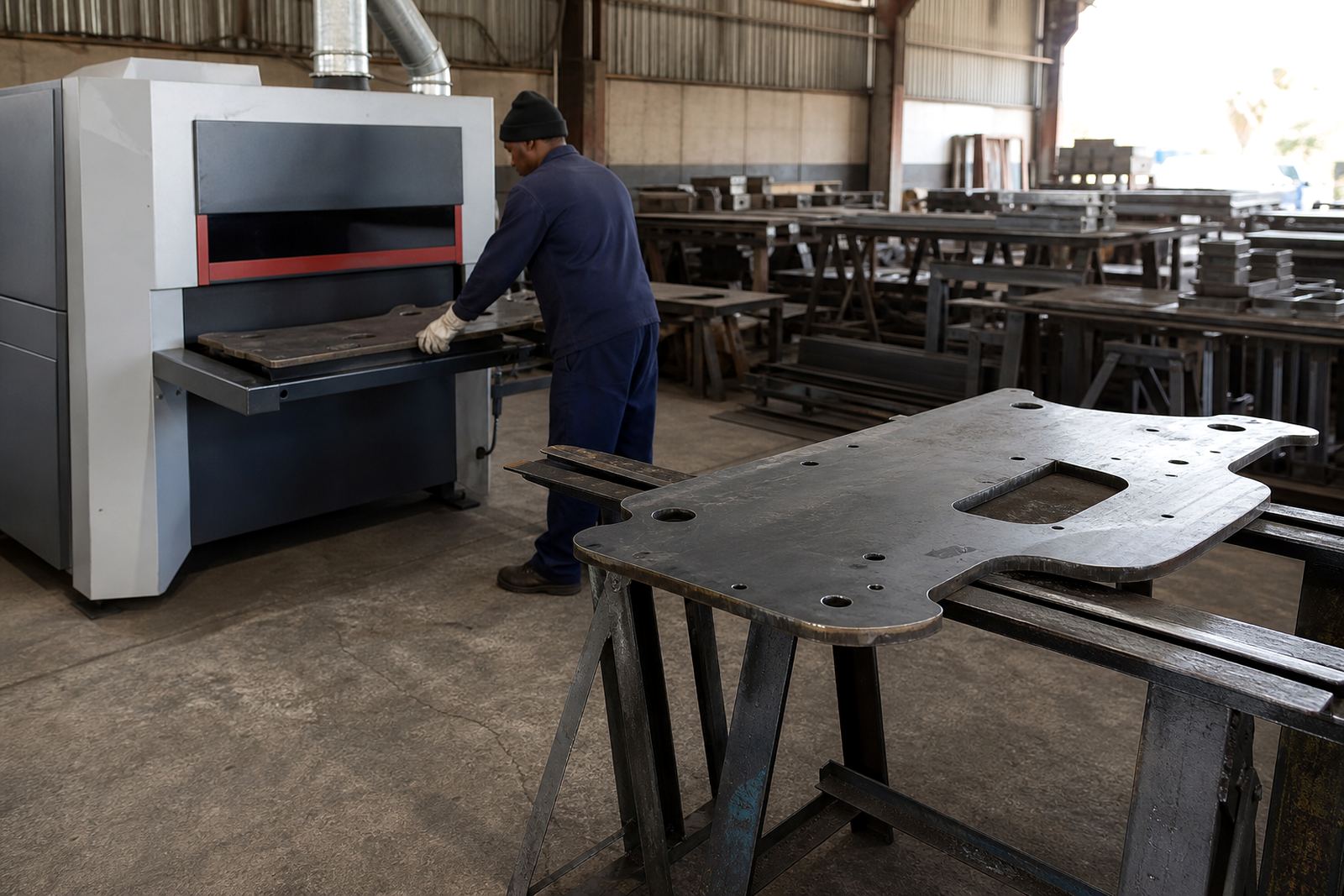
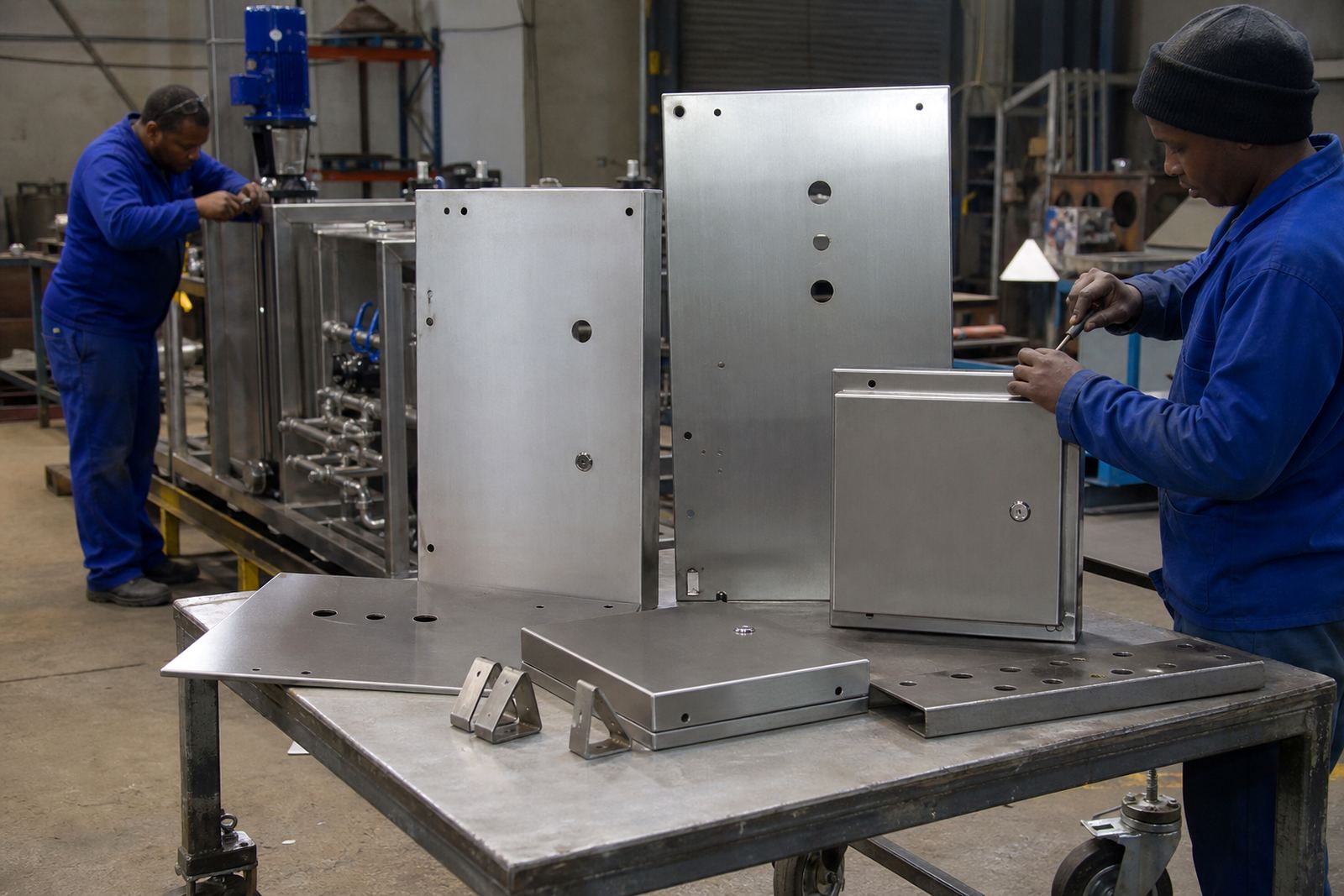
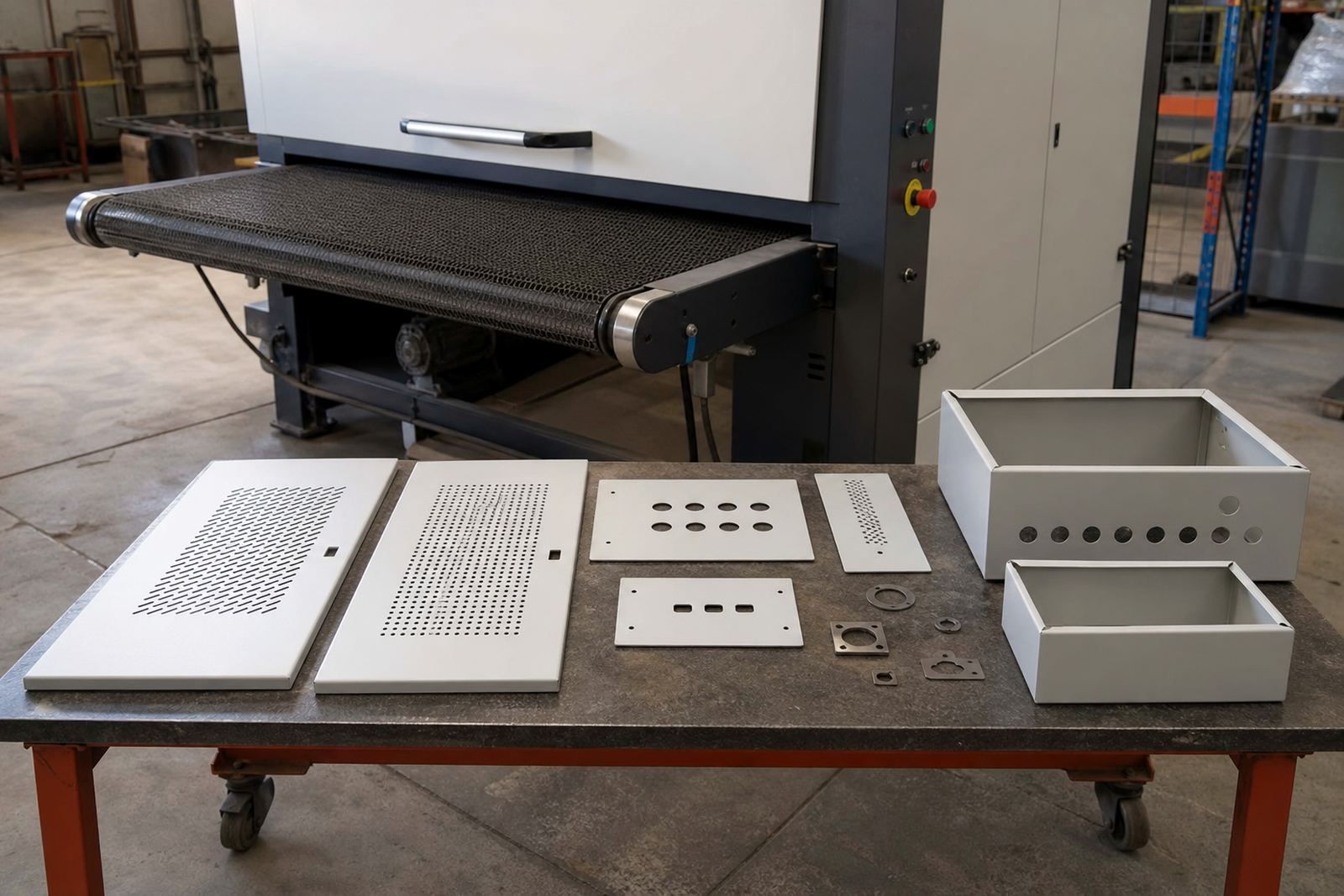
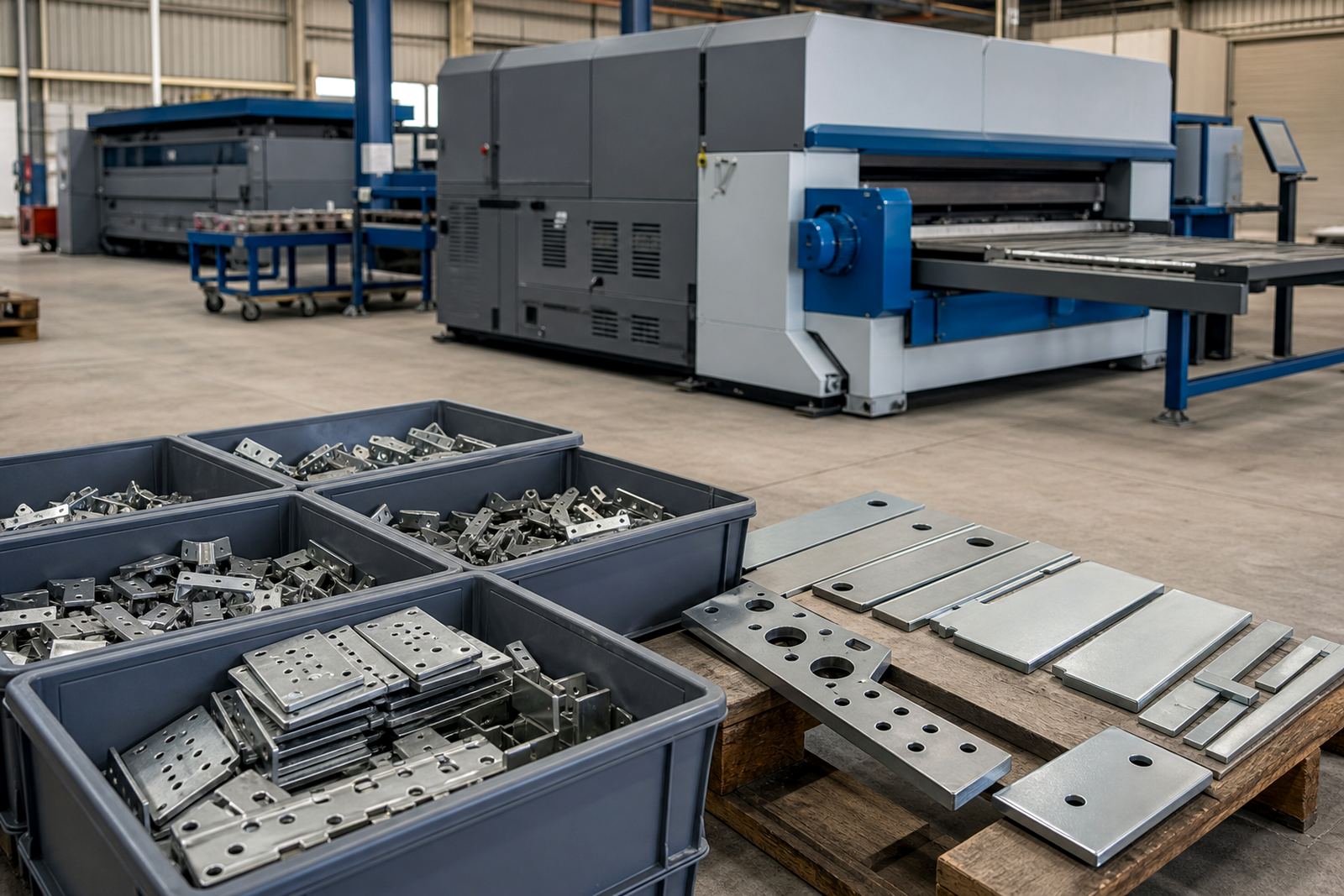
Most solar mounting part makers are cutting laser flat sheet in aluminium, galvanised steel or stainless, then moving parts through deburring and finishing before bending, drilling, marking or kitting. A practical line often includes a laser-cut parts output table, a deburring and edge-finishing machine, a simple inspection station and a packing area close by. If the parts are small and repetitive, the finishing stage must not become a bottleneck.
- Laser-cut sheet metal parts for rails, clamps and brackets
- Edge-finishing machine for burr removal and edge rounding
- Conveyor or feed table for steady throughput
- Vacuum extraction or dust control where fine particles build up
- Inspection gauges for hole position, flatness and edge condition
For smaller workshops, one operator can often manage the finishing step and inspect the parts at the same station. For higher volumes, a two person flow works better so the machine never waits while parts are stacked or sorted. That extra hand can make a proper difference on a busy day, especially when load-shedding and power interruptions affect the rest of the shop floor.
Layout advice for batch work and mixed part sizes
Solar mounting parts are rarely all the same size. One job may be long rails, the next is compact clamps with punched holes and slot features. Plan your space so the machine can accept both without constant adjustments. Keep infeed and outfeed paths clear, with enough room for trays, trolleys and marked job packs. If the operator has to turn, lift and re-stack parts too often, productivity drops and the risk of scratches goes up.
In coastal areas such as Durban and Cape Town, humidity can affect storage and surface condition, so finished parts should not sit too long in open bundles. In Gauteng, dust and workshop traffic can also affect the final finish. A proper layout should separate raw sheet, in-process parts and completed kits. That sounds basic, but it saves time and reduces mix-ups when several project sizes are running at once.
- Keep raw cut parts close to the machine, but not blocking walkways
- Store finished parts in labelled bins or racks by job number
- Allow space for operator access on both sides if part flipping is needed
- Put inspection at the end of the finishing step, not across the workshop
Common mistakes that slow solar part production
One common mistake is treating deburring as a one off tidy-up job instead of part of the production flow. Another is using hand tools on batches that should have been finished mechanically. That can work for a few sample pieces, but it becomes slow and inconsistent when the order grows. Sharp internal edges also tend to cause handling injuries and damage to gloves, which is a simple way to lose time and money.
Some fabricators also over-finish parts. If the edge is rounded too much, fit-up can change and thin sheet parts may lose accuracy at slots or locating faces. The aim is clean and controlled, not aggressive material removal. It is also worth checking extraction and maintenance schedules, because abrasive wear and built-up debris can affect finish quality long before the machine stops running. A missed service often shows up as uneven edges before anybody notices.
Budget ranges for South African buyers
For solar mounting part production, buyers usually compare more than just purchase price. They need to factor in operator time, maintenance, abrasive consumption, power use and the impact of rework. Entry level finishing equipment for smaller batch work may sit in the lower budget range, while higher throughput systems with wider working widths and better control features will cost more.
As a practical guide, many South African workshops should allow for budget planning from about R450 000 to R1 500 000 for a dedicated deburring and edge-finishing solution, depending on part width, automation level and production targets. On top of that, installation, training, spares, extraction support and annual servicing should be planned into the first year. If your plant runs around the clock or has strict delivery windows, that support cost becomes part of the real production picture, not an optional extra.
Support for repeatable output across South Africa
Deburring works with manufacturers and fabricators from Wadeville, Germiston and across South Africa who need dependable finishing for laser-cut sheet metal. For solar mounting parts, the main goal is simple: every rail, clamp and bracket must leave the finishing stage ready for the next operation. That means practical machine setup, trained operators and maintenance that keeps the line stable over time.
Our team includes Pieter Johannes van der Merwe, Thandiwe Mokoena, Sibusiso Dlamini, Ayesha Patel, Johan Kruger and Lerato Nkosi, with support for machine installation, operator training, preventive maintenance, breakdown repairs, sample part testing and process optimisation. If you are planning a new line or improving an existing one, the right machine choice can save hours every week and reduce avoidable rework. For many shops, that is where the real return sits, not in the brochure but in the day to day output.