Why telecom cabinet parts need better edge finishing
Telecom cabinets, server racks and wall boxes are judged on more than appearance. Sharp burrs can cut installers, damage cables, make powder coating lift at the edge and leave doors or panels with poor fit. In a factory that is turning out repeated cabinet parts each week, those small faults become costly very quickly.
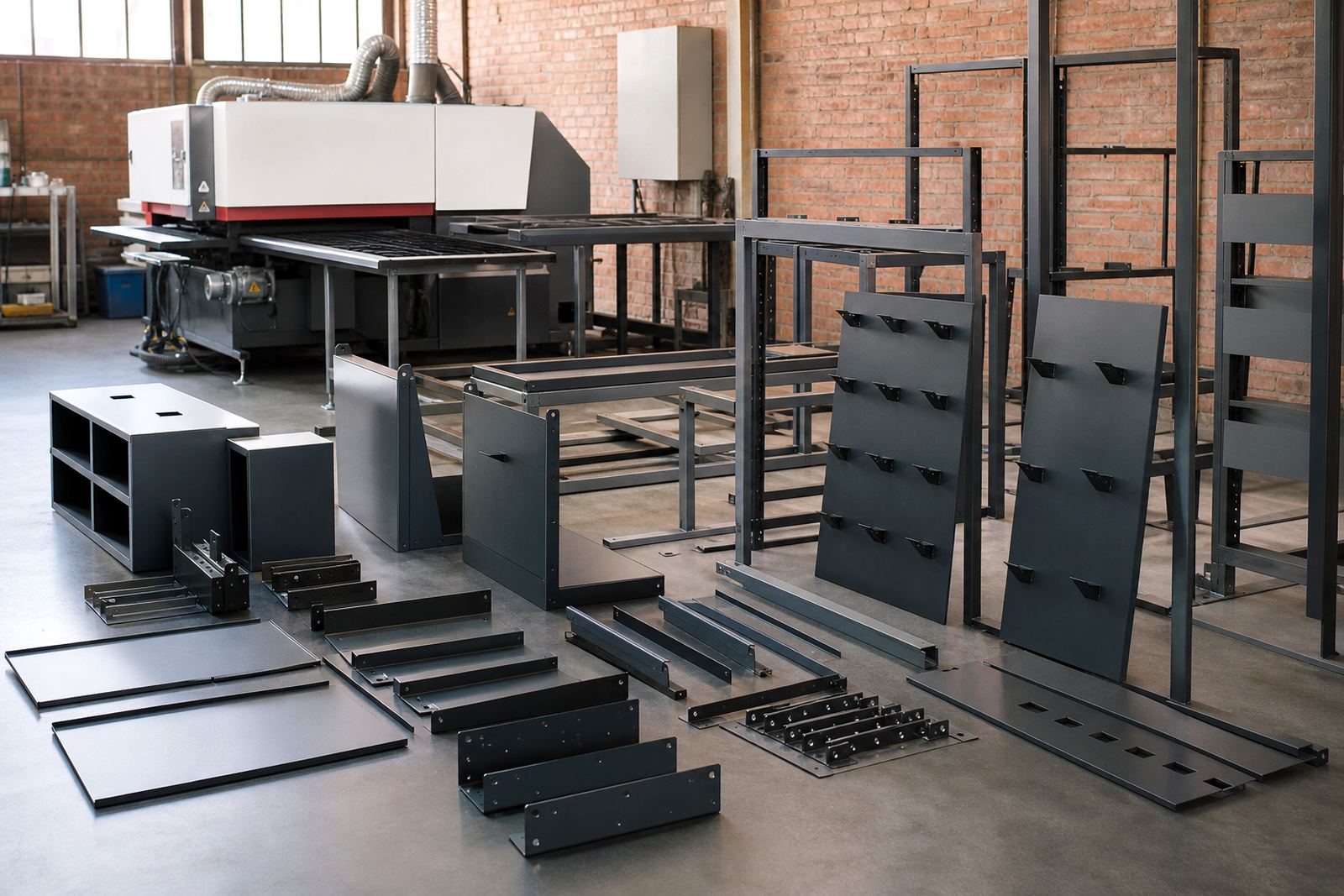
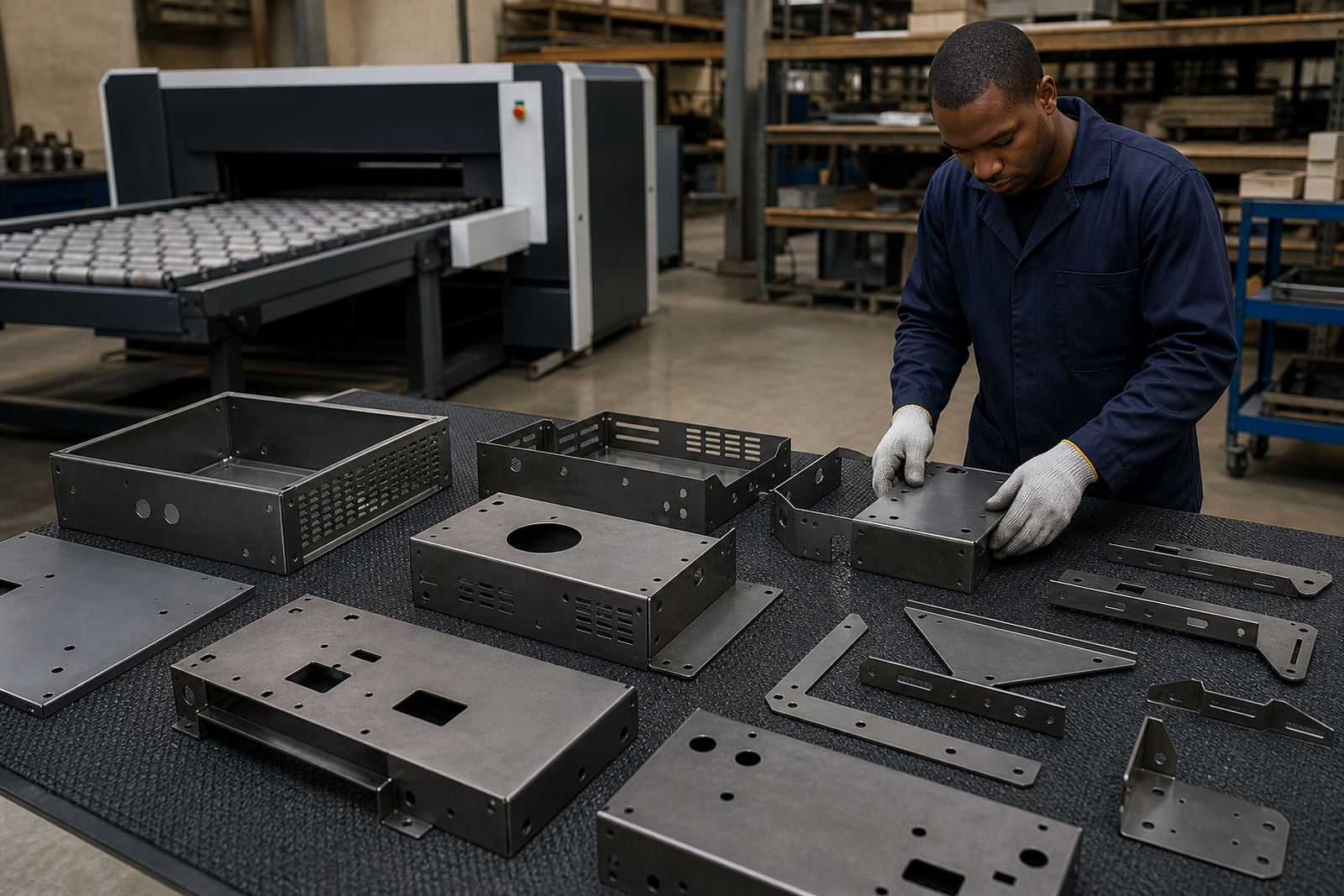
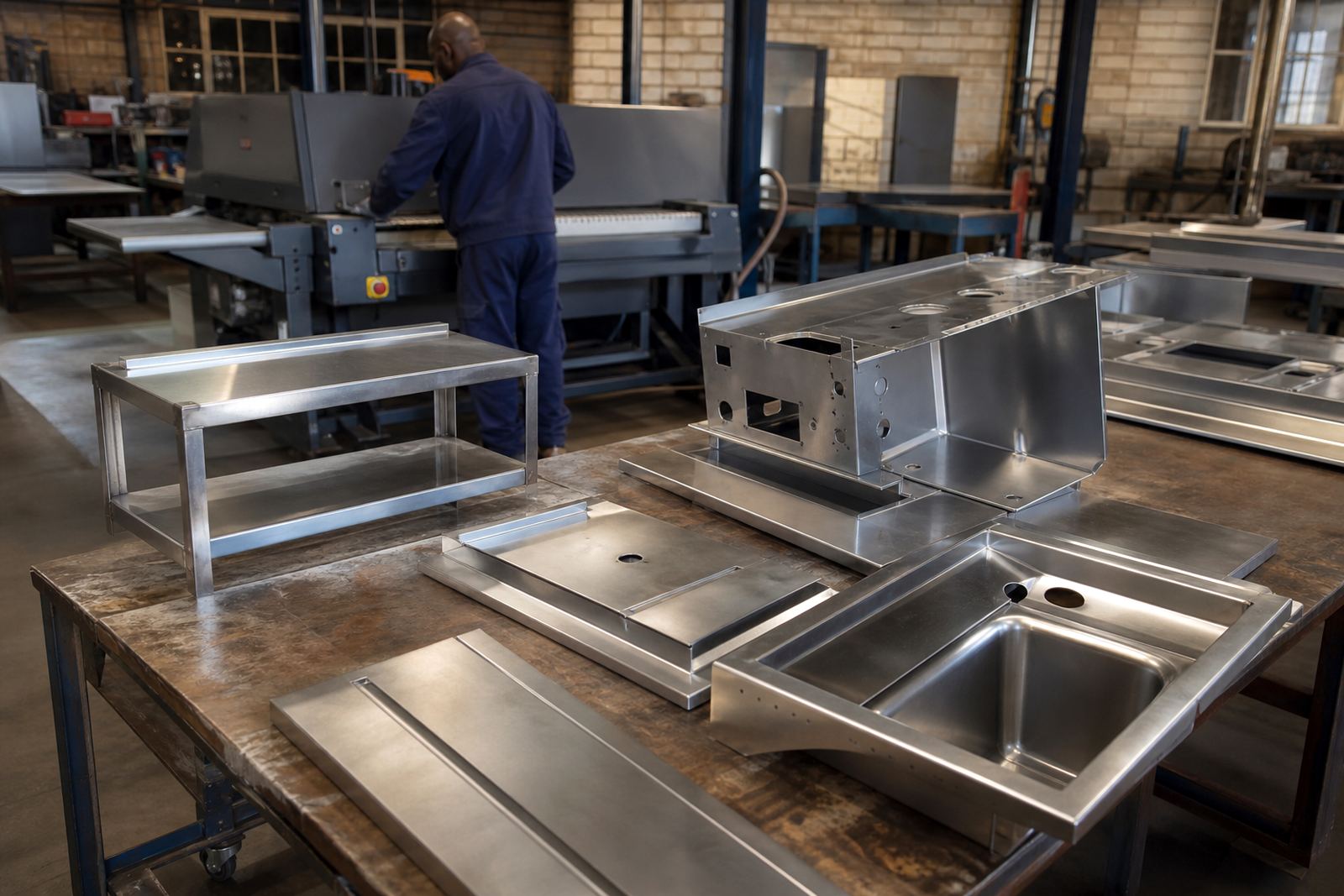
Laser-cut parts usually come off the machine with clean geometry but still need attention on the cut edge, especially on stainless steel, galvanised sheet and mild steel parts with many internal cut-outs. Handles, gland plates, hinge areas and mounting rails all need a safe edge so the cabinet goes together smoothly on site. For fabricators supplying commercial buildings, data rooms and outdoor enclosures, that matters because one bad edge can lead to call-backs and delay handover.
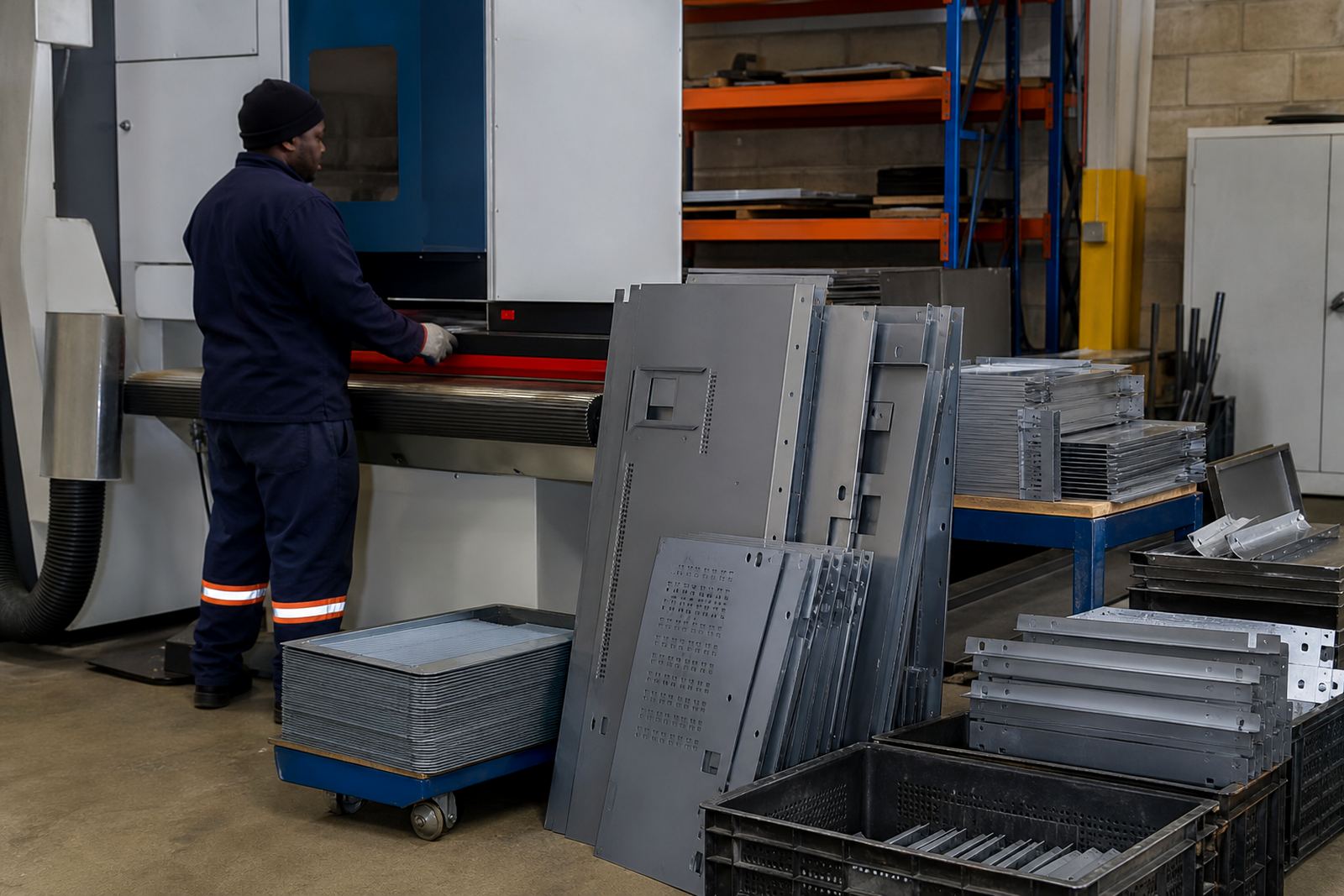
Our machines are used for this kind of work day after day. They help remove burrs, break sharp edges and create a more even finish on repeated cabinet components, so the team can keep pace with orders from Johannesburg, Pretoria, Durban, Cape Town and Rustenburg without chasing the same defect on every batch.
Typical machine set-up for cabinet makers
A good set-up depends on volume, thickness range and the finish needed on the final part. Most telecom cabinet shops work with a mix of flat sheet, folded parts and small brackets, so the finishing line needs to handle both large and compact components without constant changeover.
- Deburring and edge-finishing machine for laser-cut sheet metal
- Part handling table or infeed conveyor for flat panels
- Vacuum extraction or dust control where required
- Quality check station with gauges and sample parts
- Dedicated area for stainless steel and galvanised work to reduce cross-contamination
For smaller shops in Wadeville or the East Rand, a single machine can often cover a surprising amount of cabinet work if the workflow is planned properly. Larger operations may need a line that includes more than one finishing pass, especially where one pass is used for heavier burr removal and another for final edge softening. If the factory runs shifts around load-shedding, a layout that keeps material moving by hand or trolley can help maintain output when power is interrupted and the team has to restart quickly.
Planning the layout before the machine arrives
Cabinet makers often focus on the machine first and the layout second, but the floor plan can make the biggest difference to daily output. The finishing area should sit close to laser cutting and folding, but not so close that offcuts, dust and traffic block the flow. You want enough space for pallets, trolleys and packing benches, plus room for operators to load long panels safely.
In a busy Germiston or Johannesburg workshop, the best results usually come from a straight line: cut, finish, inspect, fold, assemble. That reduces walking and gives the supervisor a clearer view of bottlenecks. If the shop also does powder coating, the deburring area must be kept clean so abrasive residue and metal dust do not travel into the paint shop. Coastal humidity in Durban can also affect stored sheet and finished parts, so holding times should be short and storage racking should keep material off the floor.
It also helps to plan around municipal and site requirements, especially where fire exits, extraction, noise and stacking limits are checked by landlords or industrial parks. A small adjustment to where you park material can save a lot of handling later on.
Common mistakes that slow cabinet production
Even a good machine will underperform if the process is handled badly. The usual mistakes are simple, but they add up fast on repetitive telecom cabinet work.
- Running mixed material types through the same settings without checking finish quality
- Leaving burr-heavy parts from the laser to pile up before finishing
- Skipping sample testing on new cabinet designs or new sheet thicknesses
- Pushing parts too fast and missing internal edges, slots and hinge points
- Ignoring operator training, which leads to variable results between shifts
One common issue is assuming all laser-cut parts need the same treatment. A thin door skin, a thicker mounting plate and a bracket with tight internal corners do not behave the same way. Another issue is poor maintenance. If abrasive media is worn out or the machine is not checked on time, the finish becomes uneven and the team starts sorting parts by hand. That is wasted labour and it slows the whole line down. Preventive maintenance and sample part testing are worth doing before the busy season, not after faults start showing up.
What South African fabricators usually budget for
Budget depends on throughput, part size, material mix and whether the machine is going into a new line or replacing an older one. For small to medium cabinet workshops, planning should include the machine itself, installation, operator training, spares and any relocation or extraction work needed to get the system running properly.
As a practical guide, many buyers set aside a budget from around R450 000 to R1 800 000 for a deburring and edge-finishing solution suited to laser-cut sheet metal. Entry-level systems for lighter cabinet work sit at the lower end, while higher-capacity setups for multiple shifts, wider sheet sizes or heavier output can move well above that. The real cost is not only the purchase price. Downtime, worn abrasives, poor layout and repeated rework all need to be counted too.
For businesses in Pretoria, Cape Town or Rustenburg that are sending cabinets to project sites, the right budget should also allow for service access and spare parts supply. A machine that sits idle waiting for support is rarely cheaper in the long run.
How Deburring supports telecom cabinet production
Deburring works with fabricators who need repeatable edge quality on racks, doors, covers and mounting parts. Our team in Wadeville, Germiston supports clients through machine installation, operator training, preventive maintenance, breakdown repairs, abrasive replacement, machine audits, sample part testing, process optimisation, spares supply, relocation support, production planning help and annual service contracts.
Our team includes Pieter Johannes van der Merwe, Thandiwe Mokoena, Sibusiso Dlamini, Ayesha Patel, Johan Kruger and Lerato Nkosi. Clients reach us through the enquiry form on our contact page, and we assist fabricators across Johannesburg, Pretoria, Durban, Cape Town and Rustenburg as well as nearby East Rand operations. If you are building telecom cabinets in volume, the aim is simple: cleaner edges, safer handling and fewer surprises at assembly and installation.
For many shops the first step is a sample part test. Bring a typical cabinet door, bracket or mounting plate and see how the finish holds up on your own material. That gives a realistic view of output, handling and changeover time before you commit to a full production set-up.