
Plan the finishing step before it becomes a bottleneck
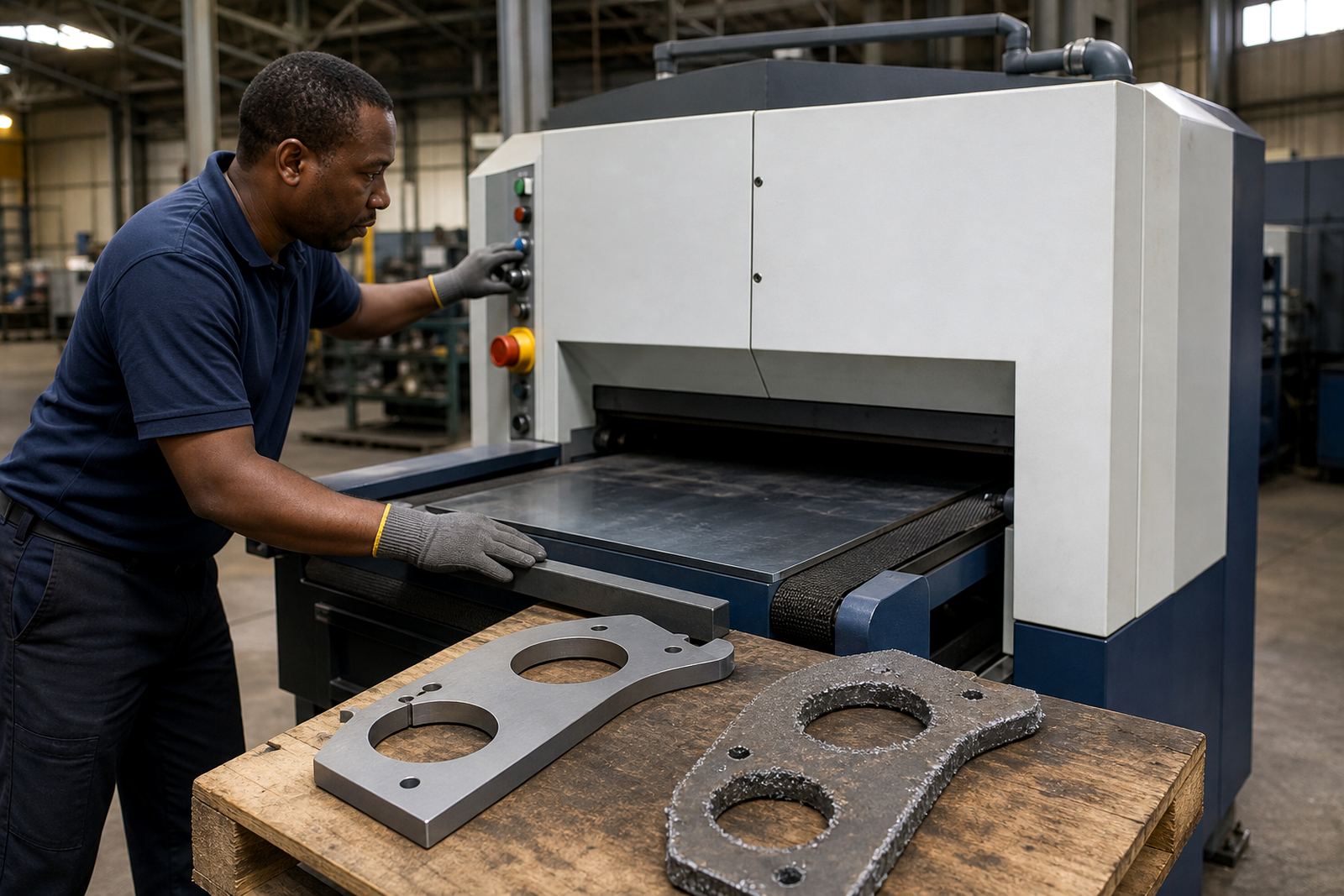
Laser-cut parts may leave the cutting table looking complete, but the edge condition often decides what happens next. Burrs, oxide, sharp corners and heat marks can slow assembly, affect fit-up and create rework if the finishing process is not planned into the route from the start. Our production planning help looks at the full path from sheet loading to final packing, so deburring is treated as part of production not an afterthought.
We work with fabricators in Wadeville, Germiston and across Johannesburg, Pretoria, Durban, Cape Town and Rustenburg who run mixed jobs, short lead times and changing batch sizes. The goal is simple: keep parts moving, keep operators busy and avoid a machine sitting idle because the finishing step was undersized or poorly placed. On many sites, that means choosing the correct machine width, feed rate and abrasive setup for the type of laser-cut steel, stainless steel or aluminium being processed.
- Review current laser-cut, bend and assembly flow
- Identify where burr removal and edge conditioning should sit in the sequence
- Match machine capacity to daily metreage and batch sizes
- Set practical changeover points for mixed material work
What we look at during a production review
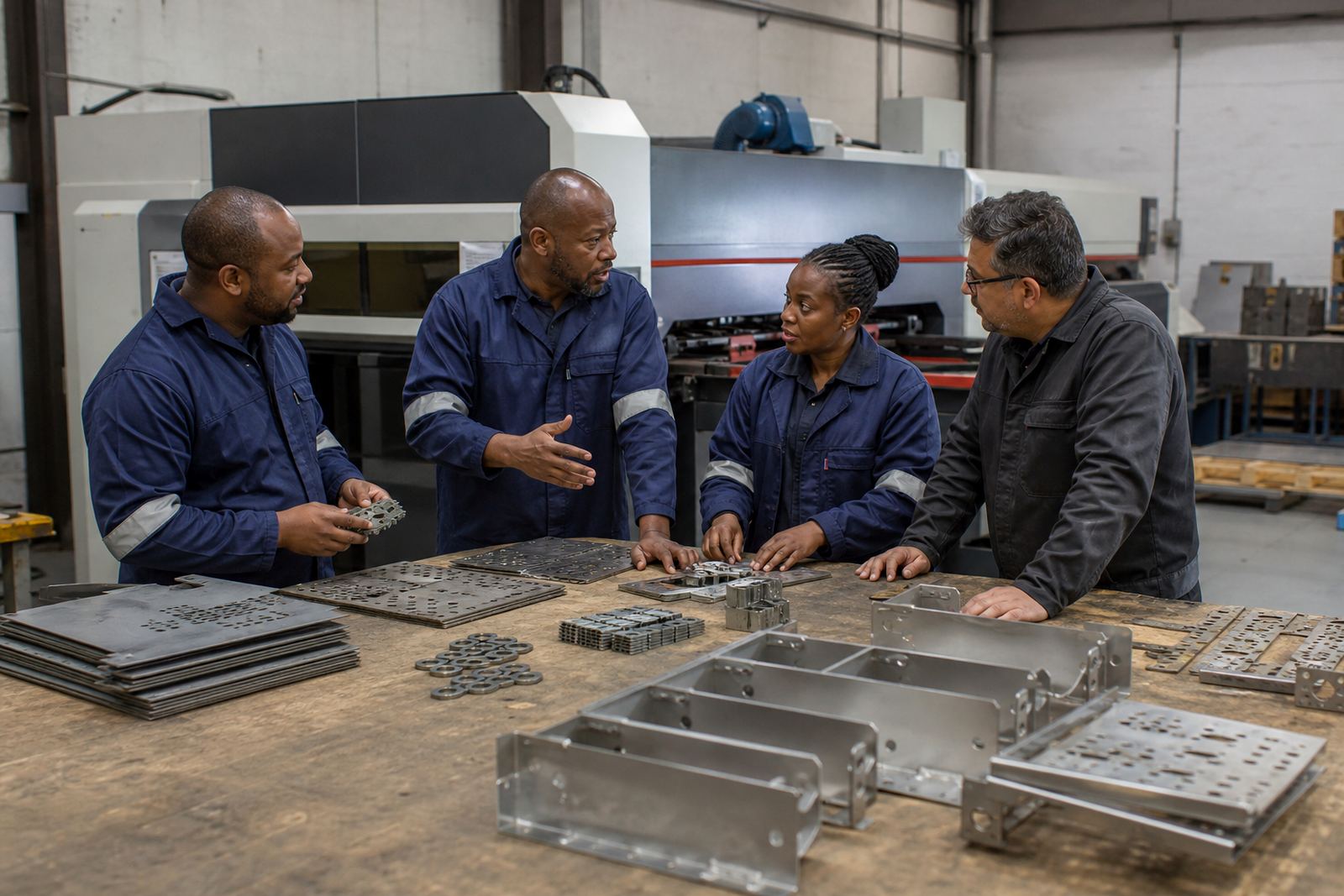
Every shop floor is different. Some sites run one shift with steady repeat work, while others handle urgent jobs for the mining, steel, signage and equipment sectors. We examine the real production pattern, not just the machine brochure numbers. That includes part size ranges, sheet thickness, nesting density, cut quality, handling methods and whether parts need deburring before folding or after assembly.
We also check how the finishing machine will fit around existing equipment. Floor space, forklift access, extraction, power supply and operator movement all matter. In many workshops around Germiston and the East Rand, space is tight and power supply can be affected by load-shedding, so the plan must be practical and not force staff to double-handle parts. Where coastal humidity is a factor, especially for Durban and Cape Town, we also factor in storage and corrosion risk for finished components and consumables.
- Part thickness range and material mix
- Average job size and daily output target
- Required finish standard for welding, folding or assembly
- Operator count and shift pattern
- Power, extraction and floor layout constraints
How the planning process runs from sample to schedule
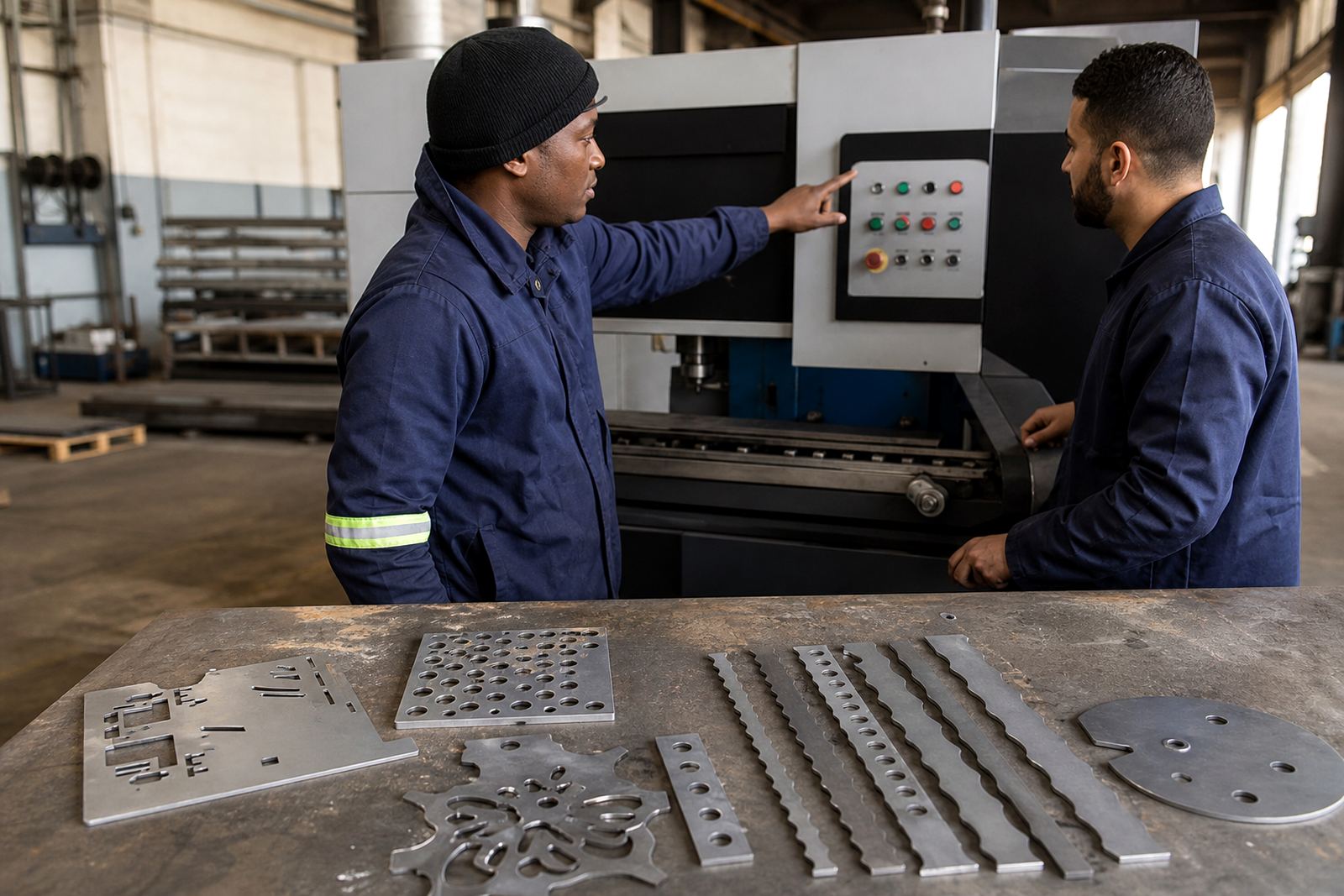
We start with sample parts or drawings where available, then identify the finish requirement on each surface and edge. If needed, sample part testing is used to confirm the level of burr removal, edge rounding and surface effect before a production decision is made. That keeps the planning based on actual results, not guesses.
Once the target finish is agreed, we map the process steps. This includes loading method, infeed and outfeed direction, whether parts should go through one pass or two, and where inspection sits. For some clients, the answer is a single machine feeding straight into bending. For others, the plan calls for staging bays, batch tagging and a dedicated operator to keep the laser team and the fab team from blocking each other. The result is a cleaner flow and fewer delays at handoff points.
- Initial discussion on workflow and output targets
- Sample part review or testing on actual material
- Capacity match to machine width, speed and usage pattern
- Layout and staffing recommendations
- Final operating plan for daily use
Machine capacity and specification guidance
Production planning is only useful if the equipment can carry the load. We guide clients on machine size, working width, feed speed and finishing media based on part profile and throughput. Smaller fabrication shops may only need a compact unit for selective edge work, while larger plants need a wider machine that can handle full sheets and repeated batches without slowing the line.
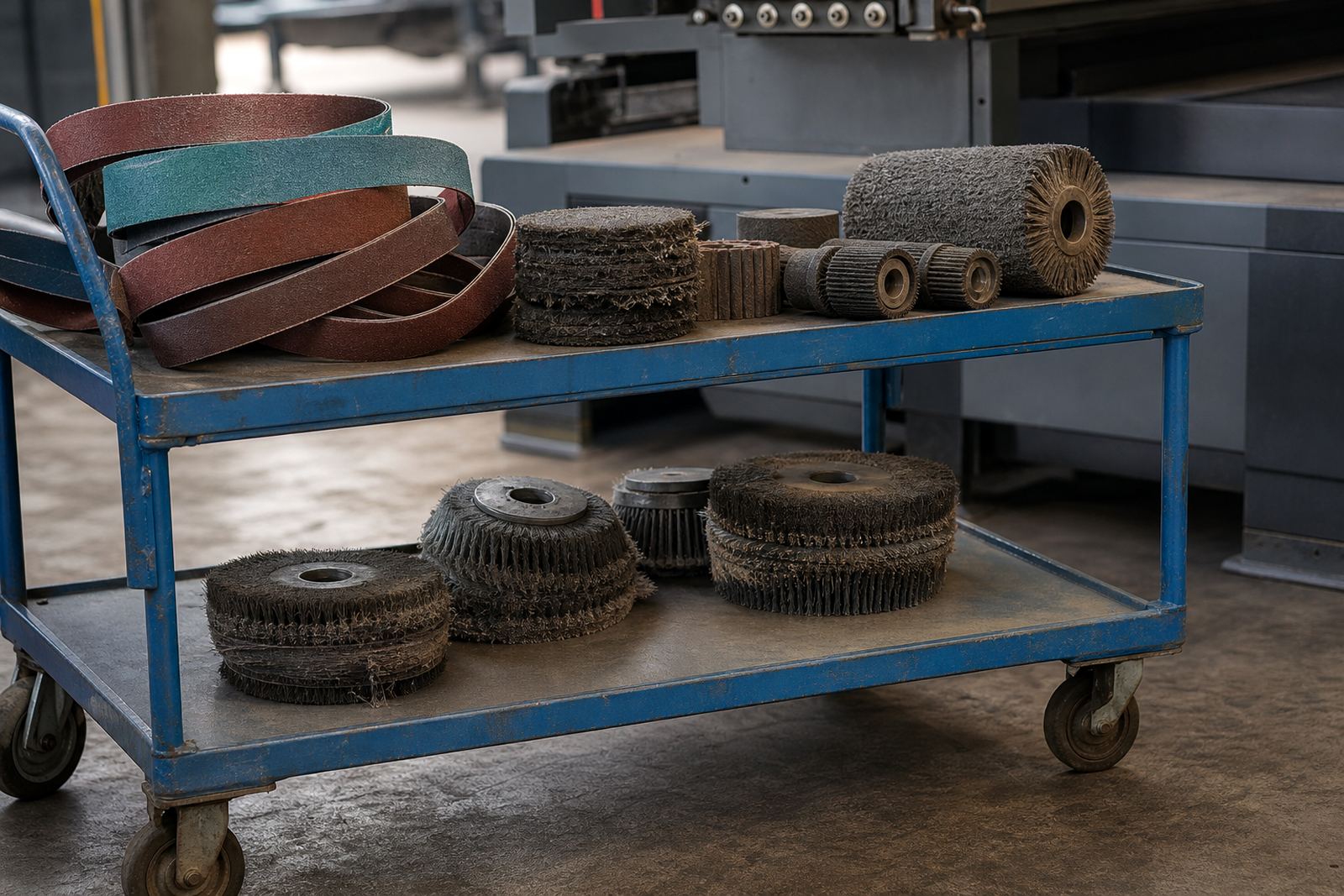
Typical planning points include working widths from 650 mm to 1350 mm, variable feed control, adjustable abrasive heads and dust extraction suited to fine metal particles. Where parts are highly mixed, we look at quick change abrasive replacement and straightforward cleaning between jobs. In South African workshops, reliability matters as much as finish quality, so the machine choice must suit the site conditions, maintenance skill level and power stability. If the workflow includes powder coating or assembly after finishing, we also plan for handling marks and surface cleanliness.
Turnaround times, pricing and maintenance intervals
Turnaround depends on the size of the production review and whether sample testing is needed. A basic planning discussion can often be arranged quickly through the enquiry form, while a full workflow assessment with sample part testing takes longer because we check finish results, machine loading and operator steps in detail. We keep the process practical and time-bound so your team can make a decision without dragging out the job.
Pricing is quoted according to the scope of the review, travel where required, sample testing and whether installation planning, operator training or production planning are bundled together. For plants that want ongoing support, we can fold planning into an annual service contract or a scheduled maintenance visit. Maintenance intervals depend on throughput and material type, but most sites benefit from regular checks on abrasives, dust extraction, feed components and alignment before wear starts affecting finish quality. In high-volume work, that can mean monthly inspection on consumables and quarterly process review. For lighter production, a six-monthly check may be enough.
- Basic workflow review for smaller job shops
- Quoted project planning for larger plants
- Sample testing charged only where required
- Planned maintenance intervals linked to output and wear
Support for Gauteng, coastal plants and national rollouts
We support fabricators across South Africa, with regular work in Johannesburg, Pretoria, Durban, Cape Town and Rustenburg. That matters because production planning in a Gauteng workshop is not the same as planning for a coastal plant with humidity, salt air and different corrosion control needs. It also matters where municipal noise, dust and waste handling rules affect how the machine area is set up and maintained.
For groups with more than one site, we help standardise the process so parts finished in one branch match the output expected at the next. That is useful when laser cutting happens in one area, deburring in another and final assembly somewhere else. The planning work can include relocation support, spare parts planning and production planning help for the next shift, the next line or the next site. The aim is steady output, less rework and fewer surprises on the floor.
Our team in Wadeville includes Pieter Johannes van der Merwe, Thandiwe Mokoena, Sibusiso Dlamini, Ayesha Patel, Johan Kruger and Lerato Nkosi, so clients get direct support from sales, applications, service and workshop staff who understand how metalwork moves through a real plant.
Key facts
| Service type | Production planning help for laser-cut sheet metal finishing |
|---|---|
| Typical working widths | 650 mm to 1350 mm |
| Supported materials | Mild steel, stainless steel and aluminium |
| Planning inputs | Drawings, sample parts, batch sizes, current workflow |
| Maintenance review interval | Monthly, quarterly or six-monthly depending on output |
| Coverage | Wadeville, Germiston, Johannesburg, Pretoria, Durban, Cape Town and Rustenburg |